How to prevent and control powdery mildew in chrysanthemums
From late August to October, powdery mildew is common on chrysanthemums. It can cause poor plant growth, dead leaves, and even failure to bloom, so timely prevention and control are needed. In cultivation, take care to prune overly dense and withered yellow branches and leaves, pull out diseased plants, clear away diseased leaves and fallen leaves, and burn them in a centralized way or bury them deeply. Planting should not be too dense; control soil moisture and increase...
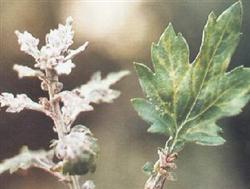
From late August to October, powdery mildew is common on chrysanthemums. It can cause poor plant growth, dead leaves, and even failure to bloom, so timely prevention and control are needed.
In cultivation, take care to prune overly dense and withered yellow branches and leaves, pull out diseased plants, clear away diseased leaves and fallen leaves, and burn them in a centralized way or bury them deeply. Planting should not be too dense; control soil moisture, increase ventilation and light penetration, and apply more phosphorus and potassium fertilizer to enhance the plant's disease resistance. Avoid applying too much nitrogen fertilizer. For potting soil or seedbed soil, mix 50% thiophanate-methyl with 50% thiram at 1:1, then dilute 600-700 times with water and spray to disinfect. In the early stage of the disease, spray with 50% kasugamycin-copper oxychloride wettable powder or 75% tridemorph emulsifiable concentrate diluted 1000 times, once every 10 days, for 3 consecutive sprays. When the disease is more severe, spray with 15% triadimefon emulsifiable concentrate diluted 1500 times or 70% thiophanate-methyl wettable powder diluted 800-1000 times, once every 7-10 days, for 3-4 consecutive sprays.