What are the control methods for chrysanthemum Fusarium wilt?
Fusarium wilt is one of the important diseases of chrysanthemums. It occurs in many regions of China. Although the incidence of this disease is not high, it is extremely harmful. Once a plant is infected, if control measures are not taken promptly, the plant will quickly wither and die. Chrysanthemum Fusarium wilt is a fungal disease. The pathogen is Fusarium oxysporum f. sp. chrysanthemi, which is a...
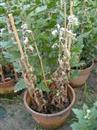
Fusarium wilt is one of the important diseases of chrysanthemums. It occurs in many regions of China. Although the incidence of this disease is not high, it is extremely harmful. Once a plant is infected, if control measures are not taken promptly, the plant will quickly wither and die.
Chrysanthemum Fusarium wilt is a fungal disease. The pathogen is Fusarium oxysporum f. sp. chrysanthemi, and it is a soil-borne disease. The most suitable temperature for disease development is 27°C-32°C. At 21°C the disease tends to moderate, and below 15°C it no longer develops. In recent years, especially in chrysanthemums that undergo shading treatment to control the flowering period, because the temperature inside the shed is high and there is no ventilation, this disease is more easily induced.
When the pathogen infects a plant, the first sign is that the lower leaves lose their green color and turn yellow and lose their luster, which is generally not easy to notice. Then the plant's leaves begin to wilt and droop, turn brown, and die, especially the lower leaves also begin to fall off. Therefore, when a plant first shows symptoms, be sure not to easily assume it is a lack of water and delay control. Carefully observe whether the stem base of the plant is slightly swollen and brown, with rough epidermis and occasional cracks; when humidity is high, a white mold-like substance may be visible. When the stem is cut crosswise or lengthwise, the vascular bundles can be seen turning brown or dark brown. The plant can also be removed from the pot, and the roots infected by the pathogen will be seen turning black and rotting.
For the prevention of chrysanthemum Fusarium wilt, first, select disease-resistant varieties and collect branches from disease-free plants for propagation. Second, disinfect the soil and regularly use fungicides to sterilize. Third, control soil moisture content, and it is advisable to use a well-drained substrate. Fourth, manage plant density to facilitate ventilation.
When a plant is infected by the pathogen, medication must be applied quickly.
Treatment with 50% carbendazim gives good results. The method is as follows: when the plant shows symptoms, prepare a 200-fold to 400-fold carbendazim solution, pour it at the plant roots, and spray the whole plant. Apply twice consecutively on the first day and second day, once on the fourth day, and once on the sixth day. In general, four or five applications are enough for recovery. However, severely diseased plants must be pulled out and preferably burned.
In addition, a 200-fold to 400-fold solution of 25% benomyl powder, or an 800-fold solution of 50% amobam emulsifiable concentrate, can also be used. The method is the same as with carbendazim, and the results are also good.