A Detailed Guide to Eucalyptus Planting Techniques and Cultivation Management Methods
Eucalyptus is the general name for tree species of the genus Eucalyptus [Eucalyptus SPP.] in the family Myrtaceae. It is one of the world's three famous fast-growing tree species and one of the world's most valuable hardwood broadleaf timbers. Native to Australia, it has as many as 945 species, with a wide distribution range and great variation in performance, and in the world's 10...
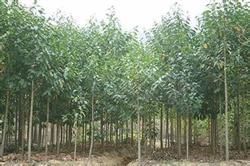 Eucalyptus belongs to the genus Eucalyptus in the family Myrtaceae and is native to Australia. In China it is mainly planted in Yunnan, Guangdong, Guangxi and western Sichuan and other provinces and regions. The planted varieties include blue gum (Eucalyptus globulus), straight-stemmed blue gum, lemon-scented gum (Corymbia citriodora), large-leaved eucalyptus and the ornamental copper-coin eucalyptus, 5 species in total. Eucalyptus leaves can be used to extract eucalyptus oil (aromatic oil); the leaves and essential oil can be used as medicine and have anti-inflammatory, sterilizing, stomach-strengthening, phlegm-clearing and wind-dispelling effects. The wood is fine-textured and rot-resistant, and the heartwood resists termites, so it is widely used in construction, bridges, shipbuilding, docks, papermaking, mines, livestock pens, fuel and many other industries, with very notable economic and ecological benefits. With the implementation of the Western Development Program and the shelterbelt projects of the Yangtze River and Pearl River, and the acceleration of returning farmland to forest, the planting area of eucalyptus is gradually expanding and its prospects are promising.
I. Suitable Environment
Eucalyptus prefers a warm climate but cannot tolerate damp heat, and grows poorly when the climate is too hot; in Yunnan it is mainly distributed in zones at an altitude of 1200-2400 m. Its cold resistance is not strong, and it can only withstand short periods of low temperature around -7°C. If exposed to -5°C for 2-3 days, it will suffer varying degrees of cold damage: in mild cases the small branches die, and in severe cases the whole plant dies. Eucalyptus is light-loving, and even slight shading can affect its growth rate. It prefers fertile, moist acidic soil. Under good conditions in Kunming, a 1-year-old seedling can reach 1.5-2 m in height, a 3-year-old tree can reach 9 m, a 10-year-old tree about 20 m, and a 20-year-old tree about 30 m, after which growth gradually slows. It can flower and bear fruit at 6 years old, and enters full fruiting after 15 years.
II. Sowing
Seeds are collected in November-December and sown in spring the following year, or collected in July-August and sown the same year. Every 100 kg of fruit can yield 1.5 kg of seeds. The 1000-seed weight is 2.8 g for blue gum and 1.5 g for straight-stemmed eucalyptus, and the seed germination rate reaches over 90%.
1. Mother-bed seedling raising. Choose fertile vegetable garden land as the seedbed site, sow in mid-March, carefully prepare the land and make beds, with a bed width of 1.2-1.6 m. After soaking the seeds for 48 hours, mix them evenly with fine sand and broadcast them on the seedbed, then cover with 1-2 cm of fine manure soil. After watering thoroughly, cover with film. Seedlings can emerge 7-10 days after sowing. Keep the soil moist and well ventilated to prevent high temperatures from scorching the seedlings. When the young seedlings grow to 5-10 cm tall, remove the film to harden them; when the seedlings reach 30-40 cm tall, it is best to transplant them on rainy days, as they are more likely to survive. In central Yunnan, transplanting from early June to early July is best.
2. Nutrient-bag seedling raising. After filling the bags with nutrient soil, sow the soaked seeds in the bags (2-3 seeds per bag), then cover with a layer of fine manure, water thoroughly and cover with film, taking care to ventilate and maintain moisture. During the seedling growth period, thin the seedlings by pulling out the weak ones, leaving 1 plant per nutrient bag. When the seedlings grow to 10-20 cm tall, they can be transplanted. Generally, seedlings are raised in early March and transplanted during the rainy season in early June.
3. Seedbed management. After the seedlings emerge, pull out all weeds in the seedbed. Eucalyptus seedlings are prone to damping-off disease. In the early stage of the disease, use 70% Dexon at 500 times dilution per mu (100 kg of solution per mu), and spray or pour it on the seedbed 2-3 times, with an interval of 10-15 days each time.
III. Transplanting and Young Tree Management
1. Transplanting. Transplant after the rainy season begins in early June. The planting hole is 40 cm deep and 40 cm in diameter, with 300 plants per mu (spacing 1×2 m). After planting, water thoroughly to settle the roots. The soil mound should be higher than the ground surface to prevent waterlogging and root rot and soil compaction, which helps the young trees survive and grow.
2. Fertilization and pest control. After survival, apply 50 kg of compound fertilizer per mu, or 40 kg of ordinary superphosphate and 10 kg of urea, around the planting holes. Eucalyptus is easily damaged by yellow ants. After the transplanted trees survive, mix 500 g per mu of 10% diazinon granules or 1 kg per mu of 3% phoxim into the chemical fertilizer, apply it around the planting holes and mix it thoroughly with the soil to control yellow ant damage.
3. Young tree management. After the young trees survive, grazing should be prohibited in the young forest, weeds around the seedlings should be removed promptly, and where conditions permit the soil should be loosened to keep it loose. After the seedlings grow for 2-3 years, prune once a year, removing the lower weak and thin branches, which helps ventilation and light penetration and maintains the growth of the seedlings. After 4 years, leaves can be harvested to extract aromatic oil.
In summary, in eucalyptus cultivation management, the raising of strong seedlings and the management of young trees in the 1-2 years after transplanting are crucial. Management after the 3rd year mainly consists of pruning branches and cultivating the trunk for timber. Therefore, planting eucalyptus has very notable economic, ecological and social benefits and broad prospects.