What are the remedial measures after eucalyptus suffers frost damage?
Frost damage to eucalyptus mainly manifests as frozen shoot tips, and in severe cases the aboveground parts freeze to death. The severity of frost damage varies depending on the eucalyptus variety and stand age. Eucalyptus camaldulensis, Eucalyptus grandis, Eucalyptus dunnii and others are among the more cold-tolerant species in the Eucalyptus genus, while Eucalyptus urophylla, Eucalyptus grandis x urophylla and others have poor cold tolerance. The main antifreeze technical measures are: 1. Mild frost damage (tip...
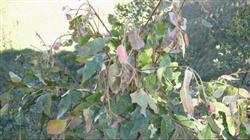
Frost damage to eucalyptus mainly manifests as frozen shoot tips, and in severe cases the aboveground parts freeze to death. The severity of frost damage varies depending on the eucalyptus variety and stand age. Eucalyptus camaldulensis, Eucalyptus grandis, Eucalyptus dunnii and others are among the more cold-tolerant species in the Eucalyptus genus, while Eucalyptus urophylla, Eucalyptus grandis x urophylla and others have poor cold tolerance. The main antifreeze technical measures are:
1. Mild frost damage (tip frozen): The impact on the following year's growth will not be too great; simply follow routine management and take care to keep robust side buds at the top.
2. Moderate frost damage (more than 1/2 of the main trunk frozen): Regardless of age, it is best to cut the trunk at 10-15 cm above the ground to promote sprouting and regeneration.
3. Severe frost damage (aboveground parts or even the root system frozen): Cut the trunk for sprouting and regeneration, or replant with container seedlings, and switch to cold-tolerant eucalyptus varieties or other tree species.
(1) Technical methods for frost damage investigation
Reference standards for grading eucalyptus frost damage: Conduct the investigation using typical sampling methods, then compile statistics on the frost damage of eucalyptus species and clones.
Grade 0: Basically no frost damage; newly sprouted tender tips are slightly wilted, young leaves suffer frost damage, and normal growth is possible.
Grade I: The main trunk is frozen and withered below 50 cm, some branches suffer frost damage, most leaf tips are frozen and withered, and the rate of whole-leaf death is below 30%. Grade II: The main trunk is frozen and withered below 1/3, 1-year-old branches are withered below 1/3, and the leaf withering rate is below 70%.
Grade III: The main trunk is frozen and withered from 1/3 to 1/2, 1-year-old branches are completely withered, some 2-year-old branches suffer frost damage, all leaves are withered, and growth can recover.
Grade IV: The main trunk is frozen and withered from 1/2 to 2/3, 1-year-old branches are completely withered, 2-year-old branches are 60% withered, the entire crown is withered, and recovery is difficult.
Grade V: The entire aboveground part is frozen and withered, with only the base of the trunk undamaged.
(2) Emergency rejuvenation technical measures
1. Cut the trunk or remove the frozen-dead parts of the plant. After eucalyptus suffers frost damage, symptoms of freezing to death generally do not appear immediately; therefore, after frost damage symptoms appear, for eucalyptus with Grade II or Grade III frost damage, the frozen and dried parts of the main trunk and tail tips should be cut off to allow normal sprouting and growth again. For eucalyptus with Grade IV frost damage, cut the trunk at 10-15 cm above the ground to promote sprouting and regeneration. For eucalyptus with Grade V frost damage, trunk cutting for sprouting and regeneration may be carried out, or container seedlings may be used for replanting, converting to cold-tolerant eucalyptus varieties or other tree species. As for mild frost damage (Grade I), because the impact on the following year's growth will not be too great, simply follow routine management and take care to keep robust side buds at the top.
2. Strengthen tending and management. When sprouting shoots grow to about 40 cm, retain 1-2 thick, robust sprouting shoots, and carry out loosening of the soil, apply boron-added calcium magnesium phosphate fertilizer or eucalyptus-specific fertilizer, etc., while also paying attention to monitoring and controlling pests and diseases.