Detailed Explanation of Topdressing Techniques During Eucalyptus Growth
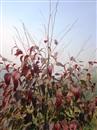
Eucalyptus red leaf and tip blight is a physiological disease, mainly caused by a severe deficiency of B, one of the trace elements essential for normal plant growth and seed setting. Cause: B plays a role in the plant's growth and flowering process by affecting the plant's carbohydrate synthesis and transport, cell division, cell maturation, cell wall and pollen tube formation, etc...
 After eucalyptus is planted and has recovered from transplanting, during the eucalyptus growth period, the sprout forest must be topdressed in a timely manner. Generally, compound fertilizer (water-soluble fertilizer) is applied once each in the first year, third year, and fifth year after transplanting. If economic conditions permit, or in order to promote eucalyptus maturity sooner, it is best to topdress once every year.
The suitable fertilizer varieties for topdressing are: 18-8-14 or 20-12-14.
Topdressing dosage: 0.3-0.5 jin per plant.
The topdressing method is: before rain or in the evening after rain (using the nighttime moisture to dissolve the fertilizer and allow it to be absorbed by the soil), spread the fertilizer 30-50 cm away from the trunk, and as the tree age increases, gradually increase the distance from the trunk when spreading fertilizer.
General topdressing periods: the first topdressing is applied when the plant height is about 1 m; the second topdressing is applied when the plant height is about 5 m, per plant. The third topdressing is applied when the plant height is about 8 m.