Key Points and Correct Methods of Eucalyptus Fertilization Techniques
It is light-loving, moisture-loving, drought-tolerant and heat-resistant. It is sensitive to cold and intolerant of low temperatures. Some species originated in the tropics and cannot tolerate temperatures below 0°C; some species originally grew in warm climatic zones and can tolerate low temperatures of -10°C. It can grow in various soils; most species can adapt to both acidic and alkaline soils, while the most suitable soil...
 I. Fertilizer Requirements and Characteristics
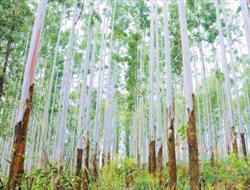
Eucalyptus is one of the three major fast-growing tree species, with a well-developed root system, strong absorption capacity and large growth volume. With sufficient water and fertilizer supply, it grows 1.5-5.5 m taller in 1 year and can be harvested and utilized in 4-5 years. The main nutrient elements absorbed by eucalyptus are: nitrogen, phosphorus, potassium, calcium, magnesium, zinc, boron, etc. According to research, each eucalyptus tree absorbs an average of 36 g of nitrogen, 2.8 g of phosphorus, 20 g of potassium, 31 g of calcium and 8.5 g of magnesium per year; the order of absorption is nitrogen > calcium > potassium > magnesium > phosphorus, and the absorption ratio of nitrogen, phosphorus and potassium is 13:1:8. Plants deficient in nitrogen lose their green color or turn purplish red, and growth is inhibited; plants deficient in potassium are weak and prone to lodging, with dull, lusterless leaves; calcium and magnesium elements can increase the resistance of eucalyptus, making it grow rapidly with a straight and well-proportioned tree form and a high rate of usable timber; zinc and boron elements promote the apical growth of eucalyptus, and if these two elements are lacking, eucalyptus will show dried-up terminal buds or swollen, brittle young buds, easy wind breakage, and the formation of weak, small clustered branches, etc., seriously affecting eucalyptus growth.
II. Fertilization Techniques
Eucalyptus fertilization must first meet the eucalyptus's demand for various nutrients; second, it must be done in appropriate amounts, so as to achieve the greatest economic benefit with the smallest fertilizer input; third, the fertilization method must be mastered to improve fertilizer use efficiency.
Eucalyptus fertilization is carried out as follows:
Base fertilizer: 7 days before planting, apply 0.25-0.5 kg of compound fertilizer or eucalyptus special-purpose fertilizer per hole, place the fertilizer into the hole, and backfill a 1-2 cm thick layer of topsoil.
Topdressing: 1 month after planting or after the young tree has grown 1 m taller, begin topdressing, applying 0.25 kg of compound fertilizer or eucalyptus special-purpose fertilizer per plant to promote early growth and rapid development of eucalyptus; in the second year, apply topdressing once in March-April, applying 0.5 kg of compound fertilizer or eucalyptus special-purpose fertilizer per plant; in the third year and fourth year, apply topdressing once each, applying 0.8 kg of compound fertilizer or eucalyptus special-purpose fertilizer per plant, to promote rapid timber formation of eucalyptus, so that it can be felled in 4-5 years, with timber yield per mu reaching 6-8 cubic meters.
Key points for topdressing:
1. Before each topdressing, weeds must be removed to avoid weeds competing for fertilizer.
2. At 30 cm from the tree root, on the uphill side of the tree root, open a crescent-shaped fertilization trench, or open one fertilization hole above the tree root and on each of the left and right sides, then cover with soil after application to prevent fertilizer loss.
3. It is best to choose to fertilize after rain, as the fertilizer is easily absorbed.
4. On ridge tops, where the soil is thin and poor, more fertilizer should be applied; along ditch edges and valleys, where the soil is thick and fertile, less fertilizer should be applied, adapting to local conditions, using reasonable amounts, saving costs and improving benefits.
5. Fertilize according to soil testing; carry out fertilization according to the soil-testing fertilization recommendation card provided by the technical department, to save costs and increase efficiency.