Key Technical Points for Spring Pest Control and Fertilization of Mulberry Trees
First, pest control must be strengthened. The pests harming mulberry trees in spring are the "mulberry looper" and the "mulberry tussock moth," which mainly feed on mulberry buds and tender leaves. For control, during the mulberry bud stage, a 1000-fold dilution of "dichlorvos" solution can be sprayed; once the mulberry leaves have grown larger, manual catching is the main method. Second, fertilize at the right time. Applying spring fertilizer promptly can promote...
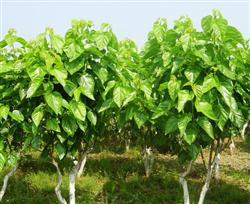
First, pest control must be strengthened. The pests harming mulberry trees in spring are the "mulberry looper" and the "mulberry tussock moth," which mainly feed on mulberry buds and tender leaves. For control, during the mulberry bud stage, a 1000-fold dilution of "dichlorvos" solution can be sprayed; once the mulberry leaves have grown larger, manual catching is the main method.
Second, fertilize at the right time. Applying spring fertilizer promptly can promote the growth of spring buds. The first spring fertilizer application is made in late March, and the second in late April, with the amount applied accounting for 30% of the annual fertilizer application. Applying summer fertilizer can ensure a high yield of mulberry leaves throughout the year. The first summer fertilizer application can use farmyard manure mixed with chemical fertilizer, while the second is mainly based on quick-acting nitrogen fertilizer. The summer fertilizer application accounts for 50% of the annual fertilizer use. Autumn fertilizer can promote vigorous growth of branches and leaves, delay the hardening of autumn leaves, and increase autumn leaf yield. Autumn fertilizer should be applied immediately after leaf picking, mainly using quick-acting chemical fertilizer, with the application amount accounting for 20% of the total annual fertilizer application; at the same time, autumn fertilizer should not be applied too late.
Third, the fertilization method must be appropriate, as this can improve the mulberry tree's fertilizer use efficiency. Digging trenches between mulberry rows for fertilization is suitable for "one-step orchard establishment." Digging pits between rows and between plants for fertilization is suitable for "large-row mulberry" and scattered-planting mulberry orchards. The "foliar fertilization" method involves spraying water-soluble fertilizer onto mulberry leaves, allowing the leaves to absorb nutrients and increase mulberry leaf yield. Foliar fertilization is suitable for the early stage of spring leaf growth, when the root system has not yet grown vigorously and cannot absorb large amounts of fertilizer; during the vigorous growth stage of mulberry leaves when there is abundant rain and insufficient sunlight; and in summer and autumn when the weather is dry and mulberry roots cannot normally absorb nutrients.