How to control Cercospora leaf spot on chrysanthemums
1. Disease symptoms The spots occur on both sides of the leaves, are nearly circular, with indistinct edges at first, later sometimes forming a thin dark brown ring, and often develop along the leaf margins. On the upper leaf surface the spots are light yellow at first, later brown to dark brown; on the underside they are grayish brown. 2. Disease characteristics The disease is caused by a fungus, the pathogen...
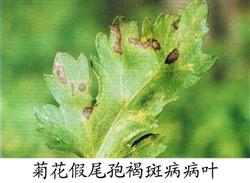
1. Disease symptoms
The spots occur on both sides of the leaves, are nearly circular, with indistinct edges at first, later sometimes forming a thin dark brown ring, and often develop along the leaf margins. On the upper leaf surface the spots are light yellow at first, later brown to dark brown; on the underside they are grayish brown.
2. Disease characteristics
The disease is caused by a fungus, and the pathogen is Pseudocercospora chrysanthemicola. The fungus overwinters on diseased plant debris, and primary infection and reinfection occur through conidia, which spread and disperse by airflow and rain splash. The disease usually occurs readily in rainy weather or when there is heavy fog and dew.
3. Control methods
(1) Horticultural control: When picking leaves, collect diseased plant debris and carry it out of the field to be burned; clear ditches and drain waterlogging, avoid excessive application of nitrogen fertilizer, so that the plants grow vigorously and their resistance is enhanced.
(2) Chemical control: At the early stage of the disease, spray 50% iprodione wettable powder at 1000-1500 times dilution; use 50% carbendazim wettable powder at 500 times dilution per mu, applying 100 ml per plant as a root drench, once every 7-10 days, for two or three consecutive applications; use 75% chlorothalonil wettable powder at 147-267 g per mu, diluted in 75 L of water, and spray evenly.