Key Points on Propagation, Cultivation Techniques and Pest and Disease Control of Osmanthus fragrans
Propagation Techniques for Osmanthus fragrans. Osmanthus fragrans is generally propagated by cuttings; single-trunk osmanthus is mostly propagated by sowing. Here is an introduction: 1. Seed collection. Osmanthus fragrans blooms from September to October, and the fruit ripens from late March to late April of the following year. When the fruit enters the ripening stage and the skin gradually turns from green to purple-black, it can be collected. The collected fruit...
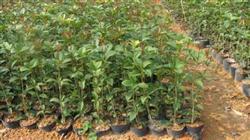
Propagation Techniques for Osmanthus fragrans
Osmanthus fragrans is generally propagated by cuttings; single-trunk osmanthus is mostly propagated by sowing. Here is an introduction:
1. Seed collection. Osmanthus fragrans blooms from September to October, and the fruit ripens from late March to late April of the following year. When the fruit enters the ripening stage and the skin gradually turns from green to purple-black, it can be collected. The collected fruit is piled and composted for about 3 days, and after the skin softens, it is soaked in water and rubbed to remove the skin and flesh, obtaining clean seed, which is slightly dried and stored in moist sand. Because osmanthus seeds have an after-ripening period, they generally need to be stratified in moist sand for 8 months before they can germinate.
2. Raising seedlings. The sowing method is commonly used. Sowing can produce a large number of osmanthus seedling plants, suitable for use as street trees. Sowing is commonly done in wide rows, with a row spacing of 20 to 25 cm and a width of 10 to 12 cm, sowing 20 kg per mu, yielding 25,000 to 30,000 osmanthus seedlings per mu. Before sowing, the seed hilum should face to one side, covered with 1 to 2 cm of fine soil, then covered with a thin layer of rice straw, and sprayed with water until the soil is thoroughly wet, to prevent soil crusting and reduce water evaporation. When the seeds sprout and emerge from the soil, remove the straw promptly and place it between the rows, which can both keep the soil moist and prevent weed growth.
Key Points on Cultivation and Care of Osmanthus fragrans
Care Points
(1) Intertillage and weeding. Focus on loosening the soil and weeding within a tree disc with a diameter of 1 m centered on the main trunk. After irrigation or rainfall, carry out intertillage and soil loosening to prevent soil crusting. (2) Watering and drainage. Watering of osmanthus is mainly done within one month after new planting and in the summer of the planting year. Newly planted osmanthus must be watered thoroughly; if conditions permit, water should be sprayed on the canopy of the plant to maintain a certain air humidity. Osmanthus is not tolerant of waterlogging; drain promptly or transplant waterlogged plants, and add a certain amount of sand when planting, which can promote new root growth. (3) Reasonable fertilization. Fertilization should follow the principle of light fertilizer applied frequently, mainly with quick-acting nitrogen fertilizer; medium and large seedlings are fertilized three to four times a year. In early spring, apply organic fertilizer within the tree disc to promote spring shoot growth. In the early winter period, inorganic fertilizer or miscellaneous waste fertilizer needs to be applied. During this period, fertilizer can be applied once or twice according to the growth of the osmanthus. For newly transplanted osmanthus, topdressing should not be too early. The base fertilizer in the transplanting pit should be mixed evenly with the soil before backfilling. (4) Shaping and pruning. ① Bud removal: when sprouting, remove the useless buds on the lower part of the main trunk. ② Branch thinning: maintain a certain clear trunk height and cut off useless branches; generally, after the osmanthus is grown, the clear trunk height is about 1.5 m. ③ Heading back: cut off the overgrown top branches to keep the osmanthus height at about 3.5 m, with a crown width of 2.5 to 3 m.
Pest and Disease Control of Osmanthus fragrans
Osmanthus brown spot, osmanthus leaf blight and osmanthus anthracnose are common leaf diseases of osmanthus. These diseases can cause early defoliation of osmanthus, weaken plant vigor, and reduce flower yield and ornamental value.
Osmanthus Brown Spot
In the early stage of the disease, small chlorotic yellow spots appear on the leaves, gradually expanding into nearly circular lesions, 2 to 10 mm in diameter, or becoming irregular lesions because the expansion of the lesion is restricted by leaf veins. The lesions are yellowish-brown to grayish-brown, with a yellow halo around the lesion. Brown spot generally occurs from April to October, and old leaves are more susceptible than young leaves. The pathogen overwinters as mycelium on diseased fallen leaves, and in the following spring produces conidia for primary infection; the conidia are spread by airflow and raindrops.
Osmanthus Leaf Blight
The pathogen of this disease mostly invades from the leaf margin and leaf tip, occurring at the leaf margin and leaf tip of the leaves. In the early stage of the disease, light brown small spots are produced on the leaves, gradually expanding into circular or irregular lesions, then expanding into nearly circular or irregular grayish-brown large lesions, with dark brown edges. Leaf blight occurs from July to November, and can occur year-round in greenhouses with poor environmental conditions. The pathogen is spread and infects by conidia through wind and water. A high-temperature, high-humidity environment with poor ventilation is favorable for the disease. When the plant grows weakly, and on old leaves after overwintering and leaves in the lower part of the plant, the disease is more severe.
Osmanthus Anthracnose
This disease infects osmanthus leaves. In the early stage of the disease, small chlorotic spots appear on the leaves, and after gradually expanding, they form circular, semicircular or elliptical lesions. The lesions are light brown to grayish-white, with a reddish-brown ring around the edge. Under moist conditions, pale pink viscous acervuli appear on the lesions. Anthracnose occurs from April to June. The pathogen overwinters as acervuli in diseased fallen leaves and is spread by wind and rain.
Control Measures
First, reduce the sources of infection. Thoroughly remove diseased fallen leaves in autumn. For potted osmanthus, promptly remove diseased leaves.
Second, strengthen cultivation management. Choose fertile soil or substrate with good drainage for planting osmanthus; increase the application of organic fertilizer and potassium fertilizer; the planting density should be appropriate, so as to facilitate ventilation and light transmission, reduce leaf surface humidity and reduce the occurrence of diseases. Scientifically use chemical control. In the early stage of the disease, spray Bordeaux mixture at 1:2:200; afterwards, spray 50% carbendazim wettable powder at 1000 times dilution or 50% benlate wettable powder at 1000 to 1500 times dilution. In severely affected areas, when the seedlings leave the nursery, they should be soaked and disinfected with a 1000 times potassium permanganate solution.
Pest control:
The main pest in household osmanthus cultivation is mites, commonly known as red spiders. Once the disease is found, it should be dealt with immediately; fenbutatin oxide, pirimicarb and azocyclotin can be used for foliar spraying. Both the front and back of the leaves must be sprayed evenly. Once a week, for 2-3 consecutive times, and it can be cured.