What summer care measures are there for ginkgo trees
1. Mound soil around the tree base. Ginkgo has a very long lifespan, but improper planting and management, especially loss of topsoil, can expose large numbers of roots on the soil surface. This is especially pronounced in ginkgo grown on sloping land; in severe cases, the exposed roots can reach a depth of more than 30 cm. Therefore, mounding soil should be done well so that the roots are buried below the soil surface, allowing them to fully...
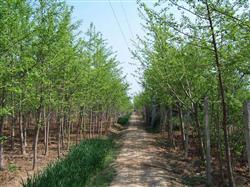 1. Mound soil around the tree base. Ginkgo has a long lifespan, but improper planting and management, especially loss of topsoil, can expose large numbers of roots on the soil surface. This is especially pronounced in ginkgo grown on sloping land; in severe cases, the exposed roots can reach a depth of more than 30 cm. Therefore, mounding soil should be done well so that the roots are buried below the soil surface, allowing them to fully perform their role in absorbing nutrients and water.
2. Loosen the tree pan. Ginkgo has a well-developed root system. When summer arrives, the soil around the main absorbing roots should be kept loose. Under normal circumstances, the area beneath the ginkgo canopy should be kept loose for a long time (in a block-planted ginkgo orchard, it should be plowed at least twice a year).
3. Fertilization. In areas where conditions permit, cake fertilizer can be applied, because ginkgo has strong adaptability to cake fertilizer. Applying it in the early stage of fruit enlargement can make the fruit grow rapidly without dropping. After the start of summer, nitrogen fertilizer should be applied with caution, depending on the plant's growth condition. Generally, a 0.3% to 0.5% urea solution is sprayed on the leaves, or a 1% to 2% urea solution is splashed on the ground.
4. Drainage and irrigation. Ginkgo likes moisture but fears waterlogging. Tests show that ginkgo growing on riverbanks and sandy soil will not suffer fatal damage when soaked in flowing water for up to 7 days, but if the soaking time exceeds 10 days, it will cause the ginkgo roots to die. Therefore, after heavy rain, especially during continuous rainy weather, or when the soil is heavy clay, drainage is poor, and the groundwater level is high, special attention should be paid to digging ditches for drainage.
Ginkgo is not tolerant of waterlogging, nor is it tolerant of excessive drought. Too low air humidity will likewise affect the growth and fruiting of ginkgo, especially during the period of rapid seed enlargement and the flower bud differentiation period, where the effect is particularly prominent. Long-term drought will not only greatly reduce the size of the current year's seeds but also affect the yield of the following year. Therefore, when the weather is continuously dry, especially in the high-temperature and dry season when water demand is high, the ginkgo orchard should be irrigated in a timely manner.