Key Cultivation and Management Techniques for Ginkgo at Different Stages
Ginkgo is an ancient tree species in China and the oldest relict plant among extant seed plants. Its leaves have great medicinal value; to date, more than 160 chemical components have been identified in ginkgo leaf extract. The main ones include flavonoids, terpenoids, phenols, alkaloids, polyisoprenes, quinic acid and others. Over the past 20 years, with research...
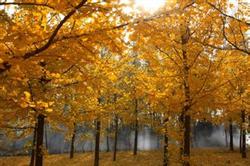 From November to the following spring in February, shaping and pruning: densely planted grafted seedlings adopt a low-trunk natural form. Seedling-grown plantations do not require shaping. Ginkgo pruning mainly involves cutting out dead branches, pest- and disease-infested branches, overly dense branches, drooping branches and crossing or overlapping branches. Shorten and cut back old branches to encourage short shoots at the cut to sprout into growing shoots, so as to develop new fruiting branch groups.
Planting: for grafted seedlings, row spacing of 4 m x 5 m; for seedling-grown trees, generally 5 m x 6 m or 7 m x 8 m. Plant 1/15-1/20 male plants as pollinizers. For long-term intercropping with crops or other cash crops, strip planting with a row spacing mostly of 8 m and a plant spacing of 4-5 m. For "four-side" planting, along roadsides, village edges, beside irrigation channels and along riverbanks, they can be planted in rows or scattered. Using ginkgo as courtyard trees in parks and factories allows both ornamental enjoyment and additional income. Planting holes 80 cm square and 60 cm deep, with 50 kg of organic fertilizer (garbage compost, barnyard manure) per hole, plus 0.5 kg of superphosphate. Stratified storage of seeds and cuttings.
Early spring fertilizer in March: for large trees (e.g. producing 50 kg of seeds), apply 100 kg of rotted barnyard manure or human waste per tree, 2 kg of urea and 2 kg of superphosphate. Fertilizing at this time promotes female flower formation, flowering and seed setting, and shoot growth. Seeds are generally sown in drills, with a drill spacing of 20-25 cm, a seed spacing of 8-10 cm, 60-70 kg of seed per mu, and about 15,000 seedlings emerge. Cuttings are taken from hardwood branches of young trees 10 years old or younger, and the base of the cuttings is soaked in clean water for 16 hours. The cutting survival rate can reach 100%. Raising seedlings by cuttings can maintain the superior traits of the mother plant and also advance fruiting. Ginkgo grafting includes large-rootstock grafting and small-seedling grafting. The rootstock for small-seedling grafting is generally 1-2 year old seedlings; the scion cut is a 1-3 year old growing shoot, with a thickness similar to the rootstock; methods may include cut grafting, cleft grafting, side grafting and bark grafting. For small rootstocks, bud grafting (chip budding) can also be used; the bud cut off may also be from a short shoot, and chip budding can advance fruiting by 2-3 years. Large-rootstock grafting can use rootstocks more than 5 years old or large non-fruiting trees. Generally, bark grafting or side bark grafting is used; the grafting site is 1.5-2 m above the rootstock trunk; the scion can be a large scion about 20 cm long bearing 3-4 year old short shoots. It can bear fruit 2-3 years after grafting, and the crown is also relatively dwarfed. Set up a support to encourage upright growth. The base of the trunk of large ginkgo trees often produces root suckers, which can be divided and planted in early spring.
Flowering and pollination in early to mid-April: ginkgo is dioecious. Male trees are generally taller, with small branching angles and narrower crowns. Male flowers are mostly catkins with extremely abundant pollen; collect at the right time and apply to female trees at full bloom, pollinating locally and evenly. Never pollinate too much, which would lead to excessive fruiting and cause alternate bearing. In some areas male trees are cut down, resulting in insufficient pollen sources, so artificial pollination needs to be strengthened.
From May to June, apply seed-swelling fertilizer, with the same amount as the early spring fertilizer. Plow under winter green manure and sow summer green manure, including Indonesian mung bean, black-eyed pea, sunn hemp and others. When the crown coverage rate is below 0.5, intercropping is still possible, such as with peanuts, soybeans, broad beans, rapeseed, ginger, daylily and others.
From July to August, weed in summer and place the cuttings as mulch around the root zone, or use chemical weeding, such as glyphosate (for perennial weeds use 265 g, add 50 kg of water, 40-50 kg per mu; or trifluralin 50 g, add 15 kg of water (for monocotyledonous weeds), spray 50-60 kg per mu.
From late September to mid-October, this is the suitable period for seed collection (harvest). The main superior cultivars include: Jia Fozhi (Taixing), Dongting Huang (around Dongting Mountain of Taihu Lake), Jinguo Foshou (Zhuji, Lin'an, Changxing), Da Meihe (Zhuji, Changxing, Lin'an, Fuyang), Yuanguo Foshou (Zhuji) and others. The suitable seed collection time is when the ginkgo seed coat turns orange-yellow and a small number fall off on their own; then they can be knocked down all at once. If harvested too early, the seeds are not fully developed, resulting not only in low yield and poor quality, but also in a low seed germination rate, or even failure to germinate. Because the seeds do not fall off easily, if bamboo poles are used to knock them down, a large number of fruiting short shoots and leaves are often damaged, affecting photosynthesis after harvest and the yield the following year. After the seeds are harvested, they can be spread on a mat or on flat ground indoors or outdoors, covered with rice straw. The spreading thickness must not exceed 40 cm, and they must not be watered or covered with soil, otherwise they easily heat up, or the seed coat rots unevenly, and the seed shell color is not pure white. When the seed coat rots, take them out, pound (wash) off the seed coat, rinse clean with water, then spread to air-dry for 2-3 hours until the shell is glossy; never sun-dry them, to prevent deterioration. The ginkgo seed coat is corrosive, so it is best to wear rubber gloves when handling. While collecting seeds, also collect fallen leaves and dry them. But do not pick leaves in summer. Fertilize after harvest, applying 100 kg of barnyard manure or garbage compost per tree. The fertilization method is mostly to dig a ring-shaped trench around the outer edge centered on the crown; when digging, be careful not to damage the main and lateral roots; the depth is 30 cm, and the width depends on the amount of fertilizer; put the fertilizer into the trench, scatter chemical fertilizer on top of the organic fertilizer, then cover with soil. Irrigating or supplying water after application gives better results. Sow winter green manure: such as yellow sweet clover, hairy vetch, large-podded common vetch, Chinese milk vetch and others.