How to Effectively Prevent and Control Tobacco Viral Disease? Methods and Techniques Explained
How to prevent and control tobacco viral disease? Viral disease is the most serious disease of tobacco in China, and it tends to become increasingly severe. Based on the current characteristic that tobacco viral disease is mainly aphid-borne viral disease, and in view of the current situation that there is still no effective control agent for tobacco viral disease, we used non-woven fabric to cover tobacco to prevent...
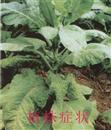
How to prevent and control tobacco viral disease?
Viral disease is the most serious disease of tobacco in China, and it tends to become increasingly severe. Based on the current characteristic that tobacco viral disease is mainly aphid-borne viral disease, and in view of the current situation that there is still no effective control agent for tobacco viral disease, we conducted experiments using non-woven fabric to cover tobacco to prevent and control aphid transmission of tobacco viral disease, and achieved good results. The summary is as follows.
I. Method of Use
After the tobacco seedlings are transplanted, promptly cover the tobacco seedlings with non-woven fabric of 10-13 g/sq m and a width of 1.0-1.5 m, and uncover the non-woven fabric after the peak period of aphid migration has passed.
II. Disease Prevention Principle
Tobacco viral disease is mainly aphid-borne viral disease. Covering the tobacco plants on the ridges with non-woven fabric immediately after tobacco transplantation can effectively block winged aphids from migrating onto the tobacco, prevent aphids from transmitting tobacco viral disease while feeding on tobacco leaves, thereby effectively reducing the occurrence of aphid-borne viral disease and achieving the effect of lessening the harm of viral disease.
III. Disease Prevention Effect
Covering with non-woven fabric has a significant effect on preventing and controlling aphid-borne tobacco viral disease. The incidence rate and disease index of viral disease in tobacco plants treated with non-woven fabric covering were both significantly lower than those of the control. About 10 d after uncovering the non-woven fabric, the control efficacy was above 50%. As time passed after uncovering the non-woven fabric, the incidence rate and disease index of viral disease in the tobacco plants treated with non-woven fabric increased to varying degrees, and the relative control efficacy of the non-woven fabric also weakened somewhat. This is the result of aphids migrating onto the tobacco plants to feed and transmit the virus after the non-woven fabric is uncovered. This problem is inevitable, but because the tobacco plants have mostly entered the vigorous growth stage when the non-woven fabric is uncovered, the impact caused by the virus has already noticeably weakened. At the same time, from this point of view, the period of non-woven fabric covering should be extended as much as possible.
At the same time, non-woven fabric has the same effects as plastic film: raising ground temperature and reducing water evaporation. Because the tobacco plants are under the non-woven fabric, it can also play a significant role in preventing frost damage and preventing early flowering, especially in areas where transplantation is earlier.
IV. Yield and Value Increase Effects
Using non-woven fabric covering to prevent and control tobacco viral disease increased the average yield per 667 sq m of tobacco field by 0.9-15.3 kg, with an increase range of 0.63%-12.29%; the output value per 667 sq m of tobacco field increased by 9.6-132.5 yuan, with an increase range of 0.74%-14.59%; the proportion of high-grade tobacco and the average price also increased to varying degrees.
V. Effects on Tobacco Growth and Quality
Chemical analysis and evaluation of tobacco leaves that had been covered with non-woven fabric showed that there was no consistent trend of change in any index between the treatment and the control, and no obvious difference, indicating that covering with non-woven fabric has no adverse effect on the internal quality of tobacco leaves.
In application, due to reasons such as the relatively narrow non-woven fabric used and the covering technique, tobacco plants may develop certain deformities such as shrinking and twisting while growing under the non-woven fabric, but they recover 5-7 d after the non-woven fabric is removed. Apart from this, non-woven fabric has no adverse effect on tobacco plant growth and agronomic traits.
VI. Precautions
1. Tobacco plants generally need to be covered with non-woven fabric for about 30 d. During use, the covering time can be appropriately extended according to the size of the tobacco plants and the specific situation of the peak period of aphid migration, so that the aphid-avoiding and disease-preventing effect of the non-woven fabric will be better. Starting 5-7 d before uncovering the non-woven fabric, uncover a portion of the non-woven fabric each day until it is completely removed. After removing the non-woven fabric, remove the bottom leaves and earth up, and strengthen field management.
2. In order to reduce the number of agricultural operations such as uncovering the non-woven fabric for weeding and pest control during the covering period, apply 40% phoxim or trichlorfon as poisoned bait at transplantation to prevent underground pests, and spray the tobacco plant leaves once with 90% methomyl wettable powder 3000-fold solution before covering with non-woven fabric to control pests.
3. The earlier the non-woven fabric is covered after transplantation and the later it is uncovered, the lower the incidence rate of viral disease in tobacco plants and the more significant the disease-preventing effect of the non-woven fabric. It is best to cover promptly after transplanting is completed, at least on the day of transplantation, to reduce the chance of virus-carrying aphids migrating and transmitting the virus before the non-woven fabric is covered.
4. If the non-woven fabric is removed all at once, tobacco is very prone to symptoms similar to weather fleck. Analysis of the cause shows that it is mainly due to the excessive difference in temperature and humidity inside and outside the non-woven fabric, and tobacco being unable to adapt to this change after the non-woven fabric is removed; it was also found that if the non-woven fabric is gradually uncovered before removal (over 5-7 d) to reduce the sudden changes in temperature and humidity caused by removing the non-woven fabric, the problem can be avoided.
5. The wider the non-woven fabric, the longer the tobacco plants are protected under the non-woven fabric, the higher the disease-preventing effect of the non-woven fabric, and the tobacco plants will not suffer severe shrinking and deformation from squeezing. Use wider (1.50 m) non-woven fabric, improve the covering technique, combine with local climate conditions, accurately grasp the time to uncover the non-woven fabric, and gradually remove the non-woven fabric after the peak period of aphid migration as much as possible. Under the condition of not scalding the leaves, the later the non-woven fabric is uncovered, the lower the incidence rate of viral disease and the higher the disease-preventing effect of the non-woven fabric.
6. The cost of using non-woven fabric for a single use is relatively high. Non-woven fabric is made from polypropylene (PP) pellets as raw material, produced by a continuous one-step process of high-temperature melting, spinning, web laying, and hot-pressing and winding. It has high toughness, good air permeability, strong abrasion resistance, moderate softness and hardness, uniform thickness, acid and alkali resistance, is non-toxic, not prone to insect damage, and easy to wash. Used non-woven fabric can continue to be used after washing. If used properly and protected with care, it can be used continuously for at least more than 2 years, thus greatly reducing the cost of use and improving economic benefits.
Click to get more tobacco cultivation techniques
Click to get more flower cultivation techniques