What are the control methods for tobacco mosaic virus disease?
How to control tobacco mosaic virus disease? Tobacco mosaic virus disease occurs commonly in all tobacco-growing areas of our province and is one of the three major tobacco diseases. When it occurs in seedlings or in the early field stage, it can reduce yield by 30%, and economic losses can reach 50%-70%; when it occurs after topping, it has little effect on yield but a relatively large effect on quality. The disease is caused by multiple viruses...
How to control tobacco mosaic virus disease?
Tobacco mosaic virus disease occurs commonly in all tobacco-growing areas of our province and is one of the three major tobacco diseases. When it occurs in seedlings or in the early field stage, it can reduce yield by 30%, and economic losses can reach 50%-70%; when it occurs after topping, it has little effect on yield but a relatively large effect on quality. The disease is caused by multiple viruses, and in production the main types are common mosaic disease and cucumber mosaic disease.
I. Symptoms
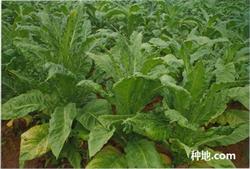
1. Common mosaic disease: after infection by the virus, the young leaves are affected first, the mesophyll along the veins turns yellow, and vein clearing appears. Then the dark or light areas gradually expand, forming alternating yellow and green mottling (mosaic); in severe cases, the leaves become uneven in thickness, forming blister-like spots, the leaf margins curl toward the underside, and the leaves become wrinkled and distorted, deformed, sometimes notched or strap-shaped. When the disease occurs early, the plants are severely stunted, with shortened internodes, poor growth, and no leaf expansion.
2. Cucumber mosaic disease: after infection by the virus, the veins are transparent at the early stage of disease, then become mosaic, the leaves become narrower and distorted, the surface hairs fall off, and the leaves lose their luster. Some diseased leaves often have margins curling upward, some develop yellow-green or dark green blister-like spots, and some have brown necrosis on the lateral veins, or dark brown lightning-like necrosis along the veins. The plants are obviously stunted, the root system develops poorly, and the upper leaves often show "mosaic scorch spots."
II. Disease development pattern
1. Common mosaic disease: this virus can survive for a long time in diseased residues. It is mainly mixed in diseased residues such as soil, fertilizer, and seeds, as well as in some virus-carrying hosts such as tomato, rapeseed, mustard, or perennial weeds. It spreads by sap contact, that is, it invades the host through microscopic wounds from mechanical friction, and is transmitted through vectors such as people, wind, and insects: it is susceptible from the seedbed stage to the vigorous growth stage, and resistance increases after topping. A temperature of 18-30°C is most suitable for disease development. Tobacco fields near villages and towns, flue-curing barns, purchasing stations, roadsides, vegetable plots, and fields previously planted to tobacco or vegetables have more severe disease; after transplanting, poor fertilizer and water management, thin, compacted, heavy-textured tobacco field soil, poor drainage, and fields where tobacco plants grow poorly have severe disease.
2. Cucumber mosaic disease: under natural conditions, this virus cannot survive in dry tobacco leaves. It mainly overwinters in winter vegetables, vegetable seed plants, or perennial weeds. In the spring of the following year, it is mainly transmitted and causes damage by the tobacco aphid. Therefore, in tobacco fields with more weeds and near vegetable plots such as cucumber and tomato, when there is high temperature and drought and a large aphid population, the disease is severe. When too much nitrogen fertilizer is applied, and when the soil is poor, compacted, and heavy-textured, the disease is also severe.
III. Control techniques
1. Select high-yielding, disease-tolerant varieties. Such as Keke 176, K394, g346, K326, and the NC series.
2. Select the seedbed well and practice rational crop rotation. The seedbed should be chosen in a field with good soil fertility, sheltered and sunny, convenient drainage and irrigation, previously planted to rice, and far from vegetable plots, curing barns, and drying sheds. At the same time, paddy-upland rotation of tobacco and rice should be implemented in the field, which can greatly reduce pathogens and lessen damage.
3. Soil disinfection. Combine this with winter plowing and sun-bleaching. Seedbeds can generally be disinfected by burning, and in severely affected areas methyl bromide fumigation can be used for disinfection; at the same time, good nutrient soil should be selected. In the field, 60 kg of lime per mu can be broadcast for disinfection. All of these can eliminate pathogens, pests, and weeds in the soil.
4. Strengthen cultivation management. Sow and transplant early at the proper time, use single-ridge high-bed cultivation, and cultivate disease-free strong seedlings; apply fertilizer rationally, manage water scientifically, promote early growth and rapid development, and enhance the disease resistance of the plants.
5. Clean the field and carry out timely intertillage and weeding. Promptly remove bottom leaves, rotten leaves, diseased leaves, and small leaves in the field, and eradicate weeds around the field and burn them in a centralized manner; it is forbidden to use farmyard manure from virus-carrying tobacco plant residues, tobacco scraps, tobacco stalk ash, or garbage soil from around houses as nutrient soil or tobacco field fertilizer. At the same time, pay attention to field operations, proceeding in the order of healthy plants first and diseased plants afterward, and avoid mechanical injury to reduce human contact transmission. After the tobacco leaf harvest, all tobacco fields should be thoroughly cleaned, and tobacco stalks, diseased plant residues, and so on should be collected and burned to eliminate pathogens.
6. Control aphids in a timely manner and cut off the source of the virus. You can choose 40% omethoate
1000-1500 times solution or 20% fenvalerate 3000-4000 times solution, 50% pirimicarb 800-1500 times solution for spraying. When the temperature is high, the weather is dry, and the number of aphids is large, spray continuously to control them. At the same time, silver plastic film cultivation can also be promoted; silver film has an obvious effect on repelling aphids, which helps avoid the susceptible stage in the month after transplanting.
7. Chemical control. Spray once each at the large cross stage and seedling stage in the seedbed and at the seedling recovery stage and rosette stage in the field. The chemicals can be 20% virusling B 500 times solution or 1.5% zhibingling 800-1200 times solution, 1% virus resistance inducer, or 83-1 resistance enhancer 100 times solution for spraying.
Click to get more tobacco cultivation techniques
Click to get more flower cultivation techniques