What are the control methods for cherry blossom brown spot disease?
How do you control cherry blossom brown spot disease? Please give a detailed introduction. Cherry blossom brown spot disease, also known as cherry blossom brown spot shot hole disease, is an important disease of cherry blossom leaves. It was reported long ago in Japan and other countries. It occurs commonly on cherry blossoms in all regions of China, including Nanjing, Taiyuan, Tianjin, Shanghai, Chengdu, Xi'an, Suzhou, Jinan, Changsha, Lianyungang...
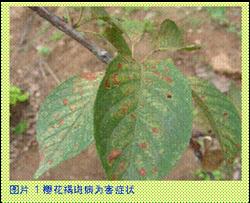
How do you control cherry blossom brown spot disease? Please give a detailed introduction.
Cherry blossom brown spot disease, also known as cherry blossom brown spot shot hole disease, is an important disease of cherry blossom leaves. It was reported long ago in Japan and other countries. It occurs commonly on cherry blossoms in all regions of China, including Nanjing, Taiyuan, Tianjin, Shanghai, Chengdu, Xi'an, Suzhou, Jinan, Changsha, Lianyungang, Wuhan, Taiwan, China and other provinces and cities, among which Wuhan, Chengdu, Tianjin and other cities have severe outbreaks. When infected cherry blossom leaves develop shot holes, it not only affects their ornamental value, but also causes the plants to defoliate early, affecting their growth and development. The disease also attacks ornamental stone-fruit trees such as cherry, Japanese apricot (Prunus mume) and peach.
Symptoms: Brown spot disease mainly harms cherry blossom leaves, and sometimes also infects young shoots. In the early stage of the disease, spots the size of a needle tip appear on infected leaf surfaces; the spots are purplish brown and gradually enlarge to form round or nearly round patches. The spots range from brown to grayish white, with purplish brown margins, and can reach 5mm in diameter. In the later stage of the disease, grayish brown mold-like growth appears on the spots, namely the pathogen's conidia and conidiophores. Finally, the center of the spot dries up and falls out, forming a shot-hole appearance with neat edges. When the disease is severe, the leaves are covered with shot holes, causing defoliation.
Pathogen: The pathogen is Cercospora circumscissa Sacc., a fungus belonging to the Deuteromycotina, Hyphomycetes, Hyphomycetales, and the genus Cercospora. Its sexual stage is Mycosphaerella cerasella Aderh., a fungus belonging to the Ascomycotina, Loculoascomycetes, Dothideales, and the genus Mycosphaerella. However, the sexual stage is rarely seen in China.
Disease pattern: The pathogen overwinters as mycelium in diseased parts of infected plant twigs, or as perithecia on diseased fallen leaves. In the spring of the following year, conidia are produced, and the spores spread by wind and rain, invading the host through stomata. The disease usually starts first on the lower part of the canopy and gradually spreads to the upper part of the canopy. In years with strong winds and abundant rain, the disease is severe; when plants are planted too densely, the disease is likely to occur; in poor, thin soil, the disease is severe; and in summers with drought, when tree vigor is weakened, the disease is also severe. Tree species such as Japanese cherry and Japanese late cherry have weak disease resistance and suffer severe outbreaks.
Control: (1) Reduce sources of infection: In winter, in conjunction with pruning, clear away dead branches and fallen leaves, cut off diseased branches, and destroy them in a centralized manner. (2) Strengthen management: apply more organic fertilizer and phosphorus and potassium fertilizers, and irrigate promptly, especially in dry seasons, to improve plant disease resistance and control the occurrence of the disease. Match trees to suitable sites and avoid planting cherry blossoms in wind gaps. (3) Chemical control: Before cherry blossoms sprout, spray Bordeaux mixture at 1:1:160, or lime sulfur mixture at 2-3 degrees Baumé to prevent infection. During the disease period, spray 65% zineb wettable powder at 500-800 times dilution, or 70% thiophanate-methyl wettable powder at 800-1000 times dilution. Spray once every 10-15 days, for 2-3 sprays.
Click to get more cherry blossom cultivation techniques
Click to get more flower cultivation techniques