How to use pesticides correctly in tobacco cultivation?
How are pesticides used in tobacco cultivation? Please provide an introduction to the methods. The following methods can be referenced for using pesticides in tobacco cultivation: 1. Adhere to the "unified" principle. First, unified pesticide management, that is, the provincial (bureau) company comprehensively considers factors such as the safety, effectiveness, and price of tobacco pesticides to form recommendations, and the prefectural (...
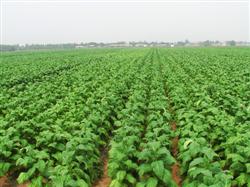
How are pesticides used in tobacco cultivation? Please provide an introduction to the methods
The following methods can be referenced for using pesticides in tobacco cultivation:
1. Adhere to the "unified" principle. First, unified pesticide management, that is, the provincial (bureau) company comprehensively considers factors such as the safety, effectiveness, and price of tobacco pesticides to form recommendations, and the prefectural (municipal) company uniformly approves and purchases them. Each county-level company, based on the characteristics of pest and disease occurrence in the local tobacco area, proposes local procurement plans according to the list of varieties recommended for use by the provincial company. The branch company strictly approves and conducts unified procurement, blocking the use of banned pesticides on tobacco from the source, so that the management of tobacco pesticide use is substantially standardized. Second, unified integrated control. Each tobacco area, based on the characteristics of the occurrence of local major pests and diseases, unifies the timing and dosage of pesticide application, and organizes plant protection teams to carry out centralized unified prevention and control, improving the effectiveness of large-area control.
2. Adhere to the "safety" principle. Tobacco is a leaf crop. When selecting pesticides, factors such as the toxicity and residual amount of the pesticide must be considered. Generally, pesticides with high efficiency, low toxicity, and low residues are selected.
3. Adhere to the "symptom-specific" principle. Different types of pesticides have different scopes and targets of control. Therefore, pesticides must be used according to the specific symptoms. To avoid unnecessary losses and waste caused by blind pesticide use, before applying pesticides, the type of pest or disease must be correctly diagnosed, and only then can the right pesticide be applied, fully giving play to the control effect of the agent.
4. Adhere to the "effective" principle. Pesticide use is not a matter of the more the better. Arbitrarily increasing the dosage and frequency of pesticide use not only increases costs but also easily causes pesticide damage to tobacco and aggravates pollution. Under the action of high concentration and high dosage, the resistance of pests and pathogens increases, bringing potential danger to future control. When preparing pesticides, the concentration of the agent must be accurate. Strictly follow the requirements on the label, dilute the pesticide with water to an appropriate concentration, make the agent disperse evenly in the water, and fully dissolve. If the concentration is too high, it not only causes waste but also causes pesticide damage; if too low, it cannot achieve the control effect.
5. Adhere to the "timeliness" principle. Strictly grasp the timing and frequency of pesticide application. If the pesticide is applied too early, it cannot play a role in preventing pests and diseases and instead causes waste; if too late, the occurrence of pests and diseases enters the peak period and resistance increases. Therefore, in order to achieve the goal of using less pesticide with good results, pesticide must be applied at the appropriate time according to the patterns of pest and disease occurrence, treating early and treating small, and controlling damage in time. The number of sprayings is mainly determined according to the residual effective period of the agent and climatic conditions. For most fungicides, generally spray once every 10-15 days, for 2-3 consecutive sprayings. Spraying should be done in windless weather, and if it rains after spraying, it should be re-sprayed in time. Pesticides that easily decompose under strong light should be applied on cloudy days or in the evening as much as possible; do not use any pesticides on rainy days or before rain.
6. Adhere to the "appropriate" principle. The application method must be appropriate. The application method should be selected according to the patterns of pests and diseases, the damaged part, and the pesticide instructions. For soil-borne diseases, the root-drenching method can be used; for wind-borne diseases or aboveground pests, spray control can be used.
7. Adhere to the "in place" principle. Be sure to apply the pesticide to the correct location. During spraying, there are often two problems: first, spraying from head to foot without distinguishing the cause or focus; second, spraying only the front of the leaves while ignoring the back of the leaves. Therefore, when spraying, the correct spraying location must be determined according to the activity characteristics of pests and diseases and the stage of disease development.
8. Adhere to the "cautious" principle. In pesticide application operations, selecting the wrong pesticide, improper application methods, excessive dosage, too high concentration, too many applications, or too short an interval can all easily cause pesticide damage, causing abnormal tobacco plant physiology or even death. For mild pesticide damage, quick-acting fertilizer, irrigation, or washing can be applied to accelerate tobacco plant growth, and it can be alleviated in a short time; severe cases are not easy to remedy. Therefore, pesticide use must be cautious. In addition, different types of pesticides should be applied alternately. If a single pesticide is used for a long time, it will lead to resistance in pests and diseases, thereby reducing the control effect.
9. Adhere to the "guidance" principle. When preparing pesticides and mixing pesticides, be sure to proceed under the guidance of a technician. In particular, when mixing pesticides, be sure to analyze and understand their respective properties and determine whether they can be mixed. Only reasonable mixing can achieve both multiple control and synergistic effects.
10. Adhere to the "green" principle. All kinds of pesticides are toxic to humans and livestock. During application operations, safety protection work must be done well to ensure safe application. Do not apply pesticides with high residues and serious environmental pollution. Discarded pesticide packaging must be uniformly collected and treated. Never throw it randomly in fields and at field edges, so as to avoid causing pollution.
Click to get more tobacco cultivation techniques
Click to get more flower cultivation techniques