How to control leaf spot disease in gardenia cultivation?
What harm does gardenia leaf spot disease cause? How to control gardenia leaf spot disease? We ask netizens to help introduce it. Zhongdiwang has compiled the harm and control methods of gardenia leaf spot disease, listed below for netizens' reference. Harm of gardenia leaf spot disease: Gardenia leaf spot disease mainly occurs on leaves,...
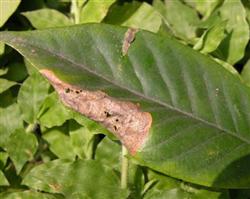 What harm does gardenia leaf spot disease cause? How to control gardenia leaf spot disease? We ask netizens to help introduce it
Zhongdiwang has compiled the harm and control methods of gardenia leaf spot disease, listed below for netizens' reference.
Harm of gardenia leaf spot disease:
Gardenia leaf spot diseasemainly occurs on leaves. The pathogen mostly invades from the leaf tip or leaf margin. Lower stems and leaves are affected first. On infected leaves, round or nearly round spots appear initially, light brown, with brown edges, with sparse concentric rings, 5mm-15mm in diameter; if they occur at the leaf margin, they are irregular in shape, brown or grayish-white in the center, with brown edges and concentric rings. After several spots merge, irregular large patches form, causing the leaves to wither; in the later stage, numerous small black dots are produced, embedded under the epidermis.
Large-leaf gardenia is more susceptible to the disease than small-leaf gardenia. The pathogen overwinters on diseased fallen leaves or diseased leaves, and in the following spring produces conidia, which spread with wind and rain. The disease is likely to occur when planting is too dense and ventilation and light transmission are poor. When potted, improper watering and poor growth make the disease more likely to occur.
Control methods for gardenia leaf spot disease:
Method 1: In autumn and winter, prune off severely diseased leaves on the tree, sweep up fallen leaves, and destroy them centrally to reduce sources of infection.
Method 2: Planting should not be too dense, and proper pruning should be carried out to facilitate ventilation and light transmission; when watering, try not to wet the leaves, and it is best to do it in the morning on a sunny day.
Method 3: Spray 70% thiophanate-methyl wettable powder at 1000 times dilution, or 25% carbendazim wettable powder at 250-300 times dilution, or 75% chlorothalonil wettable powder at 700-800 times dilution for control. Spray once every 10 days. When the disease is severe, spray 65% zineb at 600-800 times dilution, or 50% carbendazim at 1000 times dilution, to control the spread and expansion of the disease.
Click to get more gardenia cultivation techniques
Click to get more flower cultivation techniques