See how experienced growers answer the two questions: are orchids easy to grow, and can beginners grow them?
Since ancient times, scholars and refined gentlemen have loved orchids, and even today orchids remain popular. Some orchid enthusiasts have never grown an orchid before, but they don't know whether orchids are easy to grow or whether beginners can keep them alive. For these two questions, let's see what experienced growers say.
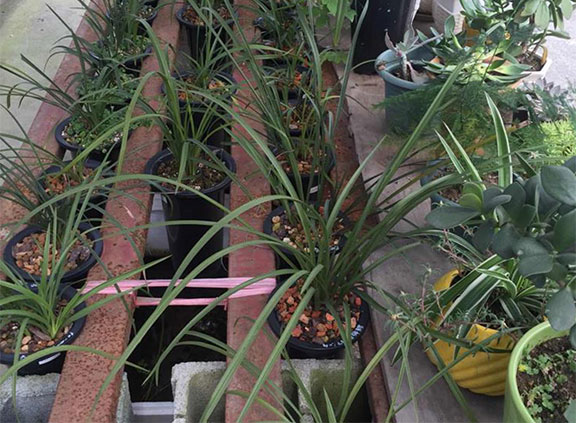
Most common varieties of orchids are not hard to grow, and for beginners, starting with ordinary orchids has many benefits - for example, ordinary orchids are cheap and good for practice. Almost every experienced grower started out as a beginner and worked their way up, and what they first grew was mostly ordinary orchids. As experience accumulates, they gradually add better varieties.
So can beginners grow them? Of course they can - and not only keep them alive, but also get them to bloom. Boldly get yourself a pot of an ordinary orchid, and below let's look at day-to-day care.
For beginners growing orchids, the medium (potting material) is the first hurdle. It is recommended to buy a ready-made product directly, and not to spend effort studying soil mixing at first. As you begin growing orchids, you will naturally learn more about potting materials later on.
Besides the potting material, let's talk about the environment. To grow a pot of orchids well, the environment is crucial. Choose the right environment and you are more than halfway to success. We must choose a well-ventilated place to grow orchids; by contrast, the light does not need to be too strong, because Chinese orchids are semi-shade plants with low light requirements. Here is a grower's description of light: "Cymbidium goeringii 2000-8000 lux, Cymbidium faberi 3000-12000 lux; if conditions allow, keep Cymbidium goeringii at 7000 lux and Cymbidium faberi at 10000 lux. Some intuitive reference data: on a very sunny day the light is 110000 lux, on a cloudy day the light is 10000 lux, in a shaded spot on a sunny day the light is 10000 lux. Growing orchids needs only one tenth of the sunlight of a sunny day."
Compared with a south-facing balcony, a north-facing balcony is more suitable for beginners.
For watering orchids, the best time is early morning. As long as you are not using mountain soil, water whenever the surface of the pot looks dry. When the temperature is below 13°C, water less; just make sure the potting material is not dry. Orchids that have just been watered should be ventilated promptly, with the leaf tips moving slightly being the ideal; it should not be too strong. In routine care, indoor and outdoor ventilation is for the purpose of air exchange.
Finally, let's talk about temperature. Our country is vast, and the suitable temperature for the orchid growing season is 22-29°C. Below 13°C and above 33°C, growth is slow. In winter it is best not to go below 5°C. In summer, not above 35°C. So in winter, keep them warm as needed, and in summer, shade them as needed.
One more point: orchids do not have a very high demand for fertilizer, so at the beginner stage you can skip fertilizing, and wait until your skills are refined before carrying out fertilizing.
There is a saying that goes like this: every experienced grower has walked over the corpses of millions of plants. What it really means is that in growing flowers, life and death are very normal, but we need to keep accumulating experience, so that we can grow flowers with ease. After all, every kind of flower has different habits.
For beginners, fuss less, ponder more, and practice diligently, and you will basically be an expert.