Detailed Explanation of Osmanthus Cultivation Techniques and Utilization Methods
Osmanthus (Osmanthus fragrans) is an evergreen small tree and a precious ornamental aromatic plant. It blooms in autumn, with a delicate fragrance that drifts far and refreshes the heart. Osmanthus can be used to extract aromatic oil and is a valuable spice. Fragrances and scented products made with pure osmanthus oil, such as osmanthus wine, osmanthus sugar, osmanthus preserves, perfume, and soap, sell well in domestic and international markets. 1...
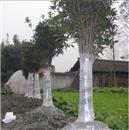
Osmanthus (Osmanthus fragrans) is an evergreen small tree and a precious ornamental aromatic plant. It blooms in autumn, with a delicate fragrance that drifts far and refreshes the heart. Osmanthus can be used to extract aromatic oil and is a valuable spice. Fragrances and scented products made with pure osmanthus oil, such as osmanthus wine, osmanthus sugar, osmanthus preserves, perfume, and soap, sell well in domestic and international markets.
1. Main varieties. There are many varieties of osmanthus, including Jingu (golden osmanthus), Yingu (silver osmanthus), Dangui (red osmanthus), Siyuegui, and Yueyuegui. Among them, Jingu has a rich fragrance and produces many flowers, with high ornamental and economic value. Sijigui has a long flowering period and blooms except in severe winter cold and intense summer heat, with the most abundant bloom in autumn; however, the tree is short and small, and the fragrance is relatively faint, so it is only suitable for garden planting and ornamental viewing.
2. Propagation methods. Osmanthus can be propagated by sowing, approach grafting, cut grafting, layering, and cuttings, generally mainly by approach grafting and cuttings. The rootstock for approach grafting is Ligustrum quihoui (small-leaf privet); after joining, it can bloom in the same year, and approach grafting is mostly carried out in summer. The cutting method can propagate large numbers of osmanthus seedlings, and the time is mostly chosen in February when the sap is about to flow. To promote rooting and prevent disease, the cuttings are sprayed with an 800-1000 times dilution of trichlorfon solution 1 month before cutting, disinfected with limewater 10-15 days before cutting, and immediately before cutting the base of the cuttings is soaked in a 10 ppm naphthaleneacetic acid solution for 8-10 hours. After cutting, water thoroughly immediately, maintain a certain humidity regularly, and a shade net can also be set up above the seedbed. Roots can form after about 2 months. Transplant once in the second year, and in the third year they can be planted out.
3. Key cultivation points. Osmanthus prefers dry conditions. Apart from paying attention to watering and moisture retention when transplanting, it generally does not need irrigation, so the soil is required to have good drainage. Usually large trees produce one flush of growth per year, while young trees produce 2-3 flushes. Fertilize once each year in June, September, and December before shoot growth or flowering. In the early stage of spring sprouting, heavy fertilizer should not be applied; pig and cattle manure, bean cake, and similar materials are good fertilizers. From May to October, timely intertillage, soil loosening, and weeding should be carried out to maintain soil moisture and prevent weeds from competing with the trees for nutrients.
Osmanthus has a well-developed root system, with many fibrous roots and strong adaptability. It is easy to transplant and survive. Generally, trees under 20 years old are easy to transplant and survive in both spring and autumn.
4. Harvesting and processing. When it blooms in September and October, harvest the osmanthus, mix it with alum (3.5%) and press it firmly. After a few days, press and squeeze out the juice to keep the original weight of the flowers, then add the same amount of sugar, mix well, and pack it into jars. It can be used as raw material for osmanthus buns, osmanthus tangyuan, osmanthus wine, and osmanthus preserves. The collected osmanthus can also be extracted using petroleum ether as a solvent; the extract is clarified, filtered, and concentrated under normal pressure and low pressure, and finally de-etherified to make osmanthus concrete. The yield of osmanthus concrete is about 0.17%. By repeatedly extracting the concrete with ethanol, pure osmanthus oil can be made, which is a natural precious spice. The osmanthus residue after extraction, with an appropriate amount of osmanthus flavoring and white sugar added, becomes osmanthus sugar, which can be used to prepare ordinary foods.