How to manage fertilization for ginkgo? Mastering these key points is enough
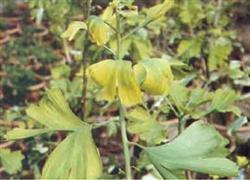
Ginkgo physiological yellowing disease is caused by the lack of a certain trace element in the soil. This disease generally begins in mid-to-late June, and from mid-July to late August the condition expands rapidly, the leaf color loses its green, gradually turns grayish brown, and appears withered and dead. Any ginkgo tree harmed by this disease is affected not only in that year's yield...
 I. The main nutrient elements that ginkgo needs to absorb
At different stages of growth and development, ginkgo needs to absorb different nutrients, among which the three elements N, P, and K account for about 45% of the dry weight of the tree body. Although trace elements account for a small proportion, they are also indispensable.
II. Fertilizer categories and their use
1. Application of base fertilizer. Base fertilizer mainly uses organic fertilizer. Organic fertilizer has complete nutrients and can also improve soil structure, such as barnyard manure, compost, and chicken, cattle, and other manures, generally applied at 2000-3000 kg per mu, with the time generally suitable in September-October. Applying it early after autumn, when the soil temperature is relatively high, is beneficial to the healing of root wounds and can promote new root growth. It enhances the root system's absorption capacity in early spring of the second year.
2. Timely topdressing. Topdressing is also called supplementary fertilizer. It is beneficial to strong trees, high yield, and high quality in the current year, and supplements nutrients for flowering and fruiting in the second year. The characteristics of topdressing for ginkgo trees are: first, the type and amount of topdressing are not restricted; second, the new shoot growth period of ginkgo is short, and increasing the amount of branches and leaves is its main contradiction. Therefore, the timing of topdressing is relatively strict. The principle of topdressing is to focus on the early growth stage, with more than 70% of the fertilizer applied in the early stage, and appropriate supplementation in the middle and late stages. Third, ginkgo has multiple management purposes, such as leaf harvesting, fruit harvesting, timber production, and ornamental landscaping. Therefore, the timing, amount, and method of topdressing vary greatly.
Generally speaking, it is best to fertilize three times a year. In spring, in early-to-mid March, at the initial stage of new root growth, the root system's absorption capacity is weak, while leaf expansion and flowering consume a lot of nutrients, so mainly nitrogen fertilizer is applied, with an appropriate addition of phosphorus fertilizer; in summer, in early-to-mid May. The flowering period has just ended, the fruit is growing rapidly, and it is also the peak growth period for new shoots, consuming a lot of nutrients. At this time, quick-acting nitrogen fertilizer is still the main choice, combined with a small amount of phosphorus fertilizer; in autumn, around mid-to-late July, it is exactly the seed stone-hardening period. To improve seed quality and yield, a mixed application of the three elements nitrogen, phosphorus, and potassium is needed.
III. Precautions during fertilization
1. Scientifically determine the amount of fertilizer. Because there are many factors affecting the amount of fertilizer, such as tree vigor, yield, tree age, variety, soil, climate, and management level. Therefore, multiple factors must be considered comprehensively to propose a reasonable fertilization plan. At present, the scientific fertilization amount is determined according to the nutrient status of the tree body. The application of leaf nutrient analysis is a reliable basis for determining the scientific fertilization amount, using the nutritional status of the leaves to judge the nutritional level of the tree body. However, most fertilization is carried out based on practical experience.
2. The best time for foliar topdressing is in the evening. Around evening, the root system's absorption and utilization rate is high. In addition, it is best to choose to carry it out after rain.
3. During the topdressing process, pay attention to some incompatibilities. For example, acidic fertilizers can only be used with acidic pesticides, and cannot be used with alkaline pesticides.