A Detailed Explanation of the Infection Cycle of Orchid Viral Diseases
Viruses are intracellular parasites. They have neither the ability to break down plant cell walls, nor can they, like other viable parasites, carry on a saprophytic existence on dead cell tissue as a transitional phase of parasitism. Therefore, when a virus invades an orchid plant, a slight wound is required. Such a wound can cause...
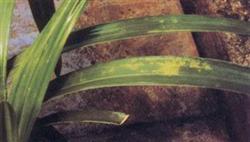
Viruses are intracellular parasites. They have neither the ability to break down plant cell walls, nor can they, like other viable parasites, carry on a saprophytic existence on dead cell tissue as a transitional phase of parasitism. Therefore, when a virus invades an orchid plant, a slight wound is required. Such a wound can break down the cell wall without causing the death of cells on a large scale. In this way, the virus can immediately come into direct contact with living cells and further multiply and spread within the cells. During orchid cultivation, such slight wounds may come from abrasions when diseased and healthy plants touch each other, or from punctures by insects, especially those with piercing-sucking mouthparts, or from artificial pruning and mechanical damage. After the virus enters a living cell, it can only spread passively by relying on the host's transport mechanisms. When it is in the parenchyma tissue, it spreads very slowly from one cell to another. But once it reaches the phloem, it begins to move rapidly along with the plant's fluid flow.
From virus invasion to the onset of disease in an orchid plant, the time that elapses is generally rather long. According to estimates, the incubation period of Cymbidium mosaic virus infecting its host is about 30 days in summer at 30°C, and about 20 days in winter at 15°C; its survival period in vitro is 60-70 days, and its thermal death point is 60-80°C. The incubation period of Odontoglossum ringspot virus infecting its host is about one week, its survival period in vitro exceeds 763 days, and its thermal death point is greater than 93°C.
At present, there are no reports that airflow, water flow and rainwater, the main driving forces for the spread of fungi and bacteria, play a role in the spread of viruses. Most are spread by insects as vectors. Occasionally they can also be spread by contact and friction between healthy and diseased plants.
The insects that transmit viruses are mainly species with piercing-sucking mouthparts, among which aphids and leafhoppers are especially important. Scale insects are also suspect. Some believe that nematodes can also transmit orchid viruses. Inside an insect's body, a virus can remain viable for a long time; as long as the insect feeds once on an infected plant, it can transmit the virus over the long term, or even for its entire life. The virus can continuously multiply within the insect host, and even be passed on to its offspring as the insect reproduces.
Viruses are mainly concentrated in the insect's salivary glands; when the insect feeds, they enter the plant's body along with the saliva and infect the orchid plant. During cultivation, because of division, pruning of roots and leaves, the pruning tools carry the virus and spread it to one another, which is also a main route for the occurrence of orchid viral diseases. There is no doubt that the main sources of viral diseases are living host plants and insects. Once an orchid plant is infected with a virus, the virus will survive for a long time within the plant's body, unless the orchid plant dies or is destroyed by humans.