What are the remedies for paclobutrazol phytotoxicity in orchids?
Orchids have been one of the most famous ornamental flowers in our country since ancient times. Their graceful and elegant leaves, understated and pure flowers, and distant, exquisite fragrance make them a treasure among flowers. There are about 500 genera and more than 10,000 species of orchids in our country. The orchids commonly appreciated are terrestrial orchid varieties in the genus Cymbidium. According to their flowering period, they can be roughly...
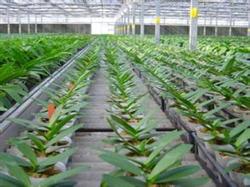 Paclobutrazol is effective for domesticating wild orchids and optimizing orchid plant shape. However, some people have caused orchid phytotoxicity due to improper use of paclobutrazol. The remedial measures are introduced here.
Paclobutrazol is a plant retardant. Its effect is to delay vertical elongation of plants, enhance lateral growth, promote an increase in tillering, thicken stems, and make plants dwarfed and compact. Its physiological effects are to increase the content of chlorophyll, proteins, and nucleic acids, reduce the content of gibberellins and indoleacetic acid in the plant, and increase ethylene release. Paclobutrazol is mainly absorbed through the root system, with very little absorbed by the leaves.
The concentration of paclobutrazol used on grass-family plants is 100-300 PPM, with a dosage of 30-40 grams per mu. Exceeding this concentration often causes phytotoxicity. The concentration generally used to control excessive growth is 100 PPM. When used on orchids, the harm from excessive dosage is of course serious. For controlling excessive plant growth, paclobutrazol is generally used only 1-2 times, with an interval of 7-10 days. If it is repeatedly used multiple times on the same plant, it is of course very dangerous.
Originally, when paclobutrazol is used within the normal range, for crops such as rice, its retarding effect can be lifted on its own once they develop to a certain extent, but in woody and other crops, the purpose of growth control is achieved through lignification and cutinization of stems and leaves. When used on orchids, it can control excessive leaf length and make them dwarf and sturdy, but if the dosage is too high, the orchid plants stop growing or the leaves become disfigured, turning it into harm instead. The remedial measures for phytotoxicity in orchid plants can be carried out from the following aspects.