Diagnosis and Treatment of Yellow Leaf Disease in Peonies: A Detailed Guide
During the cultivation and management of peonies, especially in late spring and early summer each year, the leaves often turn yellow or even dry and scorched. There are many reasons why peony leaves turn yellow, and the cause must first be identified so that the right remedy can be applied. Fertilizer-induced yellowing is leaf yellowing caused by over-fertilization. Peonies generally use organic fertilizers such as chicken manure, soybean cake, and oil residue as topdressing...
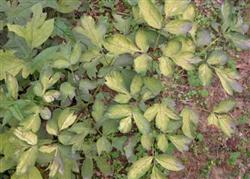
During the cultivation and management of peonies, especially in late spring and early summer each year, the leaves often turn yellow or even dry and scorched. There are many reasons why peony leaves turn yellow, and the cause must first be identified so that the right remedy can be applied.
Fertilizer-induced yellowing is leaf yellowing caused by over-fertilization. Peonies generally use organic fertilizers such as chicken manure, soybean cake, and oil residue as topdressing or base fertilizer. When excessive fertilizer is applied and the soil is also short of water, fertilizer damage occurs. The main symptoms are new leaves that are thick and glossy but with a rough, uneven surface that does not spread out smoothly, while old leaves gradually turn yellow and drop. At this point, watering appropriately will dilute the nutrients.
Drought-induced yellowing: Peonies have fleshy roots and generally should be watered sparingly, but excessive drought can cause peony leaves to turn yellow from lack of water, with symptoms especially obvious in seedlings. The symptoms are that the growing tip and new leaves remain normal, while the lower leaves and inner-canopy leaves turn dry and yellow and drop first. At this point, give one thorough watering in the morning or evening.
Alkaline-induced yellowing: If peonies grow in soil with relatively high alkalinity, the leaves will also lose their green color and turn yellow. The symptoms begin between the veins of new leaves, while the veins, especially the main veins, remain green, making the alternating yellow and green pattern very obvious. As the degree of chlorosis worsens, the veins gradually lose their green color, and then the entire leaf turns white, the leaf margins scorch, and the leaves drop. In severe cases, the branch tips die back, leading to the death of the entire plant. For this "chlorosis" phenomenon, a 0.2% to 0.3% ferrous sulfate solution can be sprayed on the foliage 3 to 5 times. The concentration should not be too high, and it should be mixed and used immediately.
Starvation-induced yellowing, that is, yellow leaves caused by a deficiency of some element, often manifests as yellowing occurring over a large area in a certain plot.
When peonies are deficient in phosphorus, the plants grow slowly and remain short and stunted, thin and weak, with small leaves that drop easily, and the color is generally dark green or grayish green and lacking gloss. It starts from the old leaves at the base of the stem and gradually spreads upward.
When potassium is deficient, the old leaves and leaf margins usually turn yellow, then brown, scorched as if burned, and brown spots or patches appear on the leaves, but the middle of the leaf, the veins, and the areas near the veins remain green. As potassium deficiency worsens, the entire leaf turns reddish brown or dry and withered, necroses and drops, and the root system is short and sparse and prone to early decline, rotting in severe cases.
Deficiency of trace elements such as magnesium, manganese, boron, and copper can also cause symptoms such as leaf yellowing, necrosis, and withered leaf tips. In combination with pesticide spraying, potassium dihydrogen phosphate and micronutrient fertilizers should be sprayed after the flowering period to supplement nutrition. When peonies develop disease, the leaves can also show mottling with uneven color depth and alternating yellow and green, namely "mosaic leaf." This is the most common symptom of viral disease and must be distinguished.
Insect-induced yellowing: Peonies are often harmed by underground pests such as white grubs and mole crickets as well as nematodes, causing the leaves to lose green and turn earth-yellow, or even dry and scorch. The main feature of this symptom is that the leaves of a single plant or several plants in a certain spot turn yellow and scorch. When this symptom is found, inspect promptly and quickly apply pesticide to control the underground pests.
Rot-induced yellowing: Peony cultivation sites are often continuous cropping or repeated cropping land of many years, which contains many pathogens, especially the fungus Fusarium, causing rot of the peony roots and stem base. As a result, the ability to absorb water and nutrients weakens, causing the lower leaves to gradually turn yellow and drop or scorch from the bottom upward, while the color of the new shoot tips and new leaves of the peony remains normal. This is the yellow-leaf symptom shown when peony roots rot during drought.
Rotting after summer rain differs from this manifestation. The symptoms of rotting after rain are pale yellow young leaves, while old leaves also gradually turn dark yellow. At this point, in combination with hoeing, apply a fungicide to control root rot or drench the roots, or in combination with autumn planting of seedlings, soak the roots and apply medicine in the planting holes.
In the daily cultivation and management of peonies, once leaves are found to turn yellow and scorch, observe carefully, determine the cause, and promptly give reasonable treatment.