Detailed Explanation of Key Cultivation Techniques for Medicinal Peony
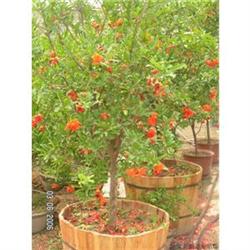
Peony pomegranate is a rare and precious variety among pomegranate cultivars in China. It is called peony pomegranate because its flowers are as large as peonies. Peony pomegranate is a new tree species formed by combining the advantages of peonies and pomegranates. It has edible, ornamental and landscaping value, and can be planted both in open fields and cultivated by families and at tourist resorts. Its flowers...
 Peonies are mainly cultivated in the middle and lower reaches of the Yellow River, and their root bark is used as medicine.
Growth habits: Peonies prefer a warm, humid environment with plenty of sunlight. They fear intense heat, resist cold and drought, dislike waterlogging, and cannot tolerate continuous cropping.
Cultivation techniques: Site selection and land preparation: Choose sandy loam soil with plenty of sunlight, fertile soil, good drainage and a relatively low groundwater table for planting. Clay soil, saline-alkali land and low-lying land are all unsuitable. Intercropping with legumes such as soybean is preferable. After the site is selected, plow deeply to 25-30 cm; where the soil layer is deep, plowing to 60 cm is possible. Propagation methods: There are many peony varieties, and because varieties and cultivation purposes differ, propagation methods also differ. There are two types: sexual (seed) propagation and asexual (division, grafting, cutting) propagation. Seed propagation is carried out in late July and early August. When the fruit turns dark yellow, pick it (do not harvest too late) and place it in a cool, damp place indoors to dry (sun-dried seeds do not germinate easily), allowing the seeds to after-ripen inside the shell. Turn them frequently to prevent overheating. Once most fruits have split and the seeds have come out, they can be sown or stored in damp sand. Before sowing, soak fresh seeds in warm water at 50°C for 24 hours to soften the seed coat, remove the gelatinous coating, and allow the seeds to absorb water and swell for easier germination. Sow the treated seeds in mid-to-late September. Apply more than 5,000 kg of barnyard manure to the seedbed. After deep plowing and fine harrowing, make beds 1.2 m wide and 15 cm high, with 30 cm between beds. Mix the seeds with damp plant ash and sow them in drills or broadcast. For drilling, the row spacing is 6-9 cm, the furrow depth is 3 cm, and the spacing is 1.5 cm. After sowing, cover with soil and level it, then press lightly. The sowing rate is 25-35 kg per mu. For broadcasting, first scrape off about 3 cm of surface soil from the bed, then evenly scatter the seeds over the bed surface, then cover with about 3 cm of damp soil and press lightly. The sowing rate is about 50 kg per mu. To retain moisture and protect against cold, cover with 1 cm of grass and then add 6 cm of soil. In early spring of the following year, remove the soil used for moisture retention and cold protection. Water once before the seedlings emerge, and water again if drought occurs afterward. Drain accumulated water during the rainy season, and loosen the soil and weed frequently. Loosen the soil shallowly. After emergence, topdress once each in spring and summer, applying 1,000 kg of barnyard manure per mu each time, and pay attention to controlling seedling-stage pests and diseases. Well-grown small seedlings are transplanted in autumn of the same year; poorly grown small seedlings must be transplanted after 2 years. The transplanting site must be given sufficient base fertilizer. Form ridges at 70 cm row spacing and set plants at 30 cm spacing. Division propagation is carried out from late September to early October. When harvesting peony bark, cut the large roots from the dug-out roots for medicine, and select and keep some healthy small roots free of pests and diseases. According to their growth, split them from the rhizome into several plants, leaving 2-3 buds per plant. On prepared land, dig holes at 60 cm spacing in both rows and plants, with a hole depth of about 45 cm and a hole diameter of 18-24 cm. The planting method is the same as for transplanting small seedlings. Finally, mound the soil into a heap about 15 cm high. Do not water immediately after planting; water only after 15 days. Grafting and cutting propagation are mostly used for ornamental peony varieties; medicinal peonies are mostly not propagated by these methods.
Field management: Loosening soil and weeding: During the peony growing period, loosen the soil and weed frequently, 3-4 times each year, and hoe promptly after rain. For ridge planting, cultivate and mound soil once after each weeding until the ridges close. After planting, in the spring of the second year after emergence, on a sunny day, open the soil around the root collar to expose the root crown ("brightening the roots"), which can promote main root growth and inhibit fibrous root growth. Topdressing: Peonies like fertilizer. In addition to sufficient base fertilizer, topdress once each around the spring rains and around the Beginning of Autumn each year, applying 1,500-3,000 kg of barnyard manure and 100 kg of cake fertilizer per mu each time, with less in spring and more in autumn. Apply the fertilizer along the side of the ridge, and bury it into the ridge together with Soil Mounding. Irrigation and drainage: If the weather is dry, water promptly. Watering should be done at night. During the rainy season, promptly drain accumulated water. Removing flower buds: After peonies bud each spring, except for those kept for seed, remove the flower buds promptly so that nutrients go to root development and yield increases. Bud removal should be done on a sunny morning to help the wounds heal and prevent disease.