What Is Calla Lily? A Detailed Guide to Growing It
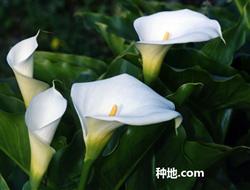
What is a calla lily? How can it be grown? Calla lily (Zantedeschia aethiopica), also known as arrowleaf elephant's ear, belongs to the genus Zantedeschia in the Araceae family. I. Overview: Elegant and graceful, with pure white spathes shaped like horse hooves and emerald green leaves dotted with white spots, it is a masterpiece of both flower and foliage. The pure and elegant calla lily flower symbolizes purity, innocence and simplicity. Today, it has become one of the important cut flower types on the international flower market.
What is a calla lily? How can it be grown?
Calla lily (Zantedeschia aethiopica), also known as arrowleaf elephant's ear, belongs to the genus Zantedeschia in the Araceae family.
I. Overview
Elegant and graceful, with pure white spathes shaped like horse hooves and emerald green leaves dotted with white spots, it is a masterpiece of both flower and foliage. The pure and elegant calla lily flower symbolizes purity, innocence and simplicity. Today, it has become one of the important cut flower types on the international flower market.
II. Ecological Characteristics
Native to southern Africa. It prefers a warm, humid environment with plenty of sunlight. It is not tolerant of cold or drought. The optimum growing temperature is 15-25°C, and the nighttime temperature should not be lower than 13°C. If the temperature is higher than 25°C or lower than 5°C, it is forced into dormancy. Calla lily likes water, and the soil should be kept moist during the growing period. After the tubers enter dormancy during the high-temperature period in summer, watering should be controlled. The soil should be fertile, clay loam with good water retention, with a pH value between 6.0 and 6.5.
III. Propagation Techniques
1. Division: After flowering from May to June, when the old leaves gradually wither and new leaves grow, or when repotting in mid-September, peel off the small tubers around the mother plant and pot them up by grade. Generally, they bloom 3 months after planting.
2. Sowing: Mainly sown in pots indoors. The optimum germination temperature is 18-24°C. They germinate 15-20 days after sowing. Seedlings need 3-4 years of cultivation before they can bloom.
IV. Cultivation Points
For cut flower cultivation, a fertile paddy field can be selected, and healthy tubers are planted in early April. For pot cultivation, use fertile clay loam, and plant 3-5 tubers in a 12-15 cm pot. Fertilize twice during the growing period, and frequently spray water on the ground or leaves to maintain relatively high air humidity. After flowering, cut off the withered and yellow leaves, and stop fertilizing and watering. After overwintering through summer, the tubers sprout new leaves again and can bloom once more.
V. Pest and Disease Control
Tubers are prone to rot during dormancy or storage. The tuber surface can be sprayed with a 1000-fold dilution of the antibacterial agent 401 acetic acid solution, then dried and stored. Pests include red spider mites and thrips, which can be killed by spraying with a 1000-fold dilution of 50% dicofol and a 4000-fold dilution of 2.5% deltamethrin emulsifiable concentrate, respectively.
VI. Green Decoration Applications
Calla lily flower stems are upright and are often used to make bouquets, flower baskets, wreaths and vase arrangements, with particularly good decorative effects. Dwarf and small-flowered varieties grown in pots are used to decorate steps, windowsills, balconies and in front of mirrors, full of exotic charm and especially lively and lovely. Calla lilies planted in gardens, especially in clumps beside ponds or rock piles, create a landscape in bloom that gives people the feeling of being in a fairyland.
Click to get more calla lily growing techniques
Click to get a massive amount of flower and tree growing techniques