Greenhouse Aloe Cultivation Techniques Shared to Help You Grow Aloe Easily
Aloe, also known as oil onion, is a plant of the genus Aloe in the Liliaceae family, native to India. Edible aloe varieties include Curaçao, Arborescens, and Chinese aloe. The main variety cultivated in local greenhouses is Curaçao, also known as Barbados aloe or Curacao aloe. The botanical characteristics and cultivation points of aloe are introduced below: 1 Plant...
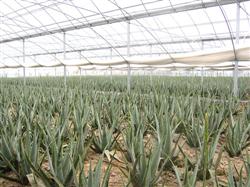
Aloe, also known as oil onion, is a plant of the genus Aloe in the Liliaceae family, native to India. Edible aloe varieties include Curaçao, Arborescens, and Chinese aloe. The main variety cultivated in local greenhouses is Curaçao, also known as Barbados aloe or Curacao aloe. The botanical characteristics and cultivation points of aloe are introduced below:
1 Botanical characteristics
Aloe roots are mostly fibrous roots, with a few being bulbous roots. Most aloes are perennial herbaceous plants, without stems or with short stems, and many are shrubs or climbing plants. Herbaceous aloe leaves are mostly basal, while the leaves of shrub and tree aloes are stem-borne. The leaves are mostly alternate, arranged in a spiral, and most form rosette-shaped leaf disks. The leaves are succulent, with thick mesophyll. Some have spines on the leaf underside or on the leaf surface. The leaf margins are entire, mostly with wavy serrations, and a few have cilia. Aloe flowers are terminal or lateral, in racemes, umbels, panicles, cylindrical or head-like inflorescences, usually indeterminate inflorescences. The flowers are red, brown, pink, yellow, orange-red, or milky white. The fruit skin is mostly a capsule, rarely a berry. The seed coat is gray or black, and the seeds are irregularly triangular to flat.
Aloe prefers warm and humid climate conditions and is not cold-tolerant. The indoor temperature in winter must not be lower than 5°C, and it should be kept dry during the dormant period. It prefers well-drained, fertile sandy loam. It is not strict about soil requirements, is tolerant of drought and salinity-alkalinity, and does not need heavy watering or fertilizing. However, it likes sunlight and is not shade-tolerant; in shaded environments, it mostly does not bloom.
2 Key points for greenhouse aloe cultivation
2.1 Land preparation and fertilization
Generally, choose land with high terrain, a low groundwater table, smooth drainage, and loose, breathable, fertile soil. Deeply plow the land and apply organic fertilizer, applying 2000-3000 kg of decomposed organic fertilizer plus 100 kg of leafy vegetable compound fertilizer per mu. The bed width should take into account the ability to set up a greenhouse and cover with shade netting. Generally, the bed width is 0.5 m for a single row and 0.6-0.8 m for double rows.
2.2 Propagation methods
2.2.1 Seed sowing method Seeds are sown in spring, requiring sand tray seedling raising, and then transplanted.
2.2.2 Division method In early spring, together with repotting, cut off the new shoots that have tillered around the mother plant from the underground stem of the mother plant and cultivate them as planting stock. However, because the number of tillers is small, the number of propagules from this method is relatively low.
2.2.3 Cutting method Cutting propagation is generally used most often. The method is to cut small side branches from the base of the main stem and from the leaf axils between spring and summer for cuttings. Cut new shoots 10-15 cm long, cut them off from the base with a small knife, place them in the shade for 1 day so that the cut surface is slightly dry, and then insert them into the growing medium. Insert them 3-4 cm deep, and water only after 1 week. They will root in about 20-30 days. The main stem can also be cut off for cuttings. Spring is the best time for cuttings, which helps them overwinter safely. In winter, absolutely avoid excessive watering to prevent root rot. They are generally planted out in the field in the following spring.
2.3 Field management
After the small seedlings are divided, they must be watered, but not excessively wet. Do not water at noon. Watering should be appropriate; if there is moist soil 2 cm below the surface, then watering can be skipped. In summer when it is dry, water once every 1-2 days, apply human feces and urine once every 3-4 weeks, and remove weeds in the greenhouse. In summer, avoid strong direct sunlight, and the greenhouse should be covered with shade netting. In winter, prevent freezing. When the outside temperature is below 5°C, the greenhouse should be heated, and by noon when the temperature is high, the greenhouse should be vented for air exchange.
2.4 Pest and disease control
According to the author's investigation, the main diseases of local greenhouse aloe are anthracnose and gray mold, which can be sprayed with a 1000-fold dilution of 100% antimicrobial agent 401 acetic acid solution. The main insect pests are scale insects and whiteflies, which can be killed by spraying with a 1000-fold dilution of 40% omethoate emulsifiable concentrate.
3 Harvesting
After the plants have matured, leaves can be harvested in stages and batches from bottom to top. The harvestable parts are tiller buds, leaves, flowers, flower stalks, and roots, etc. Harvested tiller buds can be used for propagation. For aloe harvested for leaves, the plants must be mature plants over 3 years old, each plant must have more than 20 leaves, most leaves must weigh 500 g, 3-4 leaves can be harvested each time, and harvesting can be done 3-4 times per year. After harvesting, the mother plant must retain more than 12 leaves and must not be over-harvested. The cutting point must be at the basal sheath area near the base. Per mu, mature plants can produce 10,000-12,000 kg of fresh leaves per year.
Click to get more aloe cultivation techniques
Click to get more flower cultivation techniques