Common Diseases and Control Methods for Osmanthus Tree Cultivation in Guangxi
What diseases should be prevented in osmanthus tree cultivation in Guangxi? What methods can be used to control them? Osmanthus is an excellent landscape tree species that combines greening, beautification and fragrance, with both ornamental and practical value. It is also a traditional evergreen aromatic plant in China, widely cultivated in many regions. But in recent years, the damage caused by osmanthus pests and diseases has increased, leading to...
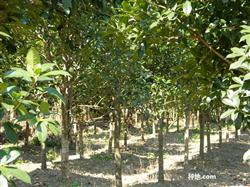
What diseases should be prevented in osmanthus tree cultivation in Guangxi? What methods can be used to control them?
Osmanthus is an excellent landscape tree species that combines greening, beautification and fragrance, with both ornamental and practical value. It is also a traditional evergreen aromatic plant in China, widely cultivated in many regions. But in recent years, the damage caused by osmanthus pests and diseases has increased, leading to a decline in ornamental value. The main occurrence characteristics of its major diseases and control experience are briefly introduced as follows.
Anthracnose It occurs easily under high temperature and high humidity conditions. In the early stage of the disease, nearly round purplish-brown lesions appear on stems and leaves, with small black dots forming on them. In the late stage, under humid conditions, pinkish sticky substance overflows from the small black dots, causing leaf blight. Starting from July to August, spray 500 to 600 times diluted zineb solution 1 to 2 times, then switch to 50% amobam 800 to 1000 times diluted solution for control. In winter, thoroughly remove fallen branches, leaves and weeds from the garden.
Tip blight It mostly occurs from leaf tips or leaf margins. In the early stage, small brown spots appear on the leaves and gradually expand into large round or irregular lesions. In the late stage, many small black dots form on the lesions, but no sticky substance overflows. In severe cases, multiple lesions connect to form large blighted patches, and the leaves curl and split. In the early stage, spray 1:2:200 Bordeaux mixture, then use 50% benomyl wettable powder 1000 to 1500 times diluted solution for control.
Brown spot In the early stage, small chlorotic yellow spots appear on the leaves and gradually expand into nearly round lesions, yellowish-brown to grayish-brown, with a yellow halo around the edge. In the late stage, black mold-like growth forms on the lesions. After the lesions connect, the leaves wither and fall off. In the early stage, spray 1:1:200 Bordeaux mixture, and half a month later spray 65% zineb wettable powder 800 times diluted solution or 50% thiram wettable powder 1000 times diluted solution for control.
Rot disease It mainly occurs at the root-collar area. The affected parts appear water-soaked, and after the lesions gradually expand, the plant's growth weakens or it even dies. It occurs severely in the rainy seasons of summer and autumn. In early spring, scatter a small amount of sulfur powder around the plant, and in winter whitewash the trunk. The whitewash is prepared with 25 jin of quicklime, 3 jin of salt, 0.5 jin of vegetable oil, 1 jin of sulfur powder and 100 jin of water. After lesions appear, scrape them clean and apply asomate-kerosene mixture.
Click to get more osmanthus cultivation techniques
Click to get more flower cultivation techniques