How to Grow Osmanthus Trees So They Thrive
The osmanthus tree is an evergreen tree of the genus Osmanthus in the family Oleaceae, also known as muxi, yangui, jinsu, jiulixiang and so on. It originated in the southwestern and central-southern regions of China and has a cultivation history of more than 2,500 years. It is one of China's ten traditional famous flowers. It has a graceful tree form, lush branches and leaves, verdant green foliage, stays evergreen through all four seasons, and its flowers are enchantingly fragrant. It is now widely cultivated...
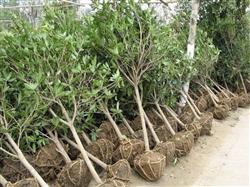
The osmanthus tree is an evergreen tree of the genus Osmanthus in the family Oleaceae, also known as muxi, yangui, jinsu, jiulixiang and so on. It originated in the southwestern and central-southern regions of China and has a cultivation history of more than 2,500 years. It is one of China's ten traditional famous flowers. It has a graceful tree form, lush branches and leaves, verdant green foliage, stays evergreen through all four seasons, and its flowers are enchantingly fragrant. It is now widely cultivated in South China and the provinces and regions of the Yangtze River basin, and is one of the most precious flowering trees for modern urban landscaping. It has been designated as the city flower by world-famous tourist cities such as Suzhou, Hangzhou and Guilin.
I. Morphological Characteristics of the Osmanthus Tree
The main osmanthus cultivars include Jingu (golden osmanthus), Yingui (silver osmanthus), Dangui (orange osmanthus) and Sijigui (four-season osmanthus).
The Jingu tree is tall, with a height reaching up to 5.7 m. Its wood is fine and hard, and the bark is grayish white. The crown is rounded. The leaves are large, opposite, leathery, thick, deep green and glossy, with entire or finely serrated margins, elliptical or long-elliptical lanceolate, 3-8 cm long, with a pointed or acuminate apex and a wedge-shaped base; the petiole is relatively short. The flowers are clustered in the leaf axils in cymes, with slender pedicels. The flowers are small, with a 4-lobed calyx whose lobes are tooth-shaped; the corolla is 4-lobed, split to the base, with elliptical lobes. The flowers are golden yellow and have the strongest fragrance.
The Yingui has smaller leaves that are elliptical, ovate or obovate, and relatively thin. The flowers are yellowish white or pale yellow, with a fragrance slightly weaker than that of Jingu, and the flowering period is also one week later than that of Jingu.
The Dangui has smaller leaves that are lanceolate or elliptical, with a pointed apex and a rough leaf surface. The flowers are orange-yellow or orange-red, with a relatively faint fragrance.
The Sijigui has elliptical, relatively thin leaves. The flowers are yellow or pale yellow, and the flowering period is long; apart from severe cold and intense heat, it flowers several times, but mostly in autumn. The fragrance is faint, the leaves are smaller, and it is mostly shrub-like.
The drupe is elliptical and contains one seed. The flowering period is September-October.
II. Environmental Requirements of the Osmanthus Tree
Osmanthus likes a warm and humid climate and has a certain cold resistance, but it is not tolerant of severe cold. It likes light and also tolerates shade; during the seedling stage it needs a certain degree of shading.
It has low requirements for soil and prefers slightly acidic soil on high, dry terrain rich in humus, and sandy soil with deep, fertile, moist layers and good drainage is most suitable. It is not tolerant of arid, barren soil, and avoids saline-alkaline soil and waterlogged land. Planting it in excessively wet land with poor drainage will cause poor growth, root rot and leaf drop, and ultimately the death of the entire plant.
III. Propagation and Seedling Methods
The propagation methods for osmanthus include sowing, cuttings, grafting and layering. In production, cutting and grafting propagation are the most common.
1. Cutting Propagation
Cutting propagation has the advantages of simple technique, large propagation quantity, high speed, high survival rate and low cost, and is the most widely adopted and most commonly used propagation method by nursery growers and flower enthusiasts.
(1) Cutting time:
From early March to mid-April, one-year-old spring shoots can be selected for cuttings, which is the best cutting time. From late June to late August, semi-ripened shoots of the current year can also be selected for heel cuttings, but this has high requirements for temperature and humidity control.
(2) Cutting and treatment of cuttings:
From young and middle-aged trees, select robust, plump, pest-free branches from the upper middle and outer parts of the tree as cuttings. Cut the branches into 10-12 cm lengths, remove the lower leaves, and keep only 3-4 leaves at the top. Soak the cuttings in a 500-fold solution of "Haizhuangyuan 818" seaweed rooting agent for 0.5-1 hour, which is very beneficial for rooting.
(3) Cutting medium preparation:
Mix slightly acidic, loose, well-aerated soil with good water retention and "Haizhuangyuan 818" seaweed microbial fertilizer evenly as the cutting substrate.
(4) Management after cutting:
The main task is to control temperature and humidity, which is the key to whether the cuttings can root and survive. The optimal rooting soil temperature is 25-28°C, and the optimal relative humidity should be maintained above 85%. Methods such as shading, plastic arch sheds, sprinkling water and ventilation can be used for control. Second, attention should be paid to mold prevention, because high temperature and high humidity easily breed mold. Every week, "Haizhuangyuan 818" Plant Guardian or Jundusha 800-fold solution can be used alternately for spraying.
Grafting propagation has the advantages of quick seedling formation, vigorous growth, early flowering and little variation, and is also one of the more commonly used methods.
Cultivating rootstock: mostly 1-2 year old seedlings such as privet, small-leaf privet and small-leaf ash are used as rootstock. Among them, grafting osmanthus onto privet has a high survival rate and fast initial growth, but the wound heals poorly, and it is prone to breaking off when exposed to strong wind or external collision.
2. Grafting Propagation
Grafting is carried out around Qingming Festival. There are two most commonly used methods in production: one is cleft grafting, and the other is side grafting.
For scions, it is advisable to select fully lignified, robust, disease-free 1-2 year old branches from adult trees, remove the leaves, and retain the petioles.
When using the cleft grafting method, the rootstock should be cut off 4-6 cm above the ground before grafting in spring before the seedlings sprout. The thickness of the scion should match the thickness of the rootstock, and the cut surface of the scion should be smooth. The key to successful cleft grafting is that the cambium layers of the rootstock and scion must align, and the binding must be tight.
When using the side grafting method, it is not necessary to cut off the rootstock; the scion bud is directly inserted into the rootstock, and the rootstock is cut off only after the grafting succeeds.
No matter which grafting method is used, it is best to graft as soon as the scion is collected. If the scion is collected from other places, be sure to keep the scion fresh.
It is best to choose clear, windless weather for grafting. After grafting, attention should be paid to checking the survival rate and carrying out tasks such as supplementary grafting, bud removal, rootstock cutting, removal of binding strips, water and fertilizer management, and pest and disease control.
3. Seed Propagation
In addition to cuttings and grafting, osmanthus can also be propagated by sowing. However, because some cultivars do not set seed or set very little, and because seedlings grown by sowing take a long time to flower, requiring more than 10 years to bloom, with great variation, nursery growers and home flower enthusiasts rarely use this method. Osmanthus seeds mature around May.
After seed collection, sowing can be carried out in two periods:
One is to sow immediately after collection, which can reduce the step of seed storage, and by autumn some seeds will germinate and emerge. Its disadvantage is that overwintering management of the seedlings is difficult, and they are prone to frost damage.
The second is to first store the seeds in sand after collection, then select the seeds from the sand and sow them the following spring. They germinate and emerge in April. The advantages of this method are: the seedlings grow quickly and seedling-stage management is less difficult.
Regardless of whether sowing is used for seedling propagation, before sowing, "Aoluojia" seaweed extract should be used for seed dressing to prevent damping-off of seedlings during the seedling stage, and water and fertilizer management should be strengthened, with timely thinning and gap filling, intertillage and weeding, and proper shading, cooling, and cold and frost protection.
4. Layering Propagation
Layering should be carried out in spring before the buds sprout. Because osmanthus branches are not easy to bend, ground layering is generally not used; only air layering is used. When using air layering, select vigorous 2-3 year old branches from superior mother plants, make a ring of bark 0.3 cm wide by girdling the branch, then apply a 500-fold solution of "Haizhuangyuan 818" seaweed rooting agent to the girdled area, then use plastic film filled with mountain soil, leaf mold, moss, etc. to wrap the wounded part, water thoroughly, and tie the bag opening securely. Observe frequently and replenish water in time so that the wrapping remains moist. After cultivation through summer and autumn, new roots will grow. In the following spring, cut the rooted branch away from the mother plant, open the wrapping, move it into a pot with soil, water thoroughly, and place it in a cool place for care. After a large number of new shoots sprout, it can then receive full sunlight.
IV. Cultivation and Management
One-year-old osmanthus seedlings cultivated through sowing, cuttings and other means have poor resistance to drought, cold and barrenness, so they are not suitable for immediate use as landscaping seedlings. They should first be transplanted into nursery fields and grown for another 2-5 years, and only after they become medium-sized seedlings should they be transplanted. The key points of cultivation and management are briefly introduced below:
1. Land Preparation
Choose slightly acidic (pH 5.0-6.5) sandy loam with sufficient sunlight, deep soil layers, rich humus, strong permeability and convenient irrigation and drainage as the cultivation nursery field. In the autumn and winter of the year before transplanting, first plow the nursery field fully once, and dig planting holes according to a row spacing of 1 × 1.5 m (after 2 years, when the plants have grown thicker and taller, remove every other plant so that the row spacing becomes 2 × 1.5 m), with planting holes of 0.4 × 0.4 × 0.4 m. Apply 0.5-1 kg of "Haizhuangyuan 818" seaweed organic-inorganic compound fertilizer (12-6-12 or 15-5-15) and 0.3 kg of "Haizhuangyuan 818" seaweed microbial fertilizer to each hole as base fertilizer. Mix the "Haizhuangyuan 818" seaweed organic-inorganic compound fertilizer evenly with the surface loam, fill it into the hole, then apply the "Haizhuangyuan 818" seaweed microbial fertilizer and transplant directly.
2. Transplanting
Transplanting is best done when the sap has not yet begun to flow or has just begun to flow, generally from early February to early March. When taking out the seedlings, keep as many roots as possible and damage as few roots as possible. After taking out the seedlings, plant them as soon as possible. If seedlings need to be transferred from other places, pay attention to moisture retention to prevent dehydration. After planting, compact the soil and water thoroughly once so that the seedling roots are in close contact with the soil.
3. Water and Fertilizer Management
After transplanting, if heavy rain causes waterlogging in the nursery field, dig ditches to drain the water. In case of drought, water to resist it. In addition to applying sufficient base fertilizer, fertilizer should also be applied 3 times each year:
In late March, apply to each plant 100-fold "Haizhuangyuan 818" seaweed paste fertilizer + 800-fold "Haizhuangyuan 818" seaweed rooting agent, 0.1-0.3 kg, to promote height growth and the production of more tender shoots;
In July, apply to each plant 0.1-0.3 kg of "Haizhuangyuan 818" seaweed organic-inorganic compound fertilizer (12-6-12 or 15-5-15), and water immediately after fertilizing to improve its drought resistance;
In October, apply to each plant 0.5-1 kg of "Haizhuangyuan 818" seaweed organic-inorganic compound fertilizer (12-6-12 or 15-5-15) and 0.3 kg of "Haizhuangyuan 818" seaweed microbial fertilizer, and after fertilizing, earth up to cover the fertilizer, to improve its cold resistance and prepare for overwintering.
4. Pruning and Shaping
Osmanthus has strong sprouting ability and the characteristic of naturally forming shrubs. It flushes shoots twice each year, in spring and autumn. If pruning and bud removal are not done in time, it is difficult to cultivate tall plants, and it easily forms a phenomenon of dense upper branches and sparse lower branches, strong at the top and weak at the bottom.
When pruning, apart from shortening branches that are growing poorly due to tree vigor or branch vigor, thinning is generally the main approach. Only overly dense peripheral branches should be appropriately thinned, and water sprouts and diseased or pest-infested branches should be cut off, so as to improve the ventilation and light transmission conditions of the plant. Sucker branches emerging from the base of the trunk should be removed promptly to avoid consuming nutrients within the tree and disrupting the tree shape.
5. Loosening Soil and Weeding
In spring and autumn, carry out one intertillage each in combination with fertilization to improve soil structure. Before overwintering, earth up around the base once and whitewash the trunk once, which can enhance cold resistance. Weed 2-3 times each year to prevent weeds from competing with the seedlings for water, fertilizer and light.
6. Pest and Disease Control
Osmanthus has relatively few pests and diseases, mainly anthracnose, leaf spot, red spider mite and oystershell scale. "Haizhuangyuan 818" Plant Guardian 800-fold solution can be sprayed regularly for prevention, once every 10-15 days; in the early stage of pests and diseases, use "Haizhuangyuan 818" Plant Guardian 600-fold solution × Tuzet or thiophanate-methyl or dichlorvos or dicofol and other agents for control.
V. Key Points for Transplanting Large Osmanthus Trees
1. Transplanting Time
Mid-January to early February is best. At this time the tree is in a dormant state, and not long after transplanting its activity becomes stronger, making it easy to survive. Avoid transplanting in summer.
2. Branch Cutting
Its purpose is to reduce nutrient consumption within the tree and water transpiration. The amount of branch cutting depends on the age of the tree and the strength of its growth vigor. Old trees of over a hundred years should have few or no branches retained because of weak growth vigor. Those with strong growth vigor and young trees can retain somewhat more branches. When cutting branches, first remove diseased and pest-infested branches, water sprouts and crossing branches. After that, apply petroleum jelly or Bordeaux mixture to the wounds to prevent pest and disease damage and rain erosion.
3. Root Cutting
To improve the survival rate of transplanting large osmanthus trees, cut 1/2 of the roots in spring 1-2 years before transplanting. The cutting point should be 2-3 times the diameter of the trunk away from the trunk, then apply "Haizhuangyuan 818" seaweed rooting agent 500-600-fold solution or 0.1% indoleacetic acid solution to the cut roots, cover with soil and water thoroughly, and let them grow new roots.
4. Taking Out the Root Ball
5. Transportation
5. Transportation
During transportation, load, unload and set down gently. When loading, fix the large tree securely and place cushioning materials between them to prevent the tree from colliding, so as not to injure the bark or scatter the soil ball. Pay attention to moisture retention along the way.
6. Planting
One month before planting, first dig the planting hole. The size of the hole should be 1.5-2 times that of the soil ball, then apply into the hole 3-5 kg of "Haizhuangyuan 818" seaweed organic-inorganic compound fertilizer (12-6-12 or 15-5-15) and 0.3 kg of "Haizhuangyuan 818" seaweed microbial fertilizer as base fertilizer. Mix the "Haizhuangyuan 818" seaweed organic-inorganic compound fertilizer evenly with the surface loam, fill it into the hole, then apply the "Haizhuangyuan 818" seaweed microbial fertilizer and irrigate before planting. When planting, use a crane to lower the large tree gently into the planting hole, use scissors to cut open the packaging straw curtain and straw ropes, then backfill with barn soil, tread firm and water thoroughly.
7. Care and Management
(1) Install support frames
Set up tripods around the main trunk of the large tree to prevent the tree from swaying due to collisions by people and livestock and strong winds.
(2) Build a shade shed
After April, build a shade shed on three sides of the large tree (except the northwest side) to prevent direct sunlight from scorching the bark and to reduce water transpiration. It can be removed in October when the weather turns cool.
(3) Watering
A newly planted large tree has damaged roots and weak water absorption, so the amount of watering should not be too much, to avoid root mold and rot. But it also should not be too little, otherwise the tree will lose water and die.
(4) Infusion
Infusion can meet the tree's demand for water and nutrients and can greatly increase the transplanting survival rate. Infusion is generally carried out from April to September. Before infusion, first drill 3-5 infusion holes at the base of the large tree with a woodworking drill from top to bottom at a 45-degree angle, deep to the pith.
Then prepare the medicinal solution by adding 0.15 g of "Haizhuangyuan 818" seaweed rooting agent and 0.5 g of monopotassium phosphate per liter of water.
Hang the bottle containing the medicinal solution high up, insert the trunk injector into the infusion hole, open the infusion switch, and the liquid can be infused into the tree. After the medicinal solution is finished, pull out the needle and plug the infusion hole with a cotton ball. When infusion is needed again, take out the cotton ball and infusion can be carried out. The number of infusions and the interval depend on the degree of drought, temperature and the plant's water needs. After the plant has completely passed the critical period, seal the infusion hole with Bordeaux mixture.
Click to get more osmanthus cultivation techniques
Click to get more flower cultivation techniques