How can nitrogen fertilizer use efficiency be effectively improved?
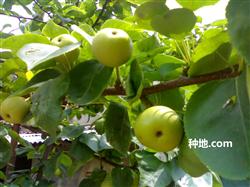
What effect does applying nitrogen fertilizer have on fruit? Please explain that the flavor of a fruit is the comprehensive expression of the properties and composition of the countless cells that make it up. How sweet a fruit is depends on how much sugar its cells contain, yet the accumulation of sugar is closely related to nitrogen fertilizer application. It turns out that from petal fall to 3... after petal fall
 What methods can improve nitrogen fertilizer use efficiency? Please explain.
The effective use efficiency of nitrogen fertilizer in our country is generally very low. How to reduce nitrogen loss and improve nitrogen fertilizer use efficiency is a problem of widespread concern among farmers. Here, seven methods for improving the effective use efficiency of nitrogen fertilizer are introduced to farmers.
I. Implement mixed application and deep application, and strengthen water management
The results of a large number of field trials show that, compared with surface application of nitrogen fertilizer, mixing nitrogen fertilizer into the soil plough layer, or applying it several centimeters below the soil surface, can reduce nitrogen loss. Making nitrogen fertilizer into granular fertilizer about a few millimeters or 1 cm in size for deep application has an even better effect. Rice field trials show that deep application of granular fertilizer achieves the same yield level as surface application of powdered fertilizer, while the amount of nitrogen fertilizer used can be reduced by about 1/3. However, in areas with high rainfall, light soil texture, and possible leaching loss, deep application should be adopted with caution. Both mixed application and deep application have the effect of reducing ammonia volatilization and denitrification loss. Suitable water management can also achieve the goal of improving the yield-increasing effect of nitrogen fertilizer. For example, in rice fields, basal fertilizer is often applied by mixed application when there is a water layer, and the effect of this mixed application is very poor; most of the nitrogen remains in the field surface water, and only a small portion of the nitrogen is mixed into the soil. By adopting the method of mixed application of nitrogen fertilizer when there is no water layer and then irrigating, more nitrogen can be mixed into the soil, thereby reducing nitrogen loss. In addition, irrigating after surface application of nitrogen fertilizer, letting the water carry the fertilizer into the soil layer, is also one of the measures to reduce nitrogen loss.
II. Choose slow-release (long-acting) fertilizers
Slow-release fertilizer is made by coating the surface of granular nitrogen fertilizer with a film, so that its soluble nitrogen is gradually released for crop absorption and utilization, reducing nitrogen loss and biological fixation. Applying slow-release fertilizer can reduce nitrogen loss to a certain extent, but because it is expensive, its main application target is cash crops.
III. Choose the best fertilization period
The fertilization period should be selected according to the nitrogen requirements of the crop, so that the crop can achieve high yield; otherwise, the straw of cereal crops will have a high nitrogen content, a high rate of empty grains, and the grain yield will not be high. For crops with a longer growth period, in addition to applying basal fertilizer, nitrogen fertilizer should also be topdressed once to several times according to the nitrogen requirements of the crop, so as to meet the crop's needs and obtain high yield.
IV. Apply according to soil texture
Soil texture and organic matter content both affect nitrogen fertilizer application. It is generally believed that sandy soil has fast organic matter mineralization and poor fertilizer retention, so it is suitable for applying small amounts multiple times; while clayey soil has slower organic matter mineralization, and the applied nitrogen fertilizer is easily adsorbed by soil colloids and fixed by microorganisms, with strong fertilizer retention, so it can be applied in small frequency and large amounts; loamy soil has excellent fertilizer supply and retention performance, and the fertilization method can be determined according to the plant's growth period.
V. Apply according to crop type
Different plants have different nitrogen fertilizer requirements and types. For example, leaf vegetables, tea trees, mulberry trees, and other plants harvested for leaves have a large nitrogen requirement and are suitable for ammonium nitrogen; stem-bark and fiber plants such as hemp, Eucommia ulmoides, and Phellodendron amurense are suitable for ammonium chloride; flowers and fruit trees are often more suitable for nitrate nitrogen fertilizer; the same plant also has different nitrogen requirements at different stages, and in 1 year, the nitrogen requirement in spring and summer reaches more than 52%, while the demand decreases during the fruit enlargement period. Therefore, nitrogen fertilizer should be applied early in a timely manner, especially during the fruit ripening period, where nitrogen fertilizer must not be applied, so as to prevent delayed maturity due to excessive vegetative growth.
VI. Use urease inhibitors
The use of urease inhibitors is to inhibit the hydrolysis of urea by urease, so that urea can diffuse and move into deeper soil layers, thereby reducing the total concentration of ammonium and ammonia nitrogen in the surface soil of dry land or in the surface water of rice fields, and reducing ammonia volatilization loss. The urease inhibitors currently studied more include O-phenyl phosphorodiamidate, N-butyl thiophosphoric triamide, and hydroquinone.
VII. Use nitrification inhibitors
The role of nitrification inhibitors is to inhibit nitrifying bacteria from converting ammonium nitrogen to nitrate nitrogen, thereby reducing denitrification loss of nitrogen and leaching loss of nitrate.
Click to get more nitrogen, phosphorus, and potassium application techniques
Click to get more fertilizer application techniques