How should phosphate fertilizer be applied during wheat cultivation?
How should phosphate fertilizer be applied when growing wheat? Please advise: in wheat production, some places either emphasize nitrogen and neglect phosphorus, or apply phosphorus the wrong way, which reduces the yield increase. Scientific phosphorus application in wheat should pay attention to the following points: 1. Look at the soil organic matter content. In soil with organic matter content below 1.5%, the yield-increasing effect of phosphorus application is...
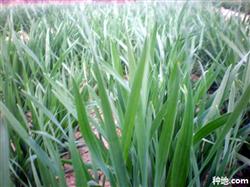
How should phosphate fertilizer be applied when growing wheat? Please advise
In wheat production, some places either emphasize nitrogen and neglect phosphorus, or apply phosphorus the wrong way, which reduces the yield increase. Scientific phosphorus application in wheat should pay attention to the following points:
1. Look at the soil organic matter content. In soil with organic matter content below 1.5%, the yield-increasing effect of phosphorus application is the best; in soil with organic matter content reaching 2-2.5%, the effect of phosphorus application is not very significant. Therefore, phosphate fertilizer should be applied first to soil with low organic matter content.
2. Determine the phosphate fertilizer according to soil texture. Variety: in neutral and calcareous alkaline soil, water-soluble superphosphate should be applied; superphosphate is weakly acidic and can neutralize the alkali in the soil; in acidic soil, weakly alkaline calcium magnesium phosphate fertilizer should be applied. Applying alkaline phosphate fertilizer to acidic soil can not only enhance its fertilizer efficiency, but also neutralize the soil acidity and avoid harm to the wheat root system from acid.
3. Look at the available phosphorus content of the soil. Phosphate fertilizer should first meet the needs of phosphorus-deficient fields and barren fields. Generally, when the available phosphorus in the plough layer soil is below 5-10ppm, the yield-increasing effect of using phosphate fertilizer is the most significant; when the available phosphorus content is around 20ppm, using phosphate fertilizer has a certain yield-increasing effect; when the available phosphorus content is higher than 30ppm, the yield increase from using phosphate fertilizer is not obvious. Therefore, phosphate fertilizer should mainly be applied to wheat fields with available phosphorus content below 15ppm, especially below 10ppm.
4. Apply phosphate fertilizer in layers. Phosphate fertilizer has low mobility, and a large number of secondary roots of wheat are mainly distributed in the soil layer within 10 cm before winter, so 1/4-1/3 of the phosphate fertilizer should be applied in the shallow surface soil layer of 5-10 cm; 1/2-2/3 should be applied in the deeper soil layer of 15-25 cm. Use pre-sowing furrow application, plough-sole base application or seed dressing, and never broadcast on the surface.
5. Mix phosphate fertilizer with organic fertilizer. For winter-sown wheat, if various phosphate fertilizers are mixed with high-quality organic fertilizer at a ratio of 1:10, it can not only reduce the contact surface between phosphate fertilizer and soil, but the acidic substances in the organic fertilizer also help improve the availability of phosphate fertilizer, greatly increasing the fertilizer efficiency of phosphate fertilizer.
6. Spray phosphate fertilizer in the middle and late stages. In the middle and late stages of wheat growth, or when phosphate fertilizer is lacking, a small amount of superphosphate extract can be sprayed 1-2 times at the seedling stage, jointing stage and booting stage of wheat respectively, that is, use 1-1.5 kg of superphosphate per mu each time, crush it into powder, soak it in an appropriate amount of water for a day and a night, filter and take the clear liquid, and dilute with 50-60 kg of water for spraying. If 0.5-1 kg of urea and plant ash extract are mixed and sprayed, the yield-increasing effect is even better.
Click to get more wheat cultivation techniques
Click to get more nitrogen, phosphorus and potassium application techniques
Click to get more fertilizer application techniques