What are the key points of winter tea management?
How should spring tea be managed? Please advise on how to achieve good spring tea quality, a large proportion of output, and high economic returns. How to make spring tea sprout earlier, be picked earlier, and reach the market earlier to increase spring tea yield and value is an important issue for improving the efficiency of the tea industry and raising tea farmers' incomes. Before spring tea picking begins, tea production should focus on tea garden fertilization, tea tree pruning, freeze damage...
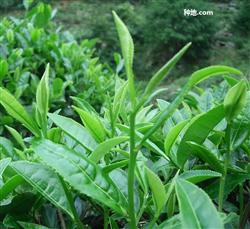 What management should be emphasized for winter tea? Please advise.
When winter comes, tea plants gradually stop growing and enter dormancy. At this time, the tea garden should carry out three management tasks well: tea tree pruning, applying sufficient base fertilizer, and pest and disease control, so that increased income next year can be guaranteed. It is recommended that everyone do the following work:
1. Tea tree pruning: Pruning can be done from October of the previous year to February of the following year. The method is to cut off the uneven branches and leaves at the top of the tea tree to make the canopy level and form a horizontal or arc shape. Generally, the length of pruned branches and tips is 5-15 cm; for some chicken-claw branches, diseased and pest-infested branches, and thin and weak branches, deep pruning should be carried out; for tea gardens with many chicken-claw branches, aged tea trees, thin and uneven tea buds, low yield, and poor benefits, heavy pruning and collar pruning should be carried out to cut off old branches, leaving stumps about 20 cm high. In this way, it is beneficial to regeneration and sprouting and to strong new shoots; for tea gardens with inferior varieties, low yield, and poor benefits, old trees should be dug out and improved tea seedlings with good quality and higher yield, such as Fuxuan No. 9, Baihao 131, and Zaobaijian, should be purchased and planted.
2. Apply sufficient base fertilizer: To ensure the excellent quality of tea buds, farmyard organic fertilizer complete in nitrogen, phosphorus, and potassium should be selected. Prepare 200 kg of livestock and poultry manure per mu, add 50 kg of oil cake and 50 kg of calcium magnesium phosphate fertilizer, mix well, ferment, and then use. Before fertilizing, first carry out a tillage pass in the tea garden, with a digging depth of 10-20 cm, preferably without damaging the tea roots, then open trenches along the drip line at the edge of the tea canopy for deep application, and cover with soil immediately.
3. Pest and disease control: For diseased trees affected by tea blister blight, tea sooty mold, sheath blight, and other diseases, dig them out by the roots and burn them promptly; inspect the old leaves and branches of tea trees once, and promptly remove branches and leaves found with insect eggs, insect nests, and insect cocoons, and burn them in a centralized manner. After clearing the garden, spray once with lime sulfur mixture.
Tea gardens are prohibited from using highly toxic and high-residue pesticides. Biological pesticides permitted by the state for use on tea should be applied scientifically, and the safety interval must be strictly observed to ensure that the tea produced is pollution-free, so as to meet the needs of domestic and international tea markets and obtain higher economic benefits.
Click to get more tea planting techniques
Click to get more flower planting techniques
Click to return to Zhongdi Network