How to graft roses? Teaching you the correct operation steps
How are roses grafted? Please give guidance. Rose grafting can be done by referring to the following methods: 1. Cultivation of the rootstock. Rootstock varieties can be chosen from Rosa multiflora 'Grevillei', Rosa multiflora var. cathayensis, and others. Use large rootstocks over 2 years old, requiring vigorous growth, a well-developed root system, and no pests or diseases. After cutting back before winter, wait until several coarse...
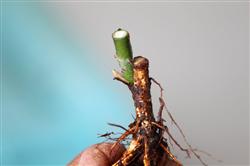
How are roses grafted? Please give guidance
Rose grafting can be done by referring to the following methods:
1. Cultivation of the rootstock. Rootstock varieties can be chosen from Rosa multiflora 'Grevillei', Rosa multiflora var. cathayensis, and others. Use large rootstocks over 2 years old, requiring vigorous growth, a well-developed root system, and no pests or diseases. After cutting back before winter, wait until several sturdy branches sprout the following year to use for grafting.
2. Grafting and management. Grafting methods: (1) From the clustered branches, select one vigorous, upright branch. From June to August, at 1 m above the ground, use T-shaped bud grafting. After it survives, do not cut the rootstock; cut the rootstock after leaf fall. Cut off all branches that were not grafted, and protect the grafted branches against cold, preferably by wrapping them with straw or plastic (11230, -55.00, -0.49%) cloth or putting a plastic bag over the outside. The following year, cut the top, removing the rootstock above the grafted bud to promote sprouting and growth of the grafted bud. At the same time, remove all buds sprouting from the rootstock. Also place an upright support stick close to the rootstock to prevent it from being blown over by wind. After the grafted bud sprouts and grows until the first flower buds appear, remove the flower buds to promote secondary branching. When the secondary branches grow to a certain length and again differentiate flower buds, also remove them to promote further branching on the secondary branches. After one growing season of branching and growth, an umbrella-shaped or crown-shaped tree form can be formed. At the same time, the main trunk also thickens as it grows. (2) After the above rootstock cultivation, select rose varieties with strong growth and good upright habit as scions, bud graft them at the base of the strong rootstock in autumn, cut the top the following spring, and promote upright growth of the grafted bud. At the same time, cut off buds sprouting from the rootstock. When the upright branch grows to more than 1.5 m, perform a second grafting at 1 m high. After it survives, remove buds and prune according to the above method to promote branching. This forms a very good tree crown.
3. Selection of rose varieties. To make tree roses, it is best to choose varieties with relatively weak branches as scions, such as polyantha roses, repeat-flowering roses, and others, so that the branches extend and spread, drooping appropriately, forming an umbrella-shaped, spherical, or weeping willow-shaped crown. In addition, several varieties can also be grafted. During rootstock cultivation, first form the main trunk, cut it at 1 m to make it branch. Then perform bud grafting on the branches. Graft different varieties onto different branches, and after they grow, one rose plant will bear flowers of many colors. But note that some varieties grow vigorously and some grow weakly; it is best to graft varieties with consistent growth vigor onto the same plant, so as to facilitate pruning and flower control, and make the flowers bloom better and the flowering period longer.
Click to get more rose growing techniques
Click to get more flower growing techniques