Why Roses Bloom Sparsely and How to Fix It
Why do roses bloom sparsely? How to fix it? Please give guidance. Tree roses are a type of single-stem, tree-like standard formed through artificial gardening techniques, in which the rose is trained to have a trunk and a crown, like a tree, and they retain the rose's characteristic of blooming abundantly. However, after many tree roses are planted, they not only fail to retain the rose's abundant blooming characteristic, but may even reach the point of not blooming at all.
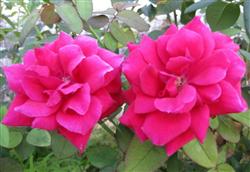
Why do roses bloom sparsely? How to fix it? Please give guidance
Tree roses are a type of single-stem, tree-like standard formed through artificial gardening techniques, in which the rose is trained to have a trunk and a crown, like a tree, and they retain the rose's characteristic of blooming abundantly. However, after many tree roses are planted, they not only fail to retain the rose's abundant blooming characteristic, but may even reach the point of not blooming at all. Based on the author's years of observation, study and exploration of tree roses, the causes are summarized as follows.
1. Insufficient light and poor ventilation
As everyone knows, the rose is a sun-loving, strongly heliophilous flowering plant, and tree roses are no exception. If the plant receives insufficient light, poor ventilation or excessive shading, the branches of the tree rose will become thin and elongated, the leaves will become thinner, and nutrient accumulation will be poor, ultimately leading to poor plant growth, few and small flowers, dull flower color, and a shorter flowering period, among other problems.
2. Insufficient or imbalanced nutrition
Because tree roses have the characteristic of blooming multiple times a year, their nutritional requirements are relatively higher than those of other flowering plants. Throughout the entire growing season of a tree rose, fertilizer should be applied several more times as appropriate, that is, apply fertilizer once after each bloom of the tree rose so that the rose plant can recover its vigor as quickly as possible. When applying additional fertilizer, pay attention to the ratio of nitrogen, phosphorus and potassium; do not apply only a single nitrogen fertilizer or only phosphorus and potassium fertilizers, otherwise it will cause symptoms such as the plant producing only branches and leaves or failing to form flower buds normally.
3. Lack of proper pruning
Because the flowering habit of roses is to form flower buds at the tips of one-year-old branches, pruning should use heading back to increase the number of branches. However, more branches are not always better; while appropriately increasing the number of branches, the ventilation and light penetration of the plant should be adjusted well. In this way, the plant can be prompted to shift into the reproductive growth stage in a timely manner, and the occurrence of pests and diseases can also be appropriately reduced. During the flowering and growing season, light pruning is generally adopted, and in winter, renewal pruning by cutting back and heading back is carried out. Suckers on the roots and main trunk of the tree rose must be removed at any time, otherwise they will consume extra nutrients, ultimately weakening the plant's growth vigor and affecting bud formation and flowering.
4. Damage from pests and diseases
Due to the invasion of pests and diseases, the branches and leaves of the tree rose are damaged, and the effective leaf area for photosynthesis is reduced, thus weakening the overall tree vigor. The main diseases include powdery mildew and black spot; generally, spraying with 50% carbendazim at 800 times dilution or 70% thiophanate-methyl at 600 times dilution is used for control. The main pests include the rose slug sawfly, the rose long-tube aphid, and the larvae of the tobacco cutworm; 48% chlorpyrifos at 1000 times dilution or 90% trichlorfon crystal at 1000 times dilution can be used for control.
5. Variety characteristics
How much a tree rose blooms is also determined by the characteristics of the variety, so varieties that bloom abundantly should be selected as much as possible; for example, if the crown is a floribunda rose variety, it is likely to bloom more.
6. Late-stage incompatibility
Generally, tree roses are produced by grafting. Therefore, there is a certain difference between the scion and the rootstock, especially in varieties with late-stage graft incompatibility, which grow poorly and ultimately affect the plant's flowering; some do not bloom, and some even gradually die. Therefore, compatible varieties should be selected for cultivation as much as possible.
In short, as long as the above problems are adjusted and solved, tree roses will certainly grow better and better, and produce more and more flowers.
Click to get more rose growing techniques
Click to get more flower growing techniques