How should roses be cared for so they bloom continuously?
What methods can make roses bloom continuously? Please provide guidance. The rose is a flowering plant that blooms in all four seasons, with a wide variety of cultivars, bright flower colors, and a fragrant scent, making it very appealing. If it could be made to bloom continuously, would that not be even more satisfying? Roses prefer a growing environment with ample sunlight, good ventilation, and fertile soil...
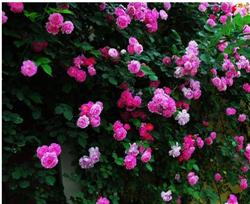
What methods can make roses bloom continuously? Please provide guidance
The rose is a flowering plant that blooms in all four seasons, with a wide variety of cultivars, bright flower colors, and a fragrant scent, making it very appealing. If it could be made to bloom continuously, would that not be even more satisfying?
Roses prefer a growing environment with ample sunlight, good ventilation, and fertile soil, and they dislike dark, damp conditions and hot, high temperatures. To make potted roses bloom continuously, you must accommodate their habits, and at the same time pay attention to proper pruning; they cannot be allowed to grow naturally without restraint.
Roses should be repotted or have their soil changed at least once a year in early spring. Besides replacing part of the soil with fertile potting soil, a base fertilizer should also be applied. The base fertilizer can be decomposed compost mixed with bone meal, or hoof and horn pieces and fully decomposed manure. During the growing period, apply a top dressing about every 10 days; the top dressing can be a liquid fertilizer made by diluting cake fertilizer with bone meal or superphosphate in water.
During the growing season of roses, place them in a location with ample sunlight. 8 hours of light per day is ideal. If you want to bring them indoors to enjoy the flowers when they bloom, bring them in after 11 a.m. and move them out at 5 p.m. This way, they can receive the soft light of the late morning and afternoon, which helps prolong the flowering period and accumulate nutrients for the next flush of flowers.
Roses grow and develop normally at an average temperature of 20°C, and enter a semi-dormant state above 28°C. The dry hot winds of early summer and the high heat of midsummer are both unfavorable to their growth and development. They should be appropriately shaded and misted frequently to lower the temperature and replenish moisture, while also paying attention to air circulation.
For post-bloom pruning of roses, it is best to cut below the third compound leaf of the flower. If there is a new bud below it, cut above the vigorous bud to encourage strong new branches and early flower buds. The pruning requirements for different flower branches are: short pruning and later pruning for strong, vigorous branches; high pruning and earlier pruning for weak, short branches. For potted roses, do not keep too many flowering branches per flush; generally 3-4 flowers is appropriate. When buds sprout after pruning, select strong buds; after buds appear, keep the large terminal bud and remove all other flower buds in the leaf axils, so as to concentrate nutrients, promote large, brightly colored flowers, and achieve continuous blooming.
Click to get more rose growing techniques
Click to get more flower growing techniques