What are the methods for growing potted jasmine?
How do you grow potted jasmine? Here is an introduction. Potted jasmine requires attention to the following points: Environment and light: Jasmine loves hot, humid, well-ventilated environments and needs plenty of light. Jasmine is afraid of cold; in the south, potted jasmine can be grown outdoors through the winter, while in the north, cold protection must be done well in autumn and winter, moving it indoors...
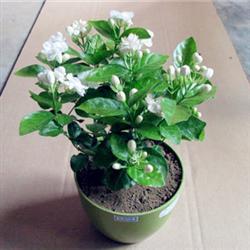
How do you grow potted jasmine? Here is an introduction.
Potted jasmine requires attention to the following points:
Environment and light: Jasmine loves hot, humid, well-ventilated environments and needs plenty of light. Jasmine is afraid of cold; in the south, potted jasmine can be grown outdoors through the winter, while in the north, cold protection must be done well in autumn and winter, moving it indoors and placing it in a south-facing direction. With strong light, the branches and trunk are robust, the leaves are dark green, and the flowers are numerous and fragrant; with insufficient sunlight, the nodes are sparse, the flowers are few, and they are not fragrant.
Water: Jasmine is not drought-tolerant, but it also dislikes waterlogging. During rainy seasons, promptly pour out any accumulated water in the pot, otherwise the leaves easily turn yellow. On hot sunny days in summer, water twice a day, once in the morning and once in the evening. If the leaves are found to curl and droop, spray water on the leaves to promote growth.
Soil: For cultivating jasmine, fertile sandy and semi-sandy soil is best. When planted in slightly acidic soil with a pH value of 6 to 6.5, the root system is dense and growth is vigorous. If the soil is heavy clay, lacks organic matter, has low fertility, and has poor aeration, then the root system will be sparse, the plant will be short, the stems and leaves will be slender, and the flowers will be few and small.
Fertilizing: During the summer growing period, jasmine often shows lush branches and leaves but no flowers. The main reason is applying too much nitrogen fertilizer, causing excessive vegetative growth. When this happens, control fertilizer and water, increase the application of phosphorus and potassium fertilizers to promote flower bud formation, and at the same time be sure to move the jasmine to a place with plenty of sunlight and good ventilation.
Pruning: Jasmine grows very quickly in summer, so prune it in time. For potted jasmine, prune and retain 10 cm to 15 cm from the base to encourage many stout new shoots. If the new shoots grow very vigorously, pinch them back when they reach 10 cm to encourage a second round of shoots, which will result in more flowers and a more compact plant shape. After the flowers fade, promptly cut off the flowering branches to reduce nutrient consumption, and this can also encourage new shoots, making the branches dense, the buds numerous, and the flowers abundant.
Click to get more jasmine planting techniques
Click to get more flower planting techniques