What causes potted azaleas to wither and die?
Why do potted azaleas wither and die? Here are the causes and control methods. Potted azaleas often wilt and die, which greatly saddens growers. The causes and countermeasures are briefly analyzed below for reference: 1. Insufficient light. Azaleas have large, beautiful flowers and a long blooming period, and they require ample sunlight. If kept indoors for viewing, photosynthesis is restricted, and the organic nutrients in the plant are quickly consumed, leading to death. Therefore, they should not be kept indoors for long periods and should often be placed in sunny outdoor locations.
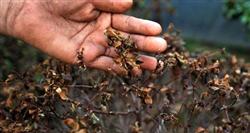
Why do potted azaleas wither and die? Here are the causes and control methods
Potted azaleas often wilt and die, which greatly saddens growers. The causes and countermeasures are briefly analyzed below for reference:
1. Insufficient light. Azaleas have large, beautiful flowers and a long blooming period, and they require ample sunlight. If kept indoors for viewing, photosynthesis is restricted, and the organic nutrients in the plant are quickly consumed, leading to death. Therefore, they should not be kept indoors for long periods and should often be placed in sunny outdoor locations.
2. Poor ventilation. Azaleas naturally prefer a ventilated, cool growing environment. Household flowers are generally kept on balconies, where poor ventilation prevents the radiant heat of the sun from being carried away by convection in time, creating a hot, dry environment. This micro-environment easily leads to the reproduction of pests such as red spider mites. For this reason, azaleas should be placed in a shady, humid and well-ventilated environment, and water should often be sprinkled on the leaves and ground to increase air humidity.
3. Unsuitable temperature. The blooming period of azaleas is also the budding period, and it coincides with the time flowers are moved outdoors. In the north, the outdoor climate in spring is dry, and azaleas cannot adapt to it. Even well-grown young buds are often scorched by sunlight due to insufficient shading. In addition, dry hot winds often blow in spring, which is a fatal blow to azaleas, which prefer humidity. In view of this, during overwintering they should be kept indoors at a temperature of 5-10°C. After being moved outdoors in late April, they should be shaded with reed curtains from 8-9 a.m., and the reed curtains should be opened at 5-6 p.m. At the same time, water should often be sprinkled on the leaves and ground to control the impact of dry hot winds.
4. Improper fertilization. Azaleas do not particularly like fertilizer. Some people, overly eager to care for the flowers, think that the blooming period consumes a large amount of nutrients and so apply a large amount of fertilizer, resulting in increased fertilizer concentration in the soil, causing reverse osmosis of cell sap and making the plant wither. Others apply bean cake, fish intestines and the like as fertilizer in the pot, not realizing that when these things rot in the soil, large numbers of microorganisms become active, causing oxygen deficiency in the soil and suffocating the root system to death. In view of this, fertilizer should be applied in small amounts but frequently. If bean cake, fish intestines and the like are used, they must be fully decomposed before application, and a small amount of ferrous sulfate can be added to prevent leaf yellowing.
5. Improper watering. Many growers believe that watering the flowers every day will make them flourish, not realizing that overwatering can instead cause bud drop, root rot and death. Some also water at hot noon or in the morning and evening on cold days. Because the temperature difference is too great, this seriously affects the growth of azaleas. In view of this, watering should follow the principle of "water when dry, stop when wet"; generally, one thorough watering every 2-3 days is sufficient. In summer, watering in the morning is best, and in winter, watering at noon on sunny days is best.
6. Failure to repot in time. Some growers do not repot azaleas for a long time. As the plant grows larger, the root system cannot spread out, and the soil nutrients are exhausted. Some people also often pour leftover tea into the flowerpot, thinking it can add nutrients, not realizing that tea is alkaline while azaleas prefer acidity, so it is unsuitable for their growth. Therefore, they should be repotted about once every three years into well-drained sandy loam with a pH of 5.5-6. After a year or so, it is even better to dilute vinegar into a thin solution and spray it on the leaves.
7. Failure to control pests and diseases in time. Azaleas are often harmed by scale insects and red spider mites. A 1500-fold dilution of fluoroacetamide should be sprayed promptly to kill them. When there are few pests, they can also be brushed off with a small brush.
Click to get more azalea growing techniques
Click to get more flower growing techniques