What are the characteristics and growing habits of rhododendrons?
What are the characteristics of rhododendrons? Please give an introduction. The genus Rhododendron has many species with widely differing habits, but most species originate from high-altitude areas and prefer cool, humid climates, disliking intense heat and dryness. They require acidic soil rich in humus, loose, moist, and with a pH between 5.5 and 6.5. Some species and horticultural cultivars are more adaptable...
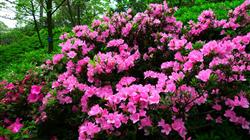
What are the characteristics of rhododendrons? Please give an introduction
The genus Rhododendron has many species with widely differing habits, but most species originate from high-altitude areas and prefer cool, humid climates, disliking intense heat and dryness. They require acidic soil rich in humus, loose, moist, and with a pH between 5.5 and 6.5. Some species and horticultural cultivars are more adaptable, tolerating drought and poor, thin soil, and can even grow in soil with a pH between 7 and 8. However, they grow poorly in heavy or poorly drained soil.
Rhododendrons have certain light requirements but do not tolerate exposure to scorching sun. In summer and autumn, they should be shaded from the fierce sun by deciduous trees or a shade structure, and the ground should be sprinkled with water frequently.
Rhododendrons generally send out new shoots in spring and autumn, mainly in spring. The most suitable growing temperature is 15 to 20 degrees Celsius; growth stalls when the temperature exceeds 30 degrees Celsius or falls below 5 degrees Celsius. There is a brief dormant period in winter, after which flower buds gradually swell as temperatures rise. When grown outdoors, they generally bloom from March to May, while in high-altitude areas blooming is delayed until July to August. In the north they are grown in greenhouses, where they can bloom as early as January to February. Rhododendrons tolerate pruning, and latent buds sprout very readily once stimulated, which can be used to control the shape of the plant and rejuvenate it. Pruning is generally carried out before May; the new shoots produced can all form flower buds in the same year, while pruning too late affects flowering. New shoots that sprout around the start of autumn can still become woody. If new shoots form too late, they are prone to frost damage in winter. They are evergreen or deciduous shrubs.
Click to get more rhododendron growing techniques
Click to get more flower growing techniques