How should azaleas be cared for so they bloom more?
How should azaleas be cared for so they bloom more? Please explain: if you want azaleas to bloom beautifully, first become familiar with the soil of the azalea's growing environment; the pH value should be between 5.5 and 6.5, and alkaline or clayey soil must be avoided. The suitable growing temperature is 12°C to 25°C. In summer, shade them from the sun, and in winter protect them from freezing and keep them warm; it is best to move them indoors. According to...
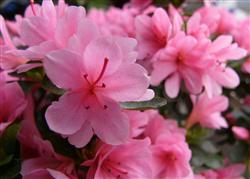
How should azaleas be cared for so they bloom more? Please explain
If you want azaleas to bloom beautifully, first become familiar with the soil of the azalea's growing environment; the pH value should be between 5.5 and 6.5, and alkaline or clayey soil must be avoided. The suitable growing temperature is 12°C to 25°C. In summer, shade them from the sun, and in winter protect them from freezing and keep them warm; it is best to move them indoors. According to the details introduced above, with careful cultivation, the azaleas will certainly bloom very beautifully.
Azaleas like fertile soil. Acidic humus soil formed by piling up and rotting fallen dead branches and leaves over many years is most suitable for cultivating azaleas.
Clay soil has poor permeability and poor drainage, so it should not be used, and especially soil containing lime must never be used.
When applying supplementary fertilizer, do not apply alkaline fertilizer water. Burying rancid fats such as lard into the soil can make azaleas grow vigorously, bloom more, and have vivid flower colors. Use nitrogen, phosphorus, and potassium fertilizers correctly. With sufficient nitrogen fertilizer, the leaves are dark green and growth is vigorous. With insufficient nitrogen fertilizer, the leaf color is pale and lusterless, the leaves are thin and aged-looking, the branches are short, small, and weak, and the flowers are few and small; too much nitrogen fertilizer will instead cause excessive vegetative growth. With sufficient phosphorus fertilizer, the plant is strong, bears many flowers, and the flower colors are gorgeous. With insufficient phosphorus, there are few branches and they are weak, the petals are thin, and the flowering period is short. When potassium fertilizer is lacking, azalea branches are slender and the tissues are soft. When the plant is young, apply somewhat more nitrogen and potassium fertilizer; when it is mature, apply somewhat more phosphorus fertilizer. If the soil has already become alkaline, causing the leaves to lose green and turn yellow-white, additional ferrous sulfate should be applied. Fertilizer water should not be too concentrated. Apply dilute fertilizer frequently. Liquid fertilizer that is too concentrated will burn the root system and harm the plant.
Azaleas are afraid of both dryness and waterlogging. If the azalea's potting soil is too dry, the root tips will shrink, and first the leaves will droop or curl; afterward, the tips of the young leaves will turn scorched yellow, and in severe cases they cannot recover for a long time and gradually wither and die. If the potting soil is too wet, aeration is poor, causing root rot; in mild cases the leaves turn yellow and fall early and growth stalls, and in severe cases the plant dies.
If the azalea's potting soil is too dry and damages the roots, the remedy is to soak the whole pot and roots in water, place it in a cool place, and spray the leaf surface with water several times. If excessive moisture causes yellow leaves to fall early, place the affected plant in a ventilated place, control the frequency and amount of watering, and stop fertilizing to prevent infection by pests and diseases.
Azaleas like a humid environment, so water should often be sprinkled around the pot and on the leaf surface to keep the surrounding environment moist. If the surrounding environment is dry, azaleas are very susceptible to disease. The remedy is to place the diseased azalea in a pit under grapevines or similar trees, cover it with glass, frequently spray water in the pit, and since slanting light can also shine through the grape branches and leaves, the diseased flowers will slowly return to normal.
After azaleas form buds, they need more sun, but during the flowering period care must be taken to avoid direct strong light; strong light will fade the flower color and make the flowers wither early. Diffused light is required, and good ventilation is also required.
Precautions:
1. Azalea roots are as fine as hair strands, with very few thick main roots. They fear both dryness and moisture, and especially fear heavy fertilizer. If watered too much, the roots soak in water; if too dry, the branches and leaves shrivel and the leaves fall off, posing a great threat to the plant. As for applying heavy fertilizer, it can endanger their lives.
2. After the flowers fade, the spent flowers must be cut off to avoid seed formation consuming nutrients. After new branches sprout, thin the branches appropriately, deciding what to keep or remove according to the plant's growth vigor.
3. Azaleas are most suitably planted in clay pots, because clay pots absorb water and allow air through, which benefits root growth and development and makes the branches and leaves luxuriant.
4. There are particular requirements for where to place potted azaleas. Generally they should be placed on a southeast-facing balcony, and there must be ventilation; move them as little as possible. Without ventilation, they are prone to black spot disease and lose large numbers of leaves.
5. Azaleas also have moderate light requirements, and direct light should be avoided in summer. For fertilizing, master the principle of applying dilute fertilizer frequently; it is better to keep it light than concentrated. Apply an organic compound fertilizer to the potting soil once a month. Spray potassium dihydrogen phosphate once every 10 days as a foliar fertilizer. Water in a timely manner, and edible vinegar may also be added to the water to increase acidity.
6. Thin buds and leaves in a timely manner. Remove part of the buds and leaves that have grown too many and too densely, so that air can circulate and nutrients are concentrated in the flower buds. After the flower buds form, increase nutrition and apply a moderate amount of extra phosphorus and potassium fertilizer, otherwise the flower buds will turn into leaf buds.
7. The main reasons for azalea leaf drop and failure to bloom are: overly strong direct light in summer, frost damage from severe cold, too much watering, fertilizer that is too concentrated, being kept indoors for too long, being placed in a place with poor air circulation or that is dark and damp, exposure to acid rain, and so on. Therefore, these situations should be avoided during care.
8. Repotting and changing the soil do not need to be done every year; generally once every 2 years to 3 years. Damage the roots as little as possible, and the time should be after the flowers fade or in autumn. At the same time, spray thiophanate methyl to prevent disease.
9. The main insect pests of azaleas are red spider mites, aphids, and so on, which can be sprayed and killed with fenvalerate and similar substances, with good results; if they are not dead after three days, spray once more. The main disease is black spot disease, caused by a stuffy, hot environment and lack of light. Measures can be taken to promote air circulation on the one hand and spray Bordeaux mixture or carbendazim on the other.
10. The main propagation method for azaleas is cuttings. Around Grain in Ear, choose new branches 5 cm to 10 cm long, cut them off at the branching point, strip off the lower leaves, keep 3 to 4 top leaves, insert 1/3 of the branch into the soil, spray enough water, and cover with plastic (11290,75.00,0.67%) film. Strengthen management at ordinary times, and transplant after one year.
Azaleas are one of the representatives of acid-loving plants, with a pH value of 5.5 to 6.5 being optimal. They like a cool, humid, well-ventilated environment. The suitable growing temperature is 13°C to 25°C. During the growing period, the relative air humidity should be maintained at 60% to 70%, and near flowering the relative humidity can reach about 80%. Azaleas like light but avoid direct strong light. In spring and autumn, increase shading appropriately, and in midsummer the shading should reach about 70%, and water should often be sprayed on the leaf surface to increase humidity and lower temperature. In summer, azaleas should be placed outdoors for care to facilitate ventilation. Azaleas like dilute fertilizer but avoid concentrated fertilizer. During the growing period, apply dilute fertilizer frequently, preferably farmyard manure, such as liquid fertilizer made by soaking and fermenting soybean cake water, horse hoof water, and various vegetable scraps, chicken feathers, fish innards, and other miscellaneous materials. Azaleas have fibrous roots, which are slender and delicate, so heavy clay soil cannot be used. They like acidic soil that is loose and has good water permeability and air permeability. In the north, mountain mud and mountain soil, larch leaf soil, or artificially prepared culture soil and other leaf mold soils can be used. After the flowers fade, pruning is needed in order to make the flower shape more beautiful and control the flowering period. The one-year-old branches that are cut off can also be used for cutting propagation.
If azalea leaves are yellow on the upper surface and have small red insect spots on the underside, then it is red spider mite damage, and in severe cases it will cause leaf drop. A 1000-fold solution of 40% dicofol can be sprayed, once every seven days, and three consecutive times can eliminate it. If the leaf surface is yellow while the veins remain green, it is a symptom of iron deficiency. A ferrous sulfate solution can be sprayed about once every ten days, with a concentration not exceeding 5‰. Using edible vinegar and well-fermented rice-washing water also has a certain effect. There are also other symptoms such as: leaves lusterless, with red-brown dry tips that gradually expand, caused by direct strong light, poor ventilation, and excessively high temperature; improving the environment can prevent and control it. If brown spot disease occurs, it can be prevented and controlled with chlorothalonil, carbendazim, copper hydroxide, thiophanate methyl, and so on. There are also cases where the leaves turn yellow, or remain very green, but at a light touch of a branch or leaf they fall in a rush and are soon completely bare; this is caused by light that is too dim and the plant being stifled; cases caused by light that is too weak, air that is too dry, air pollution, and so on can be prevented and controlled according to the situation. When azaleas lack water, they wilt and hang low; new leaves that are tender, white, and yellow are caused by long-term excessive water soaking the roots. If the leaves wilt but remain green and do not fall easily, this can also be caused by excessive water. Leaves that are uneven in size or have patchy black spots are mostly black spot disease, caused by pathogens, mostly due to the combined factors of excessive water, poor ventilation, and weak light leading to pathogen infection. The environment can be changed and chemical control can be used; for medication, refer to the treatment for brown spot disease.
Click to get more azalea planting techniques
Click to get more flower planting techniques