What causes azaleas to die?
Why do azaleas die? Please provide an introduction to prevention and control methods. The azalea has a graceful tree form and brilliant flowers, and is one of China's ten traditional famous flowers; it is a commonly used flower for landscaping, indoor potted cultivation and bonsai making. There are many causes of azalea bud drop or death, mainly: soil. Azaleas are suitable for growing in...
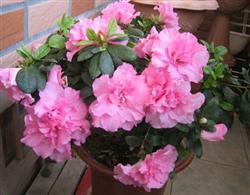
Why do azaleas die? Please provide an introduction to prevention and control methods
The azalea has a graceful tree form and brilliant flowers, and is one of China's ten traditional famous flowers; it is a commonly used flower for landscaping, indoor potted cultivation and bonsai making. There are many causes of azalea bud drop or death, mainly:
Soil. Azaleas are suitable for growing in acidic sandy loam rich in humus, with strong permeability and a pH value of 5.0 to 6.5, and they dislike alkaline soil and clayey soil. If the planting site is alkaline, or highly clayey with poor aeration, it easily causes poor plant growth, bud drop, and even death.
Fertilizing. Fertilizer applied at too high a concentration, or unrotted raw fertilizer, will cause "root burn", leading to bud drop and plant death.
Watering. Azalea roots are extremely fine and fear waterlogging. Overwatering causes a lack of air in the soil, leading to bud drop, leaf drop and plant death.
Temperature. The optimum growing temperature for azaleas is 12°C to 25°C; below 5°C or above 35°C, they are easily damaged.
Pests and diseases. Azaleas have many pests and diseases, mainly leaf gall disease, Stephanitis takeyai (azalea lace bug), and brevipalpus mites.
Repotting. Not repotting for many years leaves the plant short of nutrients; repotting at the wrong time, such as in severe winter cold, in spring when the flowers are blooming, or during high summer temperatures; and improper potting soil preparation, with high alkalinity and poor permeability, will all cause bud drop and plant death.
In response to the above causes, the following technical measures should be taken.
Soil. Choose to plant in acidic, well-drained soil rich in humus. If the soil is slightly alkaline, it can be improved: apply 1000 to 1200 kg of rotted farmyard manure (such as pig manure or cow dung) per mu, then plough and sun it; after one year the alkali in the soil will be neutralized by the fertilizer containing large amounts of humic acid. For soil that is heavy in clay and poor in aeration, the problem can be solved by mixing in river sand or sawdust, burying green manure, or applying organic fertilizer. For pot cultivation, the growing medium can be prepared from 45% leaf mold, 45% peat soil, 5% sawdust, and 5% bone meal or rotted cake fertilizer.
Fertilizing. Azaleas keep green branches and leaves all year round and bloom profusely, consuming a lot of nutrients, so their fertilizer requirement is also large. However, to prevent "root burn", you must follow the principle of "light fertilizer applied frequently", using rotted, dilute fertilizer. In early winter, apply 500 to 700 kg of rotted farmyard manure per mu as a base fertilizer, which can raise the soil temperature, benefit azalea growth in winter and enhance its cold resistance for overwintering. In February, before spring flowering, apply 1 to 2 times a light fertilizer mainly of phosphorus fertilizer combined with nitrogen and phosphorus, to promote brilliant flowers and green leaves. After the flowers fade, apply liquid fertilizer mainly of nitrogen fertilizer 2 to 3 times, with an interval of 10 days each time, to promote the growth of many new branches and tender leaves. During flower bud differentiation, apply rotted cake fertilizer once, adding an appropriate amount of potassium dihydrogen phosphate, to promote flower bud differentiation and flower bud formation. To maintain the acidity of the potting soil, water once every 1 to 2 months with a 0.2% ferrous phosphate aqueous solution.
Watering. The azalea root system is a shallow, fine root mass, fearing both drought and waterlogging; therefore, watering must be moderate, and the planting site should always be kept in a semi-moist state. Water in case of drought, and drain or irrigate in case of waterlogging. In spring during bud formation and flowering, the water requirement is great; water thoroughly 2 to 3 times a week to meet the needs of growth and flowering, which can effectively prevent wilting of leaves and tender branches, shortened flowering period, and early fading of flowers. In summer, temperatures are high and water evaporates quickly, and it is also the period of vigorous growth of azalea branches and leaves, so the water requirement is even greater; besides watering once each morning and evening, also spray water on the leaves and around the flower pot to raise air humidity. In autumn and winter, water less, keeping the potting soil slightly moist. At any time, if the pot has standing water, pour it out promptly, and loosen the soil and let it dry. In cases of particularly severe waterlogging damage, repot and change the soil.
Light. Azaleas are very shade-tolerant and suitable for growing in a semi-shaded environment; they cannot endure strong summer sunlight. Therefore, when choosing a planting site, a more shaded, moist place with scattered light, such as under a large tree, is preferable. If potted, the potted flowers should be placed under a large tree in summer to avoid strong light.
Repotting. Potted azaleas, because of their well-developed root system, strong sprouting ability, and large flowering volume, consume many nutrients, so they must be repotted and given fresh soil once every 1 to 2 years. The potting soil is prepared by the method described in the first point above; the specific repotting time is best after flowering in spring or before bud formation in autumn. The method is: water thoroughly 1 to 2 days before repotting, so the potting soil swells and loosens; when the potting soil is slightly dry, first tap the sides of the flower pot with your hand to separate the potting soil from the pot wall; use a bamboo stick or other sharp object to pry the soil in the pot loose, and gently lift out the plant; remove the soil on the outer edge of the roots and the topsoil, keeping only 1/3 of the old soil; cut off rotted roots, damaged roots, overly long roots and fine weak roots; move it to a pot one size larger and repot with fresh soil; then water thoroughly once more and place it in a semi-shaded place for care.
Click to get more azalea growing techniques
Click to get more flower growing techniques