How should common fertilizers be applied to get good results?
How should common fertilizers be applied to get good results? Please give an introduction. The following introduces the application methods of three common fertilizers: 1. Urea. Urea is a high-concentration amide-form nitrogen fertilizer. At present, it is the fertilizer with the highest nitrogen content among solid nitrogen fertilizers in China. It is a neutral quick-acting fertilizer. After being applied to the soil, it must undergo the action of soil microorganisms for 3~4 days...
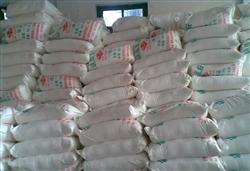
How should common fertilizers be applied to get good results? Please give an introduction.
The following introduces the application methods of three common fertilizers:
1. Urea. Urea is a high-concentration amide-form nitrogen fertilizer. At present, it is the fertilizer with the highest nitrogen content among solid nitrogen fertilizers in China. It is a neutral quick-acting fertilizer. After being applied to the soil, it must undergo the action of soil microorganisms for 3~4 days and be converted into ammonium carbonate or ammonium bicarbonate before it can be absorbed and utilized by crops. Therefore, when used as a base fertilizer, it should be applied deeply, and it should be applied 4~5 days earlier than ammonium bicarbonate and ammonium sulfate. Before conversion, urea is in a molecular state and cannot be adsorbed by the soil, so it should be prevented from being lost with water. The ammonia formed after conversion is also easily volatilized, so urea should also be applied deeply and covered with soil, and it should not be irrigated immediately after application. If it is irrigated immediately after topdressing, urea is easily lost with water, so irrigation should be carried out after an interval of 4~6 days. Urea should not be used directly as a seed fertilizer, because direct contact of high-concentration urea with seeds often affects seed germination and causes uneven emergence. When urea is used as a foliar fertilizer, the concentration must be strictly controlled. Generally, the concentration for gramineous crops is 1.5%~2%, for fruit trees about 0.5%, for open-field vegetables 0.5%~1.5%, and for greenhouse vegetables between 0.2%~0.3%. For crops in the vigorous growth stage, or for mature fruit trees, the concentration of urea applied can be appropriately increased.
2. Ammonium bicarbonate, abbreviated as ammonium bicarbonate, has a nitrogen content of about 17%, and is the variety with the lowest nitrogen content among solid nitrogen fertilizers. Ammonium bicarbonate generally has a water content of 5%~6%, is prone to deliquescence, and is prone to caking. It is still relatively stable at temperatures below 20°C. If the temperature is slightly higher or the moisture in the product exceeds a certain standard, ammonium bicarbonate will decompose into ammonia gas and carbon dioxide, and the gas will escape into the air, causing loss of nitrogen fertilizer efficiency. It is itself a physiologically neutral quick-acting nitrogen fertilizer, suitable for various crops and various soils, and can be used as both a base fertilizer and a topdressing. When ammonium bicarbonate is used as a base fertilizer, it can be applied in furrows or holes. If it can be applied deeply in combination with plowing, its effect will be better. However, note that the application depth must be greater than 6 cm (sandy soil can be deeper), and after application it must be covered with soil immediately. Only in this way can nitrogen loss be reduced. When ammonium bicarbonate is used as a topdressing, dry fields can be combined with intertillage, applied deeply below 2 cun, covered with soil immediately, and watered in time. Paddy fields should maintain a shallow water layer of about 1 cun, but not too shallow, otherwise it is easy to damage the roots. After application, it should be harrowed in time to promote good absorption of the fertilizer by the soil. When ammonium bicarbonate is used as a topdressing, be sure not to broadcast it just after rain or before the dew has dried. Whether ammonium bicarbonate is used as a base fertilizer or a topdressing, it is strictly forbidden to broadcast it on the soil surface, to prevent nitrogen volatilization, causing nitrogen loss or burning crops. At the same time, avoid application in high-temperature seasons and high-temperature periods, and apply it as much as possible in seasons when the temperature is below 20°C.
3. Diammonium phosphate. Diammonium phosphate is a high-concentration quick-acting fertilizer, suitable for various crops and soils, especially for crops that prefer ammonium and require phosphorus. It is suitable for use as a base fertilizer. If used as a topdressing, it should be applied early and deeply 10 cm and then covered with soil. It must not be too close to crops, so as to avoid burning the crops. When used as a seed fertilizer, it must not directly contact the seeds. Diammonium phosphate should not be broadcast with water, otherwise most of the nitrogen in it will remain on the surface. It should also not be mixed with alkaline fertilizers such as plant ash and lime, to prevent ammonia volatilization and reduce the availability of phosphorus.
Click to get more compound fertilizer application techniques
Click to get more fertilizer application techniques