What are the precautions for foliar topdressing of crops?
What should be noted when applying foliar topdressing to crops? Here is an introduction. To achieve good results with foliar topdressing on crops, the following points should be noted: First, the leaf wetting time should be as long as possible. After foliar spraying, the longer the leaves stay wet, the more nutrients the plant absorbs. Therefore, when carrying out foliar fertilization, it is generally best to choose after 4 PM...
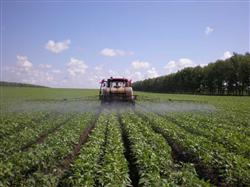
What should be noted when applying foliar topdressing to crops? Here is an introduction
To achieve good results with foliar topdressing on crops, the following points should be noted:
First, the leaf wetting time should be as long as possible. After foliar spraying, the longer the leaves stay wet, the more nutrients the plant absorbs. Therefore, when carrying out foliar fertilization, it is generally better to spray after 4 PM or before 9 AM.
Second, make the solution adhere fully to the leaves. When spraying fertilizer, be sure to be thorough, spraying every part of the plant evenly and finely. Use a sprayer with good performance, and a small amount of wetting agent or washing powder may also be mixed in to promote nutrient penetration into the leaves.
Third, note that the concentration must be appropriate. The concentration of foliar fertilizer should suit the crop; too much will not only cause waste but also lead to phytotoxicity. Generally, the solution concentration of major nutrient elements is about 0.2%-2%, and that of trace elements is about 0.01%-0.1%.
Fourth, note the underside of the leaves when spraying. The underside of vegetable leaves has many stomata and looser tissue, so nutrients penetrate more easily, and the solution on the underside dries more slowly, giving better results after spraying. Therefore, when carrying out foliar fertilization, not only should the upper surface of the leaves be sprayed, but care should also be taken to spray the underside of the leaves evenly. If spraying boron, calcium, iron, manganese, molybdenum or zinc, it is generally also required to spray the new shoots and new leaves.
In addition, vegetable growers should be reminded that although foliar topdressing has good effects and acts quickly, it cannot replace soil fertilization. Because the amount of nutrients absorbed through vegetable leaves is very small, it is impossible to completely replace soil root-zone fertilization with foliar fertilization, especially for major nutrient elements, soil fertilization should be the main method, and foliar fertilization is only an auxiliary combined method.
Click to get more compound fertilizer application techniques
Click to get more fertilizer application techniques