What are the methods for topdressing crops? A full analysis of practical techniques
What are the methods for topdressing crops? Please give an introduction. The following methods for topdressing crops are for reference: 1. Direct broadcasting: after the crop is watered or after rain, when the field moisture is suitable and you can enter the field, broadcast the fertilizer directly between the crop rows and plants. Although this method is relatively simple, part of the fertilizer...
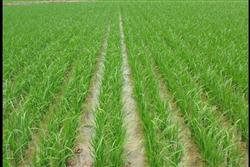
What are the methods for topdressing crops? Please give an introduction
The following methods for topdressing crops are for reference:
1 Direct broadcasting
After the crop is watered or after rain, when the field moisture is suitable and you can enter the field, broadcast the fertilizer directly between the crop rows and plants. Although this method is relatively simple, part of the fertilizer will be lost through volatilization. In particular, ammonium bicarbonate is highly volatile and must not be used; although ammonium sulfate, urea and potassium sulfate can be broadcast, they should be chosen only when field operations are inconvenient and the crop urgently needs nutrients.
2 Application with irrigation water
When watering the crop, apply the fertilizer with the water into the soil around the crop roots. The drawback of this method is that there is considerable waste, it is easily lost, and it cannot reach the deep root zone of the crop; its advantages are that it is simple to use, saves labor and time, and the workload is not large. It can be used when fertilizer sources are abundant, the planting area is large, and labor is in serious shortage. When a large area of crops shows severe nutrient deficiency symptoms, it can be used as the first-choice topdressing method.
3 Deep-burial fertilization
Open furrows or dig pits between the crop plants and rows, apply the fertilizer, and then cover with soil. With this method, fertilizer waste is small and it is the most economical, but the workload is large, it is labor-intensive, and the operation is not very convenient. When applying, note that the furrows and pits for burying fertilizer should be more than 10cm away from the crop roots and stem base; if too close to the roots, the root system is easily damaged. Because the fertilizer is concentrated and the concentration is high, this method should not be used in summer when the crop grows vigorously and needs more water, and it must not be used during the critical period of crop water demand. Generally, this method can be used in the idle winter season when labor is sufficient and crop growth is not large, so that the fertilizer buried in the soil gradually decomposes and continuously supplies the crop. However, in actual production, the peak growth period of crops is often also the peak period of nutrient and water demand; therefore, the burial method is often used when the temperature is relatively high. To prevent negative effects, water must be applied after burial to reduce the concentration of the buried fertilizer.
4 Fertigation through protected facilities
In recent years, with the development of protected cultivation technology, the matching drip irrigation technology has been widely used, putting fertilization methods on an automated track. The specific method of topdressing using drip irrigation facilities is: install a fertilizer injector at the point where the water source enters the main drip irrigation pipe, dissolve the fertilizer in the injector, insert the main drip irrigation pipe into the suction pipe filter of the fertilizer injector, and the fertilizer can then automatically enter the soil around the crop roots with the irrigation water. Its advantages are that because of plastic film mulching, the fertilizer hardly volatilizes and there is no loss; although the fertilizer is concentrated, the concentration is low, so it is both safe and labor-saving, with very good results. This is currently a relatively scientific topdressing method with great development prospects, but because the investment is too large, it is difficult to promote and apply in large-scale production.
5 Foliar topdressing
Foliar topdressing is leaf spraying. In protected cultivation, because the artificially created environment is more conducive to meeting the crop's requirements for environmental conditions, the crop shows the characteristics of fast growth, high yield and more fruit. In production, foliar topdressing is often combined with pesticide spraying to supplement the crop's nutrient deficiencies. This method uses a small amount, has a quick fertilizer effect, and can also avoid the effective components in the fertilizer being fixed by the soil, making it an economical and effective fertilization method. Its effect is even more evident when there is an obvious deficiency of nutrient elements and when the root system of the crop ages in the later growth stage. In addition to commonly used macroelement fertilizers such as urea, monopotassium phosphate, potassium sulfate, potassium nitrate and compound fertilizer, in recent years many manufacturers in various places have developed fertilizers suitable for crop foliar spraying that contain macroelements plus microelements or multiple amino acid components, such as Feilisu, Penshibao, Zhibaosu, etc., all of which have certain effects. However, it must be made clear that the basic nutrient elements required for crop growth and development mainly come from base fertilizer and fertilizers applied by other topdressing methods; foliar topdressing can only serve as an auxiliary measure.
Click to get more compound fertilizer application techniques
Click to get more fertilizer application techniques