What is SODm urea? Read this to understand it in one article
What is SODm urea? How effective is SODm urea? Please give an introduction. SODM urea is produced by adding 0.2% SODM additive made from high-purity amino acids during the urea production process, using biochemical action to increase fertilizer efficiency. It has the effect of resisting crop senescence, and compared with ordinary urea it has higher fertilizer efficiency, requires less dosage, and can reduce...
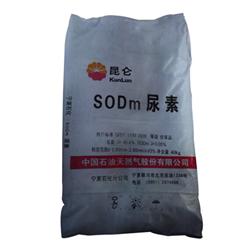 What is SODm urea? How effective is SODm urea? Please give an introduction
SODM urea is produced by adding 0.2% SODM additive made from high-purity amino acids during the urea production process, using biochemical action to increase fertilizer efficiency. It has the effect of resisting crop senescence, and compared with ordinary urea it has higher fertilizer efficiency, requires less dosage, and can reduce farmers' cultivation costs.
SOD is the abbreviation for superoxide dismutase. When introduced into agricultural production, it manifests as: eliminating superoxide free radicals, enhancing plant immunity and stress resistance, and improving plants' absorption and utilization of nutrients. SODm synergist is a metalloenzyme, non-toxic, can exhibit natural SOD activity in organisms, can serve as a substitute for natural SOD, and shows good results when applied to plant growth regulation.
SODM urea has slow-release properties:
In terms of slow release, the SODm synergist improves the urea crystal form during the urea granulation process and increases the strength of urea granules. The rate at which SODm urea releases nutrients in the soil is also noticeably more gradual than that of ordinary urea.
According to production data statistics, the granule strength of SODm urea with a diameter between 0.85mm and 2.8mm is around 6.2N, which is significantly higher than that of urea from the same production plant at the same period under similar moisture content conditions, with an increase of 15% to 20%, and is comparable to the granule strength of urea after adding formaldehyde in the same period. This not only benefits the long-acting slow release of urea, but also plays a positive role in preventing urea caking. During conveying, packaging, and transport, it can also reduce physical dust produced by granules being subjected to varying degrees of collision.
Preliminary test data on urea nitrogen migration in soil also shows that: under conditions of a fixed dosage and water amount, the concentration of nitrate nitrogen and the concentration of ammonium nitrogen released by SODm urea in the soil are both lower than those of ordinary urea. Under different water potential conditions, SODm urea is less affected. Ordinary urea releases more ammonium ions and nitrate ions per unit time and unit distance. Because SODm urea releases ions at a relatively slower rate, and because its granule strength is increased, its fertilizer effect is correspondingly prolonged.
SODM urea has high fertilizer efficiency:
Functionally mimicking natural superoxide dismutase, thereby strengthening the plant's first line of defense against free radical damage and enhancing the plant's ability to scavenge excess free radicals produced during cellular aerobic metabolism under physiological or non-physiological stress, SODm urea's high efficiency is reflected in substantially increasing yield and improving crop quality.
The Science and Technology Bureau of the Heilongjiang General Bureau of State Farms evaluated the application and extension of superoxide dismutase mimics (SODm) and superoxide dismutase mimic urea (SODmU) on major crops: after applying SODm, the yields of major crops such as soybean, rice, corn, and potato could be increased, with average increases of 7.86%, 8.60%, 8.71%, and 19.33% respectively. After applying SODm urea, the yields of soybean, rice, corn, and potato could be increased by an average of 4.99%, 4.93%, 4.82%, and 5.48% respectively. After three years of demonstration and extension on 12 farms in the reclamation area, the cumulative extension area reached 927,000 mu, with newly added economic benefits of 20.8114 million yuan, showing remarkable extension benefits.
SODM urea is green and environmentally friendly:
The raw material of the synergist is food-grade amino acids. According to testing by the Beijing Center for Disease Control and Prevention, data from acute oral toxicity tests in mice show that the median lethal dose LD50 of the SODm synergist is >=10000mg/kg.Bw (according to GB 15193.3, a mouse LD50 >=5000mg/kg.Bw is judged to be practically non-toxic), far higher than the national standard. According to testing by the National Center for Quality Supervision and Inspection of Plastic Products, the SODm synergist fully meets the degradation performance requirements for a single polymer. In addition, according to testing by the Beijing General Research Institute of Mining and Metallurgy on heavy metal content in the SODm synergist, its lead, arsenic, cadmium, and chromium contents are all less than 0.001g/L.
The raw material specifications are high and the synthesis process is simple. In terms of plant absorption, the short peptide small molecule structure of SODm makes it easy for plants to absorb while also being longer-lasting than free amino acids. It can improve agricultural product quality to a greater extent, is non-toxic and harmless, will not accumulate in its original ecological form in plants, and SODm is completely degradable in soil, making it environmentally friendly.
SODM urea product quality standard reference table: