Chrysanthemum peach growing techniques: How do you manage a chrysanthemum peach well when growing it?
How do you manage a chrysanthemum peach well when growing it? Please introduce the chrysanthemum peach, which is named for its flower shape closely resembling a chrysanthemum. It is a deciduous shrub or small tree in the genus Prunus of the Rosaceae family, and a precious cultivar of the ornamental peach. The branchlets are grayish brown to reddish brown, the leaves are elliptic-lanceolate, and the flowers grow in the leaf axils, are pink, double, with relatively slender petals, and when in full bloom look like chrysanthemums...
How do you manage a chrysanthemum peach well when growing it? Please introduce
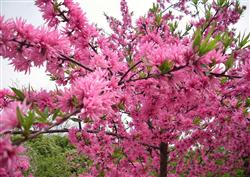
The chrysanthemum peach is named for its flower shape closely resembling a chrysanthemum. It is a deciduous shrub or small tree in the genus Prunus of the Rosaceae family, and a precious cultivar of the ornamental peach. The branchlets are grayish brown to reddish brown, the leaves are elliptic-lanceolate, and the flowers grow in the leaf axils, are pink, double, with relatively slender petals, and when in full bloom look like chrysanthemums. The flowering period is from March to April, with flowers and leaves emerging together or the flowers slightly earlier. It generally does not bear fruit after flowering.
The chrysanthemum peach is suited to growing in a sunny, well-ventilated environment. It tolerates drought, high temperatures and severe cold, does not tolerate shade, and hates waterlogging. If the soil is waterlogged, in mild cases the leaves drop and growth is affected, and in severe cases the plant dies. If light is insufficient, the flowers are small and sparse. Therefore, it can be planted in the ground in a spot with plenty of light, and when grown in a pot the pot can be placed in a bright, sunny spot, with no need for shading even in midsummer. Plant it in loose, fertile, well-drained neutral to slightly acidic soil. Water it moderately at ordinary times, and pay attention to drainage during the rainy season. Apply fertilizer three times a year: the first time before flowering, mainly phosphorus and potassium fertilizer, which can promote large, brightly colored flowers; the second time after flowering, mainly nitrogen fertilizer, to make the branches and leaves lush; June to July is its flower bud differentiation period, when you can apply phosphorus and potassium fertilizer once or twice and withhold water appropriately, so as to form more flower buds and favor flowering the next year. After autumn begins, pay attention to controlling watering, and even more so do not fertilize, to prevent autumn shoots from sprouting and to promote the lignification of the current year's branches. Before flowering, prune the plant lightly, cutting off dead and tangled branches, so that the plant's shape reaches its most beautiful state when it blooms. After flowering, do one heavy pruning, keeping only 2 to 3 buds on the branches that have flowered, to encourage new branches and form flowering branches. For branches that grow too vigorously, pinch the tips in summer to control their growth and form more flower buds. Potted plants can be placed outdoors in a wind-sheltered, sunny spot in winter or overwintered in a cold room. Repot once every spring, and when planting add some decomposed cake fertilizer powder, bone meal, etc. as a base fertilizer.
For propagating the chrysanthemum peach, one-year-old wild peach, peach or apricot seedlings can be used as rootstock, with budding in summer; the scion should use buds from the middle section of plump, robust current-year branches. It can also be propagated by cut grafting in spring.
Click to get more chrysanthemum growing techniques
Click to get more flower growing techniques