Tea Plant Cultivation Techniques: A Detailed Guide to Tea Plant Pruning Methods
How do you prune tea plants? Here is an introduction. Tea plant pruning is a measure that artificially suppresses the growth dominance of the terminal leader shoot; it can stimulate buds at lower positions to sprout new shoots, strengthen the plant's vigor, and cultivate a high-yielding, high-quality canopy. The main tea plant pruning methods include formative pruning of young tea plants, light pruning and deep pruning of mature tea plants, ...
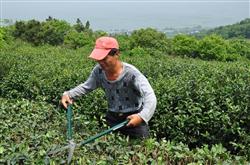
How do you prune tea plants? Here is an introduction.
Tea plant pruning is a measure that artificially suppresses the growth dominance of the terminal leader shoot; it can stimulate buds at lower positions to sprout new shoots, strengthen the plant's vigor, and cultivate a high-yielding, high-quality canopy. The main tea plant pruning methods include formative pruning of young tea plants, light pruning and deep pruning of mature tea plants, and heavy pruning and collar pruning of aging tea plants. As for the timing of tea plant pruning, theoretically the best results are achieved around Awakening of Insects in early spring. However, to take into account the current economic returns from spring tea, apart from the formative pruning of young tea plants, other pruning should preferably be scheduled after the spring tea harvest is finished.
I. Formative pruning of young tea plants
After tea seedlings are planted, when the seedlings reach a height of more than 30 cm and the main stem is more than 3 mm thick, the first formative pruning can be carried out, leaving a height of about 15 cm after pruning. For tea seedlings that grow poorly and have not reached the above standards, the formative pruning time should be postponed. After formative pruning, care should be taken to retain and nurture new shoots, and fertilization management should be strengthened; thereafter, formative pruning should be carried out once every year. The height of each formative pruning can be raised by about 15 cm above the previous pruning cut. After 3 formative prunings, the tea plant is 40-50 cm tall; by then the framework has already formed, and thereafter this should be supplemented by light topping and light pruning to further develop the canopy and the plucking surface. As for the tools for formative pruning, for the first formative pruning, hedge shears should be chosen to prune bush by bush, with the cut 3-5 mm from the first axillary bud below the cut, and the outer buds should be retained as much as possible to facilitate the growth of robust main branches in the future. Where conditions permit, hedge shears should still be chosen for the second formative pruning, as this helps improve pruning quality.
II. Light pruning and deep pruning of mature tea plants
1. Light pruning The purpose of light pruning is to promote the sprouting and growth of tea buds, increase production density, and enhance the tea plant's vigor; it is an indispensable technical measure for creating and cultivating a good plucking surface. The degree of light pruning is measured by cutting off 3-5 cm of branches and leaves from the canopy surface, or by cutting off the previous year's autumn shoots while leaving the summer shoots. For tea plants of the medium- and small-leaf varieties, the light pruning form is preferably an arc-shaped canopy surface, as this can increase the width of the plucking span and is beneficial for raising the per-unit yield. For tea plants in the young and vigorous stages, light pruning can be carried out once every year or every other year, each time raised by 2-3 cm above the original cut.
2. Deep pruning After many years of plucking and light pruning, dense and weak branches will form on the plucking surface; these are what are commonly called "chicken-claw branches," and tea yield and quality gradually decline. To renew the tea plant's plucking surface, deep pruning techniques can be adopted to cut away the layer of dense, weak "chicken-claw branches," so that the tea plant sends out new shoots again, improving sprouting capacity and extending the years of high and stable yield. Deep pruning should cut away the branches and shoots at the canopy surface; if it is too shallow, it cannot achieve the purpose of renewing the plucking surface. Tea plants that have undergone deep pruning still need light pruning every year or every other year thereafter, appropriately retaining more new leaves to re-cultivate the plucking surface.
Click to get more tea plant cultivation techniques
Click to get more flower cultivation techniques