What is southern blight in tree peony planting?
What is peony southern blight? What harm does peony southern blight cause? How to prevent and control it? Please guide. Harm of peony southern blight: The disease mainly occurs at the stem base of seedlings near the ground. When it first occurs, the affected phloem turns brown and gradually spreads to the surrounding area, and white silky mycelium is produced at the diseased part. The mycelium...
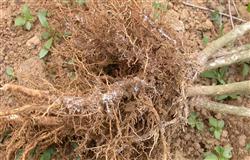 What is peony southern blight? What harm does peony southern blight cause? How to prevent and control it? Please guide.
Harm of peony southern blight:
The disease mainly occurs at the stem base of seedlings near the ground. When it first occurs, the affected phloem turns brown and gradually spreads to the surrounding area, and white silky mycelium is produced at the diseased part. The mycelium spreads outward in a fan shape and extends to the nearby soil surface. Later, rapeseed-shaped tea-brown sclerotia form on the surface of the stem base of diseased seedlings or on the mycelial layer on the soil surface. After seedlings are infected, the stem base and root cortex rot, and the transport of water and nutrients in the plant is cut off. The leaves turn yellow and wither, and the whole plant dies.
Time and causes of peony southern blight:
In the Yangtze River basin, the disease generally begins to occur in early June, with July-August being the peak period of the disease, and it basically stops occurring after September. Under conditions of 18~28°C and high humidity, it takes only 8~9 days from sclerotium germination to the formation of new sclerotia, and about 9 days from sclerotium formation to maturity.
Disease conditions: The pathogen prefers high temperature and high humidity. The optimum temperature for growth is 30~35°C, and development stops above 40°C. Soil pH 5~7 is suitable for disease occurrence, and the disease occurs rarely in alkaline soil. In gardens with rich soil humus, high nitrogen content, heavy clay soil, and relatively acidic soil, the incidence is high.
Prevention and control methods for peony southern blight:
1. To prevent disease at the seedling stage, soil can be treated with 70% quintozene powder, using 250 grams per 67 sq m, adding 5 kg of dry fine soil, mixing evenly, and spreading it in the sowing or cutting furrows, then sowing or cutting.
2. In the early stage of the disease, 70% quintozene powder can be spread on the soil surface in the nursery, also using 250 grams per 67 sq m. After application, loosen the soil so that the powder is evenly mixed into the soil; alternatively, use 50% carbendazim wettable powder at 500~800 times dilution, or 50% thiophanate wettable powder at 500 times dilution, or 1% copper sulfate solution, or carboxin 10 ppm, or oxycarboxin 25 ppm, and pour it around the seedling roots to control the spread of the disease.
3. In spring and autumn, remove soil and expose the roots. After symptoms appear on the aboveground parts of the tree, remove and expose the soil near the main roots at the base of the trunk to inhibit the development of the disease. Root exposure can be carried out from March in early spring until leaf fall in autumn. Before the rainy season arrives, the tree hole can be filled level to prevent adverse effects. When exposing roots, attention should also be paid to building soil ridges around the hole to prevent water from flowing into the hole.
4. Select disease-free seedlings. When transporting seedlings, strictly inspect them, remove diseased seedlings, and disinfect healthy seedlings. Disinfectants can include 70% thiophanate-methyl or carbendazim at 800~1000 times dilution, 2% limewater, or 0.5% copper sulfate solution, soaking for 10~30 minutes, then planting. They can also be soaked in 45°C warm water for 20~30 minutes to kill root pathogens.
5. Treatment of diseased trees. After determining that the roots are diseased based on symptoms on the aboveground parts of the tree, remove the soil at the base of the trunk to look for the affected area. After confirming it is southern blight, thoroughly scrape off the lesions on the root crown with a knife, disinfect the wounds with 50 times dilution of antibacterial agent 401 or 1% sulfuric acid solution, then apply a protective agent such as Bordeaux mixture externally, and cover with new soil.
Click to get more peony planting techniques
Click to get more flower planting techniques