Winter Melon Planting Time, Fertilization and Management Techniques Explained
Winter melon is a vegetable, and many people like to eat this vegetable. If you want to grow winter melon yourself, how should you grow it? Friends who want to grow winter melon can take a look at the article below and then know how winter melon is grown.
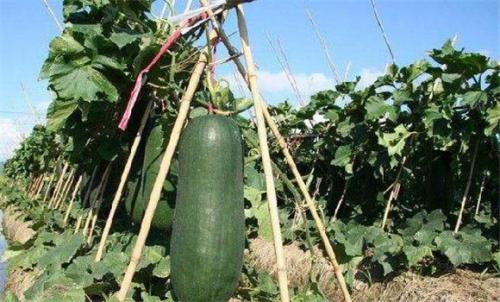
Winter melon is an annual herbaceous plant. Its fruit is very large, and it is generally allowed to grow on the soil surface because the fruit is heavy. Sowing is mainly done in summer. The leaves are large and heart-shaped. The flowers are monoecious, with both male and female flowers on the same plant. The whole plant has a powdery waxy coating. The sowing period for spring planting is from December to March of the following year, and the sowing period for autumn planting is from June to July.
To obtain high yields when growing winter melon, sufficient base fertilizer must be applied, and continuous topdressing is also needed so that the root system of the seedlings can quickly absorb nutrients and promote growth and development. Topdressing should follow the needs of the plant; when topdressing, pay attention to four points: do not apply topdressing before heavy rain; do not apply it immediately after heavy rain; do not apply nitrogen fertilizer alone, and pay attention to combining nitrogen, phosphorus, and potassium; do not pour the fertilizer solution on the head of the plant, otherwise the plant's absorption effect will be poor, fertilizer will be wasted, and diseases may be triggered.
During the seedling stage, water should be sprinkled in the morning and evening on sunny days, and irrigation should be appropriately reduced when it is cold. After the vines are trained onto the trellis, more water is needed. In addition to watering every day, on sunny days the furrow should often maintain a water level of 7 to 10 cm deep, and on rainy days the furrow water should be drained dry; in short, the soil should always be kept neither wet nor dry. Water should be controlled 10 days before harvesting the fruit to facilitate storage. Winter melon readily produces adventitious roots, so attention should be paid to vine pressing. When pressing vines, make each plant's vine form a circle on the bed surface around the plant; every 3 to 4 days, press a mud clump on a node, pressing only 3 to 4 places, so that adventitious roots grow at the nodes. After the vine has been pressed for 15 nodes on the bed surface, it can be guided onto the trellis:
Inserting poles to guide the vines: use 3 to 4 bamboo poles to build a support, with 1 thicker bamboo pole laid horizontally on top to connect the supports for stability. When the vine has 16 to 18 nodes, it can be guided onto the trellis. When guiding the vines, proceed according to the direction of the bed, guide the vines onto the trellis in a counterclockwise circle around the support, and in a planned way guide the vines toward the west, using their own vines and leaves to shade the fruit so as to reduce direct western sunlight and avoid scorching the winter melon. Remove side vines in time: for Daqingpi and Heipi winter melons, only the main vine is retained; for Niupi winter melon, after it is trained onto the trellis, the main vine and 1 side vine may be retained, and all the rest should be removed in time.
Winter melon is fertilized about once every 10 to 15 days. Sufficient nutrients also help the winter melon grow later. About 60 to 70 days after sowing, flower buds can be seen. The first flower is definitely a male flower. Look carefully at the two pictures below; male and female flower buds are very easy to distinguish. The male flower has a thinner stem, while the female flower is slightly thicker.