Peony Cultivation Methods and a Detailed Guide to Common Pests and Diseases
What pests and diseases affect peonies? How should peony pests and diseases be prevented and controlled? We ask fellow gardeners to share their advice and guidance. The main pests and diseases of peonies are: gray mold, brown spot, anthracnose, ring spot, branch blight, and root-knot nematode disease. A detailed introduction to their harm and control methods is given below for fellow gardeners' reference. 1. Peony...
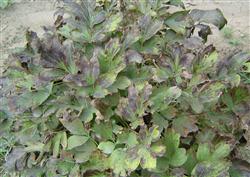 What pests and diseases affect peonies? How should peony pests and diseases be prevented and controlled? We ask fellow gardeners to share their advice and guidance.
The main pests and diseases of peonies are: gray mold, brown spot, anthracnose , ring spot, branch blight, and root-knot nematode disease. A detailed introduction to their harm and control methods is given below for fellow gardeners' reference.
1. The harm caused by peony gray mold
Gray mold is one of the most important peony diseases in the world, and it also occurs from time to time in China, being more serious in places such as Shanghai and Zhengzhou. The disease can occur throughout the peony growing season and is severely harmful to young, tender plants, causing seedlings to lodge and wilt.
Control methods for peony gray mold:
Method 1. Reduce sources of infection: In autumn, clear away dead branches and fallen leaves of diseased plants; in spring, when the disease occurs, remove diseased buds and diseased leaves, and bury diseased plant debris deeply.
Method 2. Chemical control during the growing season: Once the disease occurs during the growing season, the following agents can be used for spray control: 1% lime equivalent Bordeaux mixture, 70% thiophanate-methyl 1000-fold solution, 65% zineb 500-fold solution, or 50% dicloran 1000-fold solution. Spray once every 10-15 days, for 2-3 consecutive sprays.
Method 3. Strengthen cultivation management: Planting density should be moderate; drain promptly after rain, and do not build up wet soil around the base of the plant clump; implement crop rotation in severely affected areas; plant disease-free seedlings, and seedlings can be soaked in 65% zineb 300-fold solution for 10-15 minutes.
2. The harm caused by peony brown spot
Brown spot, also called red spot, is a worldwide disease that commonly occurs on peonies. It often causes leaves to wither early, affecting the growth vigor of peonies.
Control methods for peony brown spot:
Method 1. Reduce sources of infection: In autumn, thoroughly clear away diseased plant debris on the ground; before the plants break dormancy in early spring, spray 50% carbendazim 600-fold solution or 3 degrees lime sulfur mixture to kill the pathogens on the plants.
Method 2. Chemical control during the growing season: After the disease occurs, spray 50% carbendazim 1000-fold solution, or 65% zineb 500-600-fold solution, once every 7-10 days, for 3-4 consecutive sprays.
Method 3. Strengthen cultivation management: Moderate planting density, and apply organic fertilizer and compound fertilizer.
3. The harm caused by peony anthracnose
Anthracnose is a common disease of peonies in China. Anthracnose often causes peony leaves to wither with patches of dead spots joining together, diseased stems to twist, and young tender branches to die.
Control methods for peony anthracnose:
Method 1. Reduce sources of infection; the method is the same as for peony brown spot.
Method 2. Chemical control during the growing season: In the early stage of the disease (May-June), spray 70% thiram 500-fold solution, or 1% lime equivalent Bordeaux mixture, or 65% zineb 500-fold solution. Once every 10-15 days, for a total of 2-3 sprays.
4. The harm caused by peony ring spot
Ring spot, also called white star disease, is also a common leaf spot disease of peonies, mainly harming the leaves. When the disease first occurs, the spots on the leaves are net-shaped or nearly round, 4-10 mm in diameter, numerous, light brown to grayish white, with brown edges; old spots have obvious concentric rings, and grayish black mold-like material, namely the pathogen's fruiting bodies, grows in the center of the spots.
Control of peony ring spot:
Method 1. Reduce sources of infection: Promptly clear away fallen leaves of diseased plants, and before the plants break dormancy, spray 3 degrees lime sulfur mixture to kill the pathogens on the peony plants.
Method 2. Chemical control during the growing season: Spray 1% lime equivalent Bordeaux mixture, or 50% thiram 800-fold solution, or 65% zineb 500-fold solution. After the disease occurs, spray 2-3 times consecutively (once every 10-15 days).
Method 3. Strengthen cultivation management: Suitable planting density and good ventilation and light penetration.
5. The harm caused by peony branch blight
Peony branch blight infects parts of the peony such as the stems and branches. On the stems, the disease appears as light brown spots that gradually expand into reddish brown oval spots. The spots can encircle the stem, causing the branches and stems above the spots to die quickly.
In autumn, small black dots appear on the spots, which are the pathogen's pycnidia. Buds become brown when infected, and dead buds can remain on the plant for a long time. The disease is caused by fungi.
Conditions for onset: The pathogen mainly invades through wounds. Many wounds and weak plant growth favor the occurrence of the disease.
Control methods for peony branch blight:①Strengthen cultivation management, enhance growth vigor, reduce wounds, and improve disease resistance. ②Chemical control: see peony brown spot.
6. The harm caused by peony root-knot nematode disease
Peony root-knot nematode disease occurs relatively commonly and has been reported both in China and abroad. Over the past 10-plus years, root-knot nematode disease has become the most important disease of peony roots in China, causing early leaf drop. When the disease is severe, all peony leaves fall off by August. When it occurs year after year, the plants become dwarfed, with small leaves, small flowers, or no flowers at all.
Control methods for peony root-knot nematode disease
Method 1. Strengthen quarantine to prevent the expansion of affected areas:When diseased seedlings are found during introduction work, they must be treated: soak in 0.1% isofenphos-methyl for 30 minutes, or soak in warm water at 48°C-49°C for 30 minutes.
Method 2. Chemical control in the field:Apply 15% aldicarb granules in holes, 5 g-10 g per plant, with holes about 10 cm deep. Apply in early May (Beijing), once a year.
Method 3. Disease prevention and control methods:Disinfect with heat or pesticides. Commonly used pesticides include methyl bromide, aldicarb, fenamiphos, etc. Soil can also be disinfected by drying and high temperature; for example, after the potting soil is dried for 30 days (moisture content reaching 0.17%), no nematodes survive.
Click for morePeony cultivation techniques
Click for moreFlower cultivation techniques