What Is Peony Seedling Damping-Off? A Detailed Guide to Peony Care Methods
What is peony seedling damping-off? What harm does peony seedling damping-off cause? What methods can prevent and control it? Please also give an introduction. The harm of peony seedling damping-off: This disease is distributed in both southern and northern regions and occurs at the seedling stage. This fungus has a broad host range and can harm the sown seedlings of more than 100 plant species. It is also highly susceptible to infecting the seedlings of Michella alba, dahlia, China aster, chrysanthemum, spider plant, and Portulaca grandiflora propagated by softwood cuttings, causing damping-off or root rot.
 What is peony seedling damping-off? What harm does peony seedling damping-off cause? What methods can prevent and control it? Please also give an introduction.
The harm of peony seedling damping-off:
This disease is distributed in both southern and northern regions and occurs at the seedling stage. This fungus has a broad host range and can harm the sown seedlings of more than 100 plant species. It is also highly susceptible to infecting the seedlings of Michella alba, dahlia, China aster, chrysanthemum, spider plant, and Portulaca grandiflora propagated by softwood cuttings, causing damping-off or root rot.
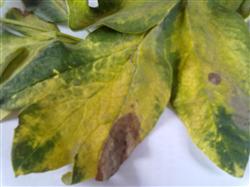
Symptoms: Diseased seedlings are mostly invaded from the soil surface at the stem base of the seedling. When the disease occurs, it first turns brown, then dark brown. When the damage is severe, the phloem is destroyed, and the roots become blackish-brown and rot.
At this time, the leaves of the diseased plant turn yellow, the plant wilts and dies, but it does not fall over. This fungus can also infect the moist leaves near the ground of young plants, causing leaf blight. Irregular, water-soaked, yellowish-brown to dark brown large spots appear at the edges and quickly spread to the entire leaf and petiole, causing death and rot. Brown mycelial masses and attached small sclerotia can sometimes be seen on the diseased parts.
Rhizoctonia solani belongs to the Deuteromycotina, Hyphomycetes, Mycelia Sterilia. The hyphae are spiderweb-like, surround the parasitized tissue, have transverse septa, are 8-12 micrometers thick, initially colorless and with many oil droplets, and branch at acute angles. The junction between the small branch and the main branch is slightly constricted, and there is often a transverse septum on it. After aging, the hyphae become yellowish-brown and branch at right angles, and the junction between the small branch and the main branch is not constricted. Rhizoctonia solani can cause disease at soil temperatures between 13-26 degrees Celsius, with 20-24 degrees Celsius being suitable. It adapts to a wide soil pH range and can cause disease at pH 2.6-6.9.
Infection route: The pathogen overwinters or survives long-term as mycelium or sclerotia on residual diseased plants or in the soil. Contaminated soil is the main source of infection. Diseased plant residues and fertilizer may also transmit the disease, and it can also spread through flowing water, farm tools, people, and livestock. Damp weather is suitable for major outbreaks of the disease; conversely, dry weather prevents the disease from developing. Disease incidence is often more severe in fields with continuous cropping for many years.
Control methods for peony seedling damping-off:
1. Strictly control the amount of irrigation water for seedbeds and cutting beds, and pay attention to timely drainage; ensure ventilation; provide shade on sunny days to prevent the soil temperature from being too high, scorching the seedlings, causing wounds, and making the pathogen more likely to infect them.
2. Pay attention to garden cleanliness and hygiene, promptly dispose of diseased plant residues, and do not use decomposed fertilizer carrying pathogens.
3. Promptly pull out and burn diseased plants when found.
4. For contaminated seedbeds, if they continue to be used for cutting propagation, or for other soil used for cuttings, formalin can be used for soil disinfection before cutting. Use 50 milliliters of formalin per square meter, add 8-12 kilograms of water, and pour it into the soil. After pouring, wait at least 1 week before using it for sowing or planting seedlings; or use an equal mixture of 70% quintozene powder and 65% zineb wettable powder to treat the soil, using 8-10 grams of the mixed powder per square meter, broadcast it into the soil, and mix it evenly with the soil.
5. Spray 75% chlorothalonil wettable powder at 800-1000 times dilution, or 50% thiram wettable powder at 500 times dilution, or 75% quintozene at 600 times dilution, or 65% zineb wettable powder at 600 times dilution, or mix 64% zineb with a 1:2 ratio and then dilute 600 times, or 72.2% propamocarb aqueous solution at 400 times dilution, or 15% hymexazol aqueous solution at 450 times dilution, using 3 liters of spray solution per square meter.
Click to get morePeony Planting Techniques
Click to get moreFlower Planting Techniques