Aloe Cultivation: How to Best Prevent and Control Pests and Diseases in Edible Aloe?
How to best prevent and control pests and diseases in edible aloe? Please explain the methods. In preventing and controlling pests and diseases in edible aloe, scientific control measures should be adopted, and pollution-free control techniques should be vigorously promoted. Highly toxic and high-residue pesticides are prohibited, so as to effectively control pest and disease damage while keeping pesticide residues in the product within limits. In terms of control, adopt "..."
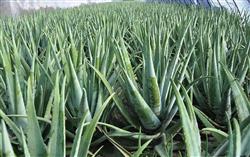 How to best prevent and control pests and diseases in edible aloe? Please explain the methods
In preventing and controlling pests and diseases in edible aloe, scientific control measures should be adopted, and pollution-free control techniques should be vigorously promoted. Highly toxic and high-residue pesticides are prohibited, so as to effectively control pest and disease damage while keeping pesticide residues in the product within limits. In terms of control, adopt the measures of "prevention first, integrated control" and prevent early at the right time. For growing edible aloe, you can refer to the following methods for pest and disease control:
I. Agricultural control methods:
Before asparagus harvest begins, clear out the old mother stems on sunny days before "Lichun" (Start of Spring) and "Liqiu" (Start of Autumn) respectively, and carry out a thorough field cleanup to eliminate pest and disease sources lurking in dead branches, fallen leaves and the soil. During field cleanup, cut off the old mother stems and the newly grown deformed, pest-damaged or disease-damaged tender stems, move them out of the field and burn them in a centralized pile;
At the same time, spray herbicide to clear weeds in the field, and dig away the sand and soil around the asparagus crowns, remove residual stems thoroughly, and expose them to sunlight for 1-2 days. For every 667 sq m, use 0.5 kg each of 70% thiophanate-methyl and 50% carbendazim, and 1 kg of phoxim, mix with 500-600 kg of water, and pour the mixture over the crowns. Then cover with 5-6 cm of borrowed sand to eliminate pest and disease sources;
Strengthen fertilizer and water management, apply more organic fertilizer, and pay attention to the reasonable combination of nitrogen, phosphorus, potassium and trace elements. If the soil in the asparagus garden is acidic, apply an appropriate amount of lime powder to adjust the soil pH; pay attention to drought prevention and drainage to promote robust plant growth and enhance disease resistance; do not harvest excessively, to avoid causing premature aging of the plants.
II. Chemical control methods:For chemical control, it is important to grasp the key control period. For diseases such as stem blight, control should be carried out at the early stage of onset, protecting the susceptible period from mother stem sprouting to maturity; for insect pests, control should be carried out from the peak hatching period of larvae to the young larval stage. After field cleanup, begin spraying pesticides to control stem blight as soon as the young stems emerge, and continue spraying until the stems and leaves age. Pesticides should be rotated frequently, and a single pesticide should not be used for a long time, so as to avoid resistance and reduced efficacy.
1. Mother stem growth period: appropriately choose high-efficiency, low-toxicity, low-residue pesticides such as Dacotech M-45 wettable powder, or 65% Haoshengling wettable powder, or 70% thiophanate-methyl wettable powder, or 50% carbendazim wettable powder at 500-600 times dilution, or 80% Xinwansheng wettable powder at 300 times dilution, or 65% amobam aqueous solution at 800-1000 times dilution to control stem blight and brown spot disease;
To control insect pests, spray when larvae are in the 1st-2nd instar, using 5% chlorfluazuron emulsifiable concentrate at 1000-1500 times dilution, or 90% trichlorfon crystals at 600-800 times dilution, or 10% cypermethrin emulsifiable concentrate at 1000 times dilution plus a small amount of dimethoate, or 2.5% deltamethrin emulsifiable concentrate at 600-800 times dilution mixed with trichlorfon or Anda at 3000 times dilution
To control Noctuidae pests: use 10% Dachengong at 1000 times dilution or 10% imidacloprid wettable powder at 1500-2000 times dilution to control aphids and thrips; for mites and red spider mites, use fenbutatin oxide emulsifiable concentrate at 1000 times dilution for spray control.
2. Harvest period: biological control should be promoted. Biological agents such as 12% Dilikang at 1000 times dilution or 3% Kejunkang at 800-1000 times dilution can be used to control stem blight; use Caishuoxing at 600-800 times dilution, or Beauveria bassiana or Bacillus thuringiensis at 1000 times dilution, or Mimian at 1500 times dilution to control Noctuidae pests such as the tobacco cutworm; use avermectin-type biological pesticides to control aphids and thrips.
For underground pests such as cutworms and Noctuidae adults, use a sugar-vinegar liquid (3 parts sugar, 3 parts vinegar, 1 part liquor, 10 parts water plus 0.1% trichlorfon) and place it in the field in the evening to trap and kill adults.
Click to get more aloe cultivation techniques
Click to get more flower growing techniques