A Detailed Guide to the Planting Techniques and Management Methods for the Renmian Tree
The renmian tree, also known as yinlian fruit or renmianzi, is an evergreen tree in the genus Dracontomelon of the Anacardiaceae family. Its crown is rounded and umbrella-shaped, with a graceful, tall and vigorous form, and it can grow to more than ten meters high. It produces white flowers in early summer each year, and by July it bears fruit. The fruit of the renmian tree is shaped like a small pear, with green skin, and eating it is so sour it makes your teeth ache...
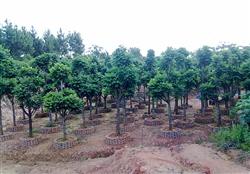
The renmian tree, also known as yinlian fruit or renmianzi, is an evergreen tree in the genus Dracontomelon of the Anacardiaceae family. Its crown is rounded and umbrella-shaped, with a graceful, tall and vigorous form, and it can grow to more than ten meters high. It produces white flowers in early summer each year, and by July it bears fruit. The fruit of the renmian tree is shaped like a small pear, with green skin, and eating it is so sour it makes your teeth ache. Its skin has five indentations, just like a human face with eyes, a nose and a mouth, so people call it the human-face fruit. It is mainly used for landscaping purposes and can serve as a street tree or shade tree, generally growing in Guangdong, Guangxi, Hainan, Yunnan and other places.
The renmian tree is most suitable for planting in courtyards or along roadsides. It is a fruit tree that is easy to keep alive but very difficult to get to fruit; seedlings can grow without watering or fertilizing, but having one tree out of ten bear fruit is already rare. It takes decades from planting to fruiting, but once a tree has fruited, it yields a harvest every year.
The renmian tree is suitable for growing in hot and humid environments. It prefers moist, fertile, acidic soil, has strong sprouting ability, likes a warm and humid climate, and has fairly strong adaptability, cold resistance, wind resistance and resistance to air pollution.
The renmian tree is generally propagated by sowing. After the fruit is fully ripe, take out the seeds, remove any remaining pulp, wash them, dry them in the shade, and then store them in stratified sand. Keep them in sand until around "Yushui" the following spring, then take them out and sow. At one year of age, the seedlings can be lifted from the nursery and planted out.
The renmian tree can also be propagated by cuttings. Choose fresh young stems and branches from high-yielding plants with good genetic traits, free of disease and damage, to encourage new roots and new shoots. The length of the cuttings should be 10-14 cm. After cutting, insert the cuttings into the soil promptly; otherwise, place them in a dark place or cover them with a damp cloth to prevent dehydration. Before cutting, to improve the survival rate, the cuttings can be soaked in growth hormone. When cutting, insert the cuttings straight into the soil, then cover with soil and press firmly, leaving about 4-6 cm of the cutting exposed above the ground, with a row spacing of about 10-15 cm and a plant spacing of about 6 cm. After cutting, water promptly; the amount of water can be adjusted according to the specific situation.
Planting out the renmian tree:The best time for planting out is around "Guyu" in late spring. At this time, South China has ample rainfall, the air and soil are relatively moist, and the climate is relatively warm, so the seedlings are easy to keep alive after planting out and recover and grow quickly. Before planting out, the planting holes should be given sufficient well-rotted base fertilizer. For block planting, the plant and row spacing is 6 m * 10 m. In the early stage, short-term crops can be appropriately intercropped in the spaces between rows. After planting, cultivate and weed 3-4 times each year, and for mature trees it is advisable to apply heavy fertilizer before flowering and after fruiting.
Pest and disease control for the renmian tree:The main problem is longhorn beetles damaging the branches and trunk. Check at any time and control them promptly. You can use wire to hook and kill them by hand, or pour 200-times-diluted dichlorvos solution into the insect holes to kill the larvae.
Click to get more flower planting techniques